OmahaNebraska.com Interview with Patrick Leahy, CEO of Firstar Fiber
CEO Patrick Leahy with facility in background
Please tell me a little bit about your journey here and what you did before coming here.
After college I worked in politics for U.S. senator Ben Nelson. Through there, I got some roles in non profit, in fundraising, consulting.
And that’s where I met the owner and founder of Firstar Recycling, Mr. Dale Gubbels. And when he was looking to retire, I was looking for a new challenge and he gave it to me.
How did that prepare you for your role now?
I think recycling, even though it’s about materials, aluminum cans, plastic bottles, cardboard, it’s very much a people business, whether it’s community relationships, business relationships, relationships with the mills. So the politics aspect, just being able to work with people from all different stripes and from different interests has helped out.
And then to recycle right, you really need strong processes. We need a good mix of workers and equipment doing the right things. And I think my background in the military brings those two things together.
What did you do in the military?
A little bit of everything. My main job is nuclear, biological and chemical, weapons, so that’s intelligence and nuclear weapons.
So then you’re very familiar with all the toxic aspects of the materials.
Yes. There’s nothing here quite like that.
Of course, yes.
I don’t want to equate those two. Yes. But ” safety first” is definitely a motto in the military. Risk mitigation. And I would say that translates in the recycling manufacturing industry is “safety first”.
So, that must have been a huge priority when you took over.
Yes, yes. I think there was already a strong foundation in the culture. But the recycling industry as a whole sees challenges with fires, especially fires related to lithium ion batteries. It’s something that no matter if you have a strong foundation in safety, you can always do better and you always need to keep it going.
There are so many different types of plastics. How do you sort those so they become different products?
The sortation process is in all of the above. You have the manual – human beings doing it. You have mechanical equipment and machinery helping with the sortation process, using gravity, weights, stuff like that. You also have the AI Machine Learning, robotics that are scanning things and looking at it from the material composition is inserting. It’s all three that are at play in our process to get you a good clean product. Only number one, it’s only number two. So only a certain kind.
On the AI side, are they testing the materials and using computer vision or how is that done?
Some of it’s pre-programmed and then it’s learning what things look like along the way and updating itself, to get better at a capture. It’s just using either infrared or color spectrum to make those calls as well as size.
What different types of things would you like people to know about your company that maybe they should know already and then also what they might not know.
I’m going to say about the industry, first. I think people should know why recycling is different in different locations because every recycling center is set up to handle things in a different way. Always check with your local recycling center or your local agency or government to determine what you can recycle. So you can make sure that you recycle. Because there’s nothing worse than people putting something in the cart that they think is recycled, but it’s not. It just ends up causing the system problems, slowing things down and costing more money back.
So, that’s the first thing I’d say is look to your local entity to recycle.
About Firstar specifically, I would say what makes this unique, in addition to just being a great culture, great people, is we take both commercial and residential single stream at the same facility in the same process.
We do it about half and half. Typically, recycling centers will focus on one or the other, but we’re doing both.
On top of that – with what we’re doing with our plastic feed processing and making the lumber – we’re one of the first material recovery facilities that’s vertically integrated. And we prove that this would be a model that others will follow over time.
So, that’s the two things that really make us unique.
Are you going to be building, depending on how these tests go, a plant in Hawaii and other places? Or are you going to be working with something that’s existing there?
Both. We may not be the ones that build it, but we may, whether it is licensing out our process or franchising it out. What we would prefer to do is work with a local partner because your local partner will have an understanding of the community, the government agencies involved, the construction firms like the end consumer of the product over the number of pallets, floor mats or ground mats, whatever. So it would definitely be a partnership. Who that partner is … ?
OmahaNebraska.com Interview with Executive Chef Sam Laughlin at Noddle Hospitality
OmahanNebraska.com here with…
Sam Laughlin.
Tell me a little bit about your restaurant.
So, Sammy’s here. We’re not an all-natural but a very little preservative sandwich shop. We like to use healthy ingredients sliced to order for our sandwiches, as in our meats and our cheeses. We like to use local ingredients where we can. So, like our lettuces and our tomatoes, when we can use them, we do try to use them. We like to use local brands like Rotella’s as our bread supplier. Any of our chips and things like that, we like to use a lot of gluten-free options and just different items to kind of make the whole community welcome, including people with food allergies or dietary restrictions and also while making a little bit of a healthier option in the [Inner Rail] Food Hall as well.
They were talking to me about your lunch meats.
Our ham and our turkey as of now have no preservatives in it. They are strictly ham and they’re strictly turkey.
That’s impressive.
There’s no meat glues or anything that binds the meat together. So that’s why sometimes when you see us slicing, they tear a little bit more easily because it doesn’t have those preservatives and those glues and such to hold things together.
I didn’t know there was a meat glue.
Yeah. So back in my culinary days, we used to use a gastronomy technique that you could fuse two pieces of meat together to make a certain shape or to make a certain design for those meats as well.
Tell me a little bit about what you did before this and then how and why you started the restaurant.
So, before this I was a cook at multiple places around town: Via Farina, Jackson Street Tavern, Stirnella when that was opened… Au Courant… and that’s kind of where I finished my big extensive culinary journey. Like, learning around town was Au Courant, and then I went out west and helped open up Lost Rail Golf Club as well, that golf course. Helped start their food program working with another chef, eventually taking that over and running it myself. And then now coming back down here. I just kind of wanted the change of pace. Being in the restaurant was fun, and I want to get back into it for sure, because I wanted to change it up and kind of start something a little bit fresh. We also owned Tiny’s over there. That used to be my nickname around town as well.
Oh, so you’re also Tiny’s?
Tiny’s Pizzeria or Tiny’s Pizza Joint, and just kind of been a local around town and kind of earned my nickname Tiny from being made the chef at Au Courant and kind of just wanted to start up the sandwich shop that we felt would benefit Omaha. You know something a little bit more fresh, a little bit more clean, and something that comes from Omaha.
What are some of your favorites? You would have two hats here—restaurants. Tell me what your favorites are here and tell me about your favorites at Tiny’s.
Okay, so my favorites here are—I would say the number one, the Godfather. It’s like our version of the Italian club or Italian sandwich. And then I would say our The Mark, which is our #10, which is basically a Cubano sandwich or a Cuban sandwich. And then I would say for sure the Tuna Crunch. The Tuna Crunch is special because we make our own tuna salad in-house. But we also do a nice, healthy serving of crushed potato chips on the top to then add the crunch to the tuna. And then for Tiny’s I would say the Hot Girl for sure is one of my favorites. And then the Margherita Pizza as well.
I don’t remember which pizza I had. I’m going to have to look at the list, but it was fantastic.
Yeah. I appreciate that. Thank you. The same thing was over here. We’re trying to make the healthier option… the same thing we’re trying to do at Tiny’s as well. We understand that it’s pizza and there’s cheesy deliciousness going on, but like our dough is 100% sourdough so it’s a little bit healthier on your stomach. It’s not too heavy on your stomach. Our ingredients, we use Grandé cheese, which is again a no-preservative cheese that we like. There’s no caking agents or anything like that in the cheese that we use, but we also like to use local ingredients over there like our mushrooms from Flavor Country Farms. We love them. They serve us with some beautiful mushrooms for our Fun Guy pizza and then also…
That’s what I had.
Yeah, yeah, yeah. Okay, that’s a really good one. That’s one of my personal favorites. But the same with the Hot Girl [pizza] and the honey. The honey we use is from a local farm called Miller Dohrman Farms. We get the honey delivered to us by them as well. Beautiful, beautiful farm, and it’s a sense of community that I like to bring to the restaurants that I worked in and that I have worked in the past. It was beautiful seeing the community come together, all the farmers and all the different people that it takes to make a restaurant great.
That is beautiful.
Thanks. I appreciate that,
Why did you pick this area and Inner Rail?
Because Aksarben is growing, it’s beautiful. It’s becoming a community more and more every day, and I can see it. I’ve seen what Noddle Hospitality have done with the… at the Inner Rail, Sonny’s, all of Zone 6, like, it’s been a beautiful journey being a part of their team and being along with them and them helping me grow and do the things that I want to do in this community as well.
OmahaNebraska.com Interview with Samuel Voss, General Manager of Mouth of the South Restaurant in West Omaha, Part Two
Please tell me a little bit about Ryan Ernst coming here, because both of you weren’t born here.
No, Ryan had family here as well, so he was raised kind of all over. But he had family here and came up. He kind of migrated north, and he just got into the food scene, and ever since then it just is the thing that drives him. And so that’s how he got here. But I was already a Midwest person. Didn’t really travel much until later on.
I’ve been around now.
Probably six months ago I was in New Orleans for about a week. And I was actually disappointed. You see all these cool pictures and Mardi Gras happening, Bourbon Street, all these things sound amazing. But I got down there, and it smells. Like, this city stinks. It’s cool to look at, but the smell and the heat and all that stuff. I didn’t find anything good to eat until the third night when we went to Drago’s and we got their char-grilled oysters. Amazing. Like, we should have gone here the first night. The second night, I’d take a Big Mac at that point. I was so disappointed because we serve better food here than you can get there. Ours has better flavor. Ours has better presentation. The rice isn’t cooked to death. Sometimes when you heat a sauce that has a has a roux in it or it’s thickened, sometimes if you get it too hot, it breaks. And so sometimes there’s oil pooling on the top, and that’s kind of what it was and just really disappointing. So I was, like, man, there’s gotta be somewhere where I’m gonna hit a home run. That third night we went to Drago’s, and I was like, this is probably the best I’ve ever had.
But for me, New Orleans was kind of one of those things where it’s like I’ve been there, and I’m good now. I know what we do, and I know what they do…
You have an amazing culinary background, you’re in a good place, and you went to New Orleans and just…
I wasn’t I wasn’t over thrilled.
This makes a really great testimony. You work here, and it’s really great.
I think the greatest thing that came for me out of New Orleans was I did a couple of tours like city tours, and their history is amazing…and the history of music, because I’m a music guy. And so you didn’t know a lot of these artists came out of New Orleans. You’re like, I didn’t know Harry Connick Junior was the one that helped build this music center where these kids that have no future can go in and learn how to play instruments and learn how to play music. I had no idea of any of that. And even touring the above-ground cemeteries, that was super interesting. So the history of the place was just amazing. And then it was at that point when everything clicked. Then it’s like, boom, the story comes from…you know, people in New Orleans eat red beans and rice on Monday. And you’re like, well, why do they do that? I could eat it Tuesday or I could eat it Friday or Sunday. Well, they do it on Monday because it’s an entrée that you can start on the stove and you don’t need to watch it. And Monday was laundry day, so back in the old days, these ladies are just with their washboards, their pot of red beans are just boiling away, simmering on the stove while they’re just grinding, washing laundry. And you’re, like, that’s what they ate on Mondays, because that was laundry day. Who knows that? Who, walking in Omaha, Nebraska, knows that? So some of those little nuances to the stories made perfect sense. But the history and the tourism and the architecture were probably the highlights of that trip for me.
You said he had family here…when did he get the idea for a restaurant and then starting out in Florence? I’m just curious.
Oh, boy. I would say… I’m not sure, exactly, of the dates. It was something that he wanted to do. Obviously, trying to get into this business is really difficult, and it’s very costly. We have some pretty unrealistic restrictions. too, in the city with build outs and trying to go through plumbing boards and getting inspections done is kind of challenging, so I’m sure he had some obstacles there, but it’s always been something he wanted to do. It was always in his heart, just waiting for him.
It was the right opportunity when the location came up down on 30th and Florence. Even to this day, I wear this jacket or the shirt. I’m always in something that says Mouth of the South. And when I’m at the store, I’m stopped, like, “Oh, my God, you work at Mouth of the South.” I’m, like, “Yeah.” “I just love that place. When are you coming back to Florence?” And it’s like, “Well, there’s not really a location in Florence right now, but we do have the Lakeside location of 168th and Center, and visit us out there.” A lot of the same menu items from day one. A little bit of menu evolution that went on there, a little bit, but probably 60 to 80% of the menu is still the original from day one.
It must be hard figuring out what to keep and what to change. As you said, people’s tastes are evolving or can be influenced by different trends.
Yeah. Sure. Sure it is, and literally this business is all about trial and error. There’s not any equation like a perfect equation where you could get online and compute “I want my restaurant to be very successful.” There’s a lot of components that go into this business. This is probably next to the medical industry, and I always joke… because my good friend is a nurse and so we always chat. It’s like you have so many working pieces in your industry with medicine, so I can equate all the different medications to ingredients. If you make a wrong move to a patient and they’re harmed or whatever, I could do that too, if I don’t abide by guidelines for temperature and time. So, just like Chi Chi’s, the chain that closed years and years ago, they found a foodborne illness in green onions that tanked their corporation, something as simple as that, and it got back to somebody didn’t wash their hands. There’s so many working pieces. Like, from the vendors, you need to make sure that you’re getting reputable suppliers with products to make sure that you don’t have anything coming in that’s contaminated. And then it’s how do you train and teach your staff to handle things properly and cool them correctly and follow things correctly and reheat correctly and hold it correctly. There’s just a lot, and so this business is really, really complex. That’s the thing. Sometimes when you get on Food Network and you see these competitions, it’s all about the glitz and glam. And I just sit there and I chuckle, and… like, there is so much more to it than “Oh my gosh. you burn a salmon and the whole night just went to heck.” There’s so much more behind that.
Not just fast, fancy chopping for 25 seconds…
Right.
It’s hard work.
Right. If I could take 14 minutes to put a garnish on an entree, I certainly would do that, but it’s not… When you’re in the… and you got tickets to move, and you’ve got people to serve…because in my history, what I have realized in this business is people coming in, they get hangry. They want to eat right now. They don’t want to wait. And I don’t blame them cause I’m the same way. When I go somewhere, I’m like, “I am starving, and I want to eat.” I don’t want to wait 45 minutes for something to come out, or 30 minutes. I want something quick.
But it’s also amazing to say I’m where you are.
Right. And so that’s where you the balance comes in, to teach your staff on how to do that and how to execute that the right way. Don’t cut corners. You don’t get anywhere in this business by cutting corners. Just don’t. And that’s what I teach, too. You can’t rush something. We don’t microwave anything, so don’t even think about it.
So nothing is microwaved.
Yeah. We don’t use a microwave at all. And even our freezer space is super, super small. We don’t have a lot of things that come in frozen, either, so it’s fresh. And like I said, we process, we make, and we sell. We do it in small batches. So it’s the freshest that we can get.
Mouth of the South’s Shrimp and Grits, artfully placed in a bowl on wooden table by window with sun streaming in to the restaurant
I enjoyed the meal that I had here. The shrimp was very fresh. It didn’t seem like it was sitting in a freezer forever.
Right.
And then the peppers were really good. What kind of peppers were those?
Those are poblanos, and we get those fresh. And again, like, when I say literally we do everything, we’ve got a team back there that roasted peppers. And then they wrap them and then they’ll stand… and I’m like, holy cow, there’s got to be a simpler process for this. But there really isn’t. And they love it. Like the Hispanic crowd that we have back there—amazing workforce for us. Love them. They’re just literally like a family. They’ll stand back there for hours just peeling the burnt pieces off of these roasted peppers. And that’s what we put in things, so it’s…
There was a little surprise with the shrimp in there, and it was just like at the perfect timing. You’re enjoying all these flavors. And then there was the pepper, and it was really enjoyable.
Awesome. I appreciate it. So yeah, that’s it in a nutshell. That’s Mouth of the South. It’s always evolving. There’s always things coming. We sort of got menu ideas stabilized to where we want to go, and now I think it’s time we…because dining out is more than just grabbing a bite. It’s more about, you know, you want an experience. If you’re going to…especially in this day and age, we hear the word inflation so much and it’s like I understand that word, and how do you then create a better value for somebody that’s coming to your establishment to spend money with you? You’ve got to give them a better experience. That’s what it is.
When I go out to eat, I love to just chat with the server, because it’s more than just… Of course they’re taking care of me, but they’re not my servant. I can form a relationship with somebody and ask, “How are you? How long have you worked here?” Because I always ask those questions when I go out. And I always frequent places that I find somebody that’s interesting like that, where my service was just the best I’ve ever had, and then I tend to go there. I’m a creature of habit. If I like the product and I like the service, I always go back. And so that’s kind of what we preach here: Just get to know your people. Just give them what they expect. Don’t cut corners. Don’t rush. Never ask anybody to hurry up or leave. Even if there is a wait, they have the table for as long as they want it. And that’s just kind of how we operate here. And we have a lot of good people, too, and I think it gets back to the character of the person as well. Everybody here gets along. There’s not a single person on our team that we have an issue with. Everybody just knows what to do. They’re willing to come in, they’re ready to take care of people, they’re ready to give good service, they’re ready to sell a really great product, and they’re ready to get somebody to come back. We want repeat business because that’s the way that we can showcase what we’re doing.
But like I was saying earlier, our next plan of attack is our bar offerings on that side, to kind of elevate cocktails a little bit. So we’ve got a bunch of new glassware that we just got in. We’re going to be making a few changes there, just with some better things. Trying to get some local things. Maybe instead of using an off-brand vodka like a normal bar does, just provide a good vodka like a Tio’s. There’s no reason to put a really crappy vodka in something nice that you made. And the syrup from scratch, that you’re just going to load it down with this garbage vodka.
Yeah, this just seems to need to have a better partner. I haven’t had anything here, but when you’re spending that much attention to detail and trying to keep the food more like food instead of some of the other things we have out there, it makes sense that you’d want to do that as well.
Yeah, yeah. We do want to elevate it. And like I said, that’s kind of my motto. Every day that I walk in, I look at something and say, “How could we do that better?”
So constant ideas, creativity, innovation…
Have to. Yeah, have to every day. You just can’t… and sometimes you get those places that are just unwilling to look at the menu, or like, “There’s nothing wrong with my Caesar salad.” You’re right. It’s not. I’m not saying that it’s wrong. It’s good. But I think your dressing could be better. Maybe if you used anchovies in there like a true Caesar salad, it might be a little bit better and have a little bit more robust of a taste instead of just it tastes like mayonnaise with a little bit of Parmesan cheese in it and maybe a crack of black pepper, right? Or there’s no reason why you’re buying pre-cut lettuce. Like, lettuce should be fluffy, and the edges shouldn’t be brown, and it shouldn’t be soggy and dense. Lettuce should be nice. Okay, well, is there a farm somewhere where we could buy locally grown lettuce, you know? And that just where my mind is always at… like, what can we get? How can we do it better? Even from a layout. Like, does the layout of the restaurant makes sense, or are people kind of packed in here like sardines? Do I want to sit this close to somebody else if I’m sitting here, like, they’re trying to have a good experience and so am I, but I feel like we might be part of the same group, right? And so there’s just some of those…
Yeah, in some places it’s way too tight.
Right. So it’s just thinking outside of the box in those ways, and it’s every day. You just walk in, even when you park your car. You look at the patio, like, “Oh, wow, our patio…”
Yeah, it was very inviting.
And in the midsummer, it’s like, “Oh, there’s wrappers out there. I gotta go get them, because they blew off the table” or “Could the landscaping be better?”
Thank you. Thank you so much. Favorite menu items are things people should try?
I would say probably my go-to is gonna always be the shrimp and grits.
Yes, it’s amazing.
We have the best grits. Like I said, I always chuckle every time I pass a Waffle House, and I was like, “Man, I used to love their grits,” and I think they just boil them with water and there’s nothing to them. Maybe a little salt. They’re just kind of flat. But then I got here, and ours are just fluffy. It’s just like clouds, you know? And you got that Gouda coming through, and you taste the butter and it’s just real. Our burgers are really good. We hand patty those in-house so we’re not getting like a pre-done, pre-grill-marked or pre-frozen patty or a “puck” is what they call them. So we patty those. The crispy romaine salad is really good because we do the crispy tasso, which is like a Southern-style New Orleans bacon. Sometimes when people hear the word tasso, they’re like, “Oh my God, what is that?” It’s like, “No, you’re going to love it. It’s cured, it’s salty, it’s crispy. It’s just like bacon. And then we make our famous black peppercorn dressing the real way, with eggs and all that.
Oh, I’ll have to try that.
It’s really good, and we take the Gruyere and we shave it. So you’ve got nice strips of Gruyere in there, and then we make our croutons out of French bread. We toss those in oil and some herbs, and we cook those, so it’s a really solid sandwich. A lot of people love the kicking chicken, but I’m not a I’m not a carb guy, so I don’t eat a lot of pasta or bread. I try to stay more on the whole-muscle meats. I love the Bourbon Street Surf and Turf because that’s got the crawfish and the Hollandaise on it with blackened shrimp and the mashed potatoes with garlic and real butter. It’s super good.
I’m very full, but now you’re making me kind of hungry and wanting to try something.
It’s super good. Super good. And we have a Gouda ale right now that’s really delicious.
I saw that. That sounds really strange.
It’s really good, and we use Abita beer. That was a nice thing, too, I forgot to add about touring New Orleans. We try to feature as much Abita products as possible because they’re based out of New Orleans. I toured their brewery while I was there. I got a VIP tour.
Oh, nice.
It was amazing. I got to try a lot of things that we can’t get up here in the Midwest. And I was just, like, bummed. I’m, like, “Why? I want your… your blueberry wheat beer was delicious.” I think people here would really love that. But so I would say for the most part, that. And obviously the bread pudding. Once in a while, I’ll snag a bite if somebody’s got one. I can’t eat it, obviously, for the for the bread and the carbs. But we’re known for that. It won awards here in the city, #1 Bread Pudding in Omaha.
Ooh, okay!
And we do a Bananas Foster cheesecake that’s really phenomenal.
I saw the description on that. That looked really good.
Yeah. It’s, like, bruléed bananas, and it’s just really tasty. The brownies that a lot of the younger kids like those, like the teenagers. It’s just this big brownie that comes all bubbly with this praline frosting and a big bowl of French vanilla bean ice cream, and homemade chocolate sauce that we make with… there’s whiskey in it. Yeah, it’s just… there’s so many things that are just really good.
Thank you. I’ve got a lot to look forward to for next time.
Sure.
Thank you. I appreciate the interview.
Visit this Omaha restaurant at: Mouth of the South 16909 Lakeside Hills Plaza Omaha, NE 68130 (531) 375-5399
OmahaNebraska.com Interview with Samuel Voss, General Manager of Mouth of the South Restaurant in West Omaha
Samuel Voss at Mouth of South Restaurant
Tell me your name please and a little bit about the restaurant and how you came to be here.
Okay. My name is Samuel Voss.
Mouth of the South is a restaurant that I visited when it was in Florence on 30th. I ate there, had no clue that I would ever work at it. You just never make those connections at that point. I just loved it from day one. And I think back then, I don’t even know what I had. It was something like a kicking chicken, I think. It was just a small place and that’s how it started. Ryan built it from basically nothing.
Obviously there was a fire 10-plus years ago; that one burnt to the ground . It started with a smoker that caught on fire. It took the building. And so he looked and looked to rebuild because it’s just his passion. He found a spot on 72nd and Ames. There’s a Baker’s right there. There’s a Home Depot. I think there’s a seafood place in there now. A little bit too big of a building; it just never really fit.
And so then he opened up Lakeside . Gosh, I think this was on Year 5 or. 6. And this has really been kind of the bread and butter. It just fits the area, the people…just a really supportive community that really, really love it. And it’s just doing great.
It’s home now…
It is.
He comes from a little bit of a background… his family is from New Orleans. And so the thing sometimes that I get discouraged about is there’s an education piece that comes along with this concept. And so when people hear of Southern food, they automatically think of soul food, and so both are really good.
Cajun Creole is not soul food, and so sometimes there’s a misconception there or a stigma. But soul food kind of generates more of like your Georgia area, kind of the more of the Bible Belt, and Cajun Creole is specifically, like, Louisiana, that kind of sell. So you’re going to have more seafood heavy, and it’s more robust in spice and flavor. People come in sometimes and they’re, like, “Oh my gosh. I thought you would have fried chicken on your menu,” and it’s just not in the cuisine. One of my favorite things to eat is fried chicken, but I wouldn’t expect that here just because of my background and being in this industry for 28 years and doing the culinary school thing at a really young age and living in Chicago, a big city, for many, many years.
So I kind of understand what all these cuisines are, and that was just my expectation. I understood it from day one, and I loved it. He’s really good with flavor. His palate is really good. He just knows how to pair things together, things that work, things that don’t work. And he’s not unwilling to try things either, which is really good, too. As we know, we (chefs) are as good as our last meal. That’s been the saying in the culinary world forever. And palates and taste do evolve. What was good yesterday isn’t necessarily good tomorrow, and so you’ve got to evolve and change. I say that the Food Network and all that stuff has just ruined restaurants, because now everybody has become a foodie with no formal training. Sometimes when I watch those shows my head just explodes. It’s like “That’s not what that’s called” or “That’s not the processor” or “That’s not the true way to do it.”
Where did you go to culinary school?
At Le Cordon Blue in Chicago.
Wow.
I graduated in ’07, many years ago, and restaurants have just been something that was in my DNA. My mom was from a huge Catholic family, and cooking was the thing that always brought everybody together. But it’s just been an interest to me. I love that in this concept it’s small, but it’s mighty. People sometimes underestimate what it is or, or maybe just don’t know what it is or aren’t willing to give it a try. And I think once they kind of step out of that… over the line or out of those boundaries, they love it and they understand it. This is one restaurant, I would tell you, that since day one has been true scratch, 100%. There’s not a lot of restaurants here that can say they mix up, case, and smoke their own sausage.
Yeah, I was really surprised and really happy about that [real made from scratch cooking including the sausages].
Right. We process all of our meats. We cure a lot of things. We smoke everything here. There’s very little that we get in besides butter and milk—we don’t have a cow out back. where you know, I can churn butter. I can certainly do that, but it just seems to be a waste of time for me. But to really put the focus into scratch. And I think when you do that, you can control not only the taste or any of those things, but you can control the quality. You can also control what ingredients that you’re then selling to your guests to then consume. Like, we’re having meatloaf. There’s no reason for it to have red dye in it. Like, what’s the reason for that?
Oh, my. I didn’t know it could have red dye in it.
Right? I want our meatloaf to have beef, and I want it to have onions and aromatics and vegetables. And maybe a few eggs and a handful of bread crumbs or two. And that’s truly what meatloaf is. But, you know, a lot of places where they get it out of a package, you have no idea what you’re eating. So that’s a big thing for me too. Outside of the restaurant, I try to eat as clean as possible. And so inside the restaurant, it really just makes me excited that we don’t add artificial flavorings to things…even in the bar, with the bar drinks. And that’s been kind of an MO for Ryan. We make the peach syrup, we make the blueberry syrup, we make the strawberry syrup. And so when somebody wants a flavored lemonade, we don’t run and get this red jar of things or this yellowish off-colored jar of something that sort of remotely tastes like a peach. We make it with real peaches in the back. And so it’s sugar and it’s water and it’s lemon juice and it’s a pinch of salt and it’s peaches. And we boil that and maybe add a little bit of natural agave or sweetener to that. And that’s really sort of in every component and aspect in this restaurant. I’m really excited to be a part of that, and it’s good to know that people really support that because it is seeming to be more of a lost art, I guess, in a sense. I can open a can or my sister can open a can of green beans. Sure, they’re going to keep you sustained, but they’re not good. Let’s just get some fresh green beans and maybe, you know, blanch them a little bit, sauté them with a little avocado oil or olive oil. A little bit of sea salt, and call it a day. We don’t have all that junk. If you turn the label over and there’s all this other additives in there, it’s like it doesn’t make any sense. And like I said, that’s kind of been Ryan’s thing from day one. It just impressed me coming on, because I didn’t have that expectation, joining Mouth. And I knew what the food was, but I didn’t know how it was made. I knew how it looked, but I didn’t know like what the process was or how it was prepared, and it was just interesting to see that. He’s got stacks of recipes everywhere and he just writes them all the time.
Wow.
And so it’s neat to do that, but it’s been a fun, fun ride cause I stepped from kind of multifaceted concepts. I’ve done a lot of things. I worked at Coco Pazzo in Chicago in the NBC Tower. I was executive chef at 19 years old. I wasn’t even old enough to drink, and I was running an eight-million-dollar piece of business in downtown Chicago. So I’ve done, that and then it’s just… you know, when you’re at a young age you want all that glitz and glam, and then as you start to mellow out a little bit, you’re just like…I’m content with good. I’m content with great. It doesn’t need to be big or a lot, but I want it to be good.
I think you want to experience a lot of things, see what’s out there, and then eventually you learn what’s important to you. And for some people, maybe it’s staying here. And for other people it’s making other choices.
Yeah. And you know that.
But without doing that, then you don’t know how valuable right here is.
Right. And scratch is just something that just fits in my vocabulary, and that’s why I appreciate here. When I was growing up, a canned good to me meant something else than it meant to another kid in my class. We didn’t have 10 cans of carrots or 10 cans of corn. It was a Mason jar. I grew up on a farm. We had all kinds of animals, and we had a garden, and that was a different meaning to me. It’s like “What is this tin thing?” “Oh, that’s a can.” I’m like, “Oh, my God. Mine comes in a Mason jar. I’m not sure where you got that thing.” But that’s how we ate as kids. So, just kind of starving for that. Even to this day, I do a lot of my own preserving and canning at home just because I know the benefits of it.
It’s something I wanted to learn and do once, but I haven’t found anyone to…for that process. It looks pretty laborious.
It is, but it’s easier than you would think. It is. You see all these gadgets, and then everybody has a different method of doing things. And you have to sanitize the jar and you gotta boil this and you gotta simmer that and peel this. It’s not as daunting as it appears. Actually, in my case, I think it’s actually therapeutic to just stand there over a boiling pot of tomatoes, making stewed tomatoes and you’re just jarring them up. You’re in your own world. You’ve got music on in the back and the dogs are laying across the room, and you’re just doing your own thing. And all of a sudden it’s just gratifying to hear all the little pops and tings on the lids as soon as they seal as they sit there and cool down. That’s really cool. And even jams and jellies, sauces, and all those things, I make from scratch. In this restaurant, too, there’s a lot of things we make, all the way down to the Bloody Mary mix. There’s obviously stuff that we have to get, like the raw ingredients, natural ingredients. We’re not going to make cheese, for example, because it’s very hard and it’s risky if you don’t time and temperature control it just right. Bacteria can do really horrible things to people. But that’s maybe something that we might learn at some point, I don’t know, but it is what it is. Now, most mozzarella I can make. I can make that with my eyes closed, or cream cheese, or all that stuff. But I’m not going to make a wheel of cheddar or a great big wheel of Parmesan or whatever it is.
How did you end up coming here from Chicago?
I’m from the Midwest, eastern Iowa, and I actually moved here probably five or six years ago, maybe. I was doing a long-distance relationship and just realized, like…when you hear Nebraska on a map, you’re just like, “Oh my gosh, that place sounds boring.” Like there’s nothing in Nebraska, and I know what it’s like driving across western Iowa, and then you get to Nebraska and it’s twice as long and there’s nothing. So anyway, I came here and I was just like, “Holy moley!” Omaha’s a city of food. There’s restaurants everywhere. If you want anything at any time of the day, you can get it, and it’s a 20-minute drive or a 15-minute drive wherever you’re going. You go all the way north, all the way south, east, or west, and it’s still 20 minutes. And so that’s how I ended up here. But I ended up back in the Quad Cities after Chicago during the recession. It was really tough in the city in, like, 2008, 2009. It was really tough. So I actually went back and ran the restaurant that I worked in, going through high school. I had an opportunity to take it over, and I did that, so that’s how I got here. But and then just the corporate thing… I worked at a restaurant over at Village Pointe, an Italian place. They went belly up probably six months ago, but I sort of had an inkling that it was coming. It was poorly run by a corporate office, and that’s when this became available. And then Ryan and I just clicked from, like, day one. We are just, like, literally the same person on the same level.
Wow.
We always say to each other, “Just get out of my head.” We could probably finish a sentence if we wrote half of it on paper, I could probably write the rest of that sentence, but we’re just on the same page. We’re working on some new menu items. We’ve got some ideas that we’re going to launch, starting out with brunch, because I feel like brunch is one of those things where you’re just out for the day to relax. You just want to have something good, sit down and have a conversation and make it a social event. So we’re going to attack our brunch menu first. And in the office, even, here, there’s just things that we have done that we have printed and posted to the wall with notes like “This is awesome, but I think it needs this” or “I like the idea of that, but I think it needs sunnyside up eggs instead of over easy.” And then, like, “This one’s a go. This was spot on—everything about it: the taste, the presentation, all of that.” So what we’re working on now is just dissecting, thinking outside of the box, to where…you know, I like to go out and have an omelet or a thing of scrambled eggs, but I can get that at home. If I’m going out, I want to have something that’s a little bit elevated, something that I wouldn’t normally eat at home, or something that I might not even select at all if it was an option, like would I eat avocado toast if I went out? But this sounds really good. I certainly wouldn’t make it at home because I don’t eat a lot of carbs, but I’d eat the avocado, I’d eat the crab salad, I’d eat all of that stuff. But it’s trying to get that and pass that along to people that really appreciate it. So that’ll be coming out here probably in the next two to three weeks.
Mason Jar Lighting, one of the unique features of the Mouth of the South RestaurantMason Jar Lighting Section
Visit this Omaha restaurant at: Mouth of the South 16909 Lakeside Hills Plaza Omaha, NE 68130 (531) 375-5399
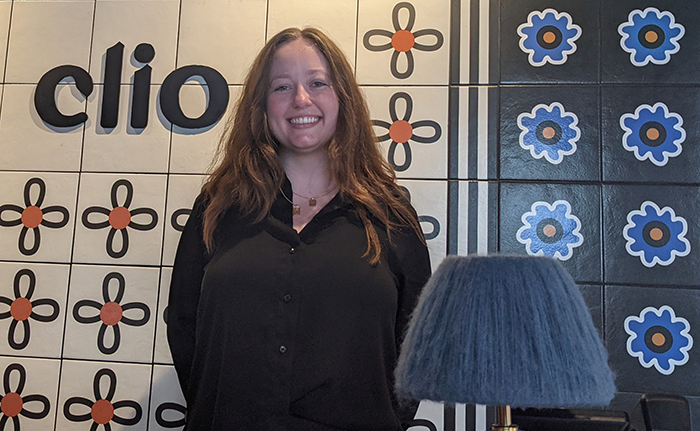
Lexi Christensen behind the host desk at Clio’s Restaurant
OmahaNebraska.com here with..
My name is Lexi Christensen, and I’m the General Manager of Clio in Omaha’s Old Market.
How long has Clio’s been open?
Clio opened on June 3rd just this last year. So just two months ago, we celebrated our birthday. So yeah, very fresh in the Old Market still.
And were you here when it opened?
Yeah, I was here June 3rd. But my time with Clio actually started on April 15th. That’s when our job fair started. We had a five-week hiring event where Monday through Friday 10:00 AM to 6:00 PM we were taking interviews, building our team both for the kitchen, but then for our front of house for our house servers and bartenders as well. So yeah, April 15th is when I started on the project.
Have you been in the Omaha area a long time?
Yeah, born and raised. So Omaha is in my blood, if you will.
So you have a really good feeling, especially for the Old Market area…
I think so. Yeah. My family is still based out west. I grew up off of 160th and Q and then I went to Creighton. I moved downtown when I was 18, and I’ve been in, like, the downtown, Midtown area ever since. Yeah. The Old Market’s definitely…as someone who’s from West Omaha, I didn’t appreciate it as much as I could have. But in my time at Creighton and then especially in the restaurant industry, I’ve definitely learned to truly love the space for what it is.
There’s so many amazing things about, you know, each neighborhood.
Yeah, 100%.
What did you do before you came to work for Clio?
Directly before Clio, I was the assistant general manager over at Plank, so Plank is within our parent company still, and I was the AGM [Assistant General Manager] over there for a year and seven months. And then before that I was a server at one of the steakhouses downtown, and then before that I was still in school. So I’m still relatively new in the restaurant industry, which is crazy to think about. I’m very lucky to have the support and the teachers that I’ve had in the past few years to get me to where I’m at right now.
I’ve been here a couple of times. The service has been amazing. The food has been great. You are doing so many things right.
Thank you. Yeah, it’s definitely been…as many things, it’s been a process. We’re still growing and learning every single day, but I’m very proud of the community we’ve formed within Clio, both with our kitchen team and then our front-of-house service team. Truly, just some of the most genuine and hard-working individuals I’ve had the pleasure of working with. And I think that’s what’s unique about Flagship, our company, too. We’ll talk a little bit more about that later.
We can talk about it now, if you’d like.
Cool, yeah. We’re part of Flagship Restaurant Group. Flagship started in 2002 when our four main owners kind of came together and started the first Blue Sushi. So Blue Sushi off of 144th and Maple is the OG restaurant in our company. And then we’ve expanded…now, I think Clio was restaurant number 40 if I remember correctly, so we have 40 different restaurants, between, like, eight or nine concepts in twelve or thirteen states. A lot of it is Midwest and Southwest focused, but we go a little bit east, and then I guess Denver is in us, too. But it’s mostly Midwest and Southwest, I would say.
So Flagship has Plank, Blue Sushi, Clio, and…
Yeah. And so in the Omaha area, Plank, Blue Sushi, Clio… we also have Memoir off of 10th and Harney. We have Blatt Beer and Table. So we have one downtown here and one out west—Roja out west—and then the Flagship Commons in the Westroads Mall, and then we have a few, like, really eclectic concepts in other places, right? So in Des Moines, we have this really cool kind of like island-tiki-bar-inspired place called Revival. So Revival is really cool. We have two bar-centric kind of concepts. One is called Ghost Donkey, so Ghost Donkey’s a Mezcal tequila bar.
I’ve heard about that.
Yeah, we’re actually gonna have one in Omaha at the end of September.
Ah, that’s why I’ve heard about it.
Yeah. And then also at the end of September, another concept, Champagne Lanes, or we kind of shorthand it to CPL. So Ghost Donkey and CPL are going to be here in Omaha in the next, like, month or month and a half. It’s going to come up really quickly. So those are really cool concepts. Champagne lanes is a concept where they do champagne on tap, so sparkling wine on tap with fried chicken bites, because champagne and fried chicken pair really well together.
I did not know that.
Yeah. So the champagne is, you know, nice and dry and it kind of like, makes your mouth kind of pucker a little bit. And then the greasy, kind of fatty, in the fried chicken complements it and balances out really well.
Okay.
So it’s just like a really fun pairing there, and then Champagne Lanes also has duck pin bowling. So mini-bowling; that’s where they get the “Lanes” part. And then we have this really cool concept in Phoenix and one in Texas called Palma. Again, kind of like island inspired, but they have a really cool menu there too. So yeah, they do. They, as in our owners and all of the minds that work together with this. They just do a really good job. The team that comes up with the menus for these concepts is pretty extensive, so it’s like, depending on the concept, it’s anywhere from four to like six or seven chefs that come together for these menu creations. And then our operations team, they’ll come together to kind of come up with the steps of service. So like how the store is run and operated, and that can be anywhere from like three to even like eight to ten people. You know, it’s a lot of really great people that are coming together to get these concepts going.
Sounds like a very collaborative experience, which is often, you know, richer in fruit than just one or two people together and then sounds like a lot of teamwork here on this side. You said you were trying to create a family within this.
Yeah, 100 percent.
How do you do that? It’s so hard for restaurants and places to get this kind of flow going that I see, and it feels like you’ve been here a while. I mean, you’re new and fresh, but the teamwork seems like it’s just been this way for years.
Yeah. Well, that’s a really big compliment. Thank you. That was definitely something that our management team strived for since day one. So even before our hiring event, I met with our head chef. His name is Donnie Topolsky. Donnie’s been with the company for going on, almost seven years now. For the first, like, six 6-1/2 years of his tenure, he was at the chef at Blatt West. So, Donnie and I had a brief meeting shortly after he got hired on to that position, and we are in this transitionary period, and in that meeting, Donnie and I came to the agreement that our goal is to make sure that our relationship between our front of house and our back of house and our relationship between all of these people are built on teamwork.
So when we were in the interviews, I think it was like the second or third question we asked every single candidate was “What’s your teamwork style?” And then we would follow it up with “What’s your relationship with front of house?” or “back of house?” So, that was definitely a precedent that we set really, really early on. And that was intentional because this is such a unique concept. It’s so beautiful. And you know, I’ve been very lucky. I’ve only ever worked with collaborative teams. I really like that my experience is like that, because that’s a little unique.
Not a lot of people come from restaurant backgrounds that are as collaborative as we sit here as my experience in the past is. So yeah, just setting that precedent literally since day one. And then I think it helps that it kind of trickles down, right, so our owners are all, like, very family-based people, like, that’s their priority, right? Making sure that our families are taken care of, ourselves are taken care of, and then we can take care of our job, right?
So, that’s something that is set from our owners, but then even specifically at our store level, all of us managers have weekly meetings. So, there’s three front house managers, myself, and then I have two AGM’s, and then we have our head chef and two sous chefs, so we all come together every Monday and kind of just talk about the restaurant. We talk about our goals. We talk about where we’re excelling, where we have room for improvement, and I think the team sees that and it definitely just helps with that positive energy that we have going on here.
Well, this is very different than other restaurants downtown and also other restaurants in the city. What’s sort of the inspiration for that? And could you tell people what makes Clio so special?
Yeah. So, the creative process of Clio went through a really interesting evolution. My understanding is that when they first proposed this idea of a wine-bar-themed restaurant, because that’s kind of what the foundation was, right? We have this awesome company sommelier who’s actually one of our managers here too. Her name is Shannon Salsbury. She’s just a genius, and she chooses really lovely wines. And she’s very, very smart about the wines that she’s choosing. So yeah, Shannon, and you know, Shannon and team kind of came together and said, “Well, how can we do a wine bar concept?” So, it started out with maybe just like an Italian influence and doing like an antipasti and charcuterie board, maybe some flatbreads. But then as they were traveling and doing research for what we can do with this space, they kind of came upon this Mediterranean restaurant idea and just ran with it. So, then they visited some really cool restaurants in Chicago and Austin, TX. And that’s where they got the big inspiration for Mediterranean. But the name Clio we borrow from Greek mythology. The Greeks have eight muses, right? So Clio is the Greek muse of history. And so we kind of took that as our opportunity to share the history of our families. Right? So when you go and look at, you know, all of the people that in that are in our company, like, we have so many influenced from the Mediterranean. We have folks that have family from Lebanon, from France, from Italy, some Greeks in there, too, right? So, the Mediterranean was our inspiration. And then where the flavors came from, kind of, is just what spoke to us from our families’ history.
It’s interesting because you look at the dishes and you’ll have harissa, which is from my experience just from Tunisia, maybe from other places, and then you, but you have somehow amazingly paired it with things you wouldn’t think…and then the harissa is not so hot. So I don’t know how you come up with all those flavors. It’s really interesting.
I’m never going to claim that I’m a culinary genius. You definitely don’t want me in the kitchen—I can tell you that much—but I can tell you that the way that the flavors complement each other is kind of where we get a lot of those expressions from. So yeah, 100 percent harissa is typically a little bit on the spicier side, but the way that we express ours with the trout fillet for instance, right? We have our harissa trout. Or we put harissa in our tomato sauces. And so the fattiness from the trout or the acidity from the tomato sauce does a really great job of cutting the spiciness and balancing out that dish really well. And that’s a huge theme across our whole menu. I think when you take a look at the menu, you may notice a few flavors and words kind of repeat themselves, but although they repeat themselves, they are shown in such different and unique ways.
That’s what I thought was also interesting, because I saw it’s like, well, this looks like it’s going to be the same as this, and it was not.
Right, yeah. My favorite example of that is in our mezze section. So mezze is kind of like a Greek word where it’s another word for antipasti, right? So small plate that can be coursed out. And we have our Turkish beef dumplings…
They’re wonderful.
They’re so good, and then we have our stuffed dates, and they both have this really beautiful tomato sauce. They have slightly different spices in them, but I think they taste pretty similar, but when they’re paired with the other items in those dishes, they’re such a different experience.
White bowl with square Turkish beef dumplings with harissa-tomato sauce dotted with sour cream and cilantro
Yes. I happened to try those, too.
Yes. So yeah, you can definitely speak on the Turkish beef dumplings, which I should also side note. Turkish dumplings are a little bit different than your traditional kind of like Eastern Asian dumplings, right? They’re folded very beautifully and intricately, but they look a little more similar to like a ravioli. So that’s how we compare it. It’s a little bit similar to, like, a ravioli, rather than, like, a Chinese dumpling, maybe. So yeah, like, the Turkish beef dumplings have this really beautiful pasta-like dough. And then it’s got that really nice beef center and this beautiful tomato sauce.
Merguez sausage stuffed dates swimming in tomato sauce
And then the stuffed dates have those dates, and again another beef center but wrapped in prosciutto. And they’re just so different and so unique, but still complement each other really, really well, so yeah, I love those two dishes.
I’m pretty sure you can’t pick one, but what are some of your favorite dishes or ones you would love people to try?
Yeah. So I was actually just talking to a table about this yesterday. I feel like when guests come here, they almost have to have all four spreads. So we have four house-made spreads that are beautiful. There’s hummus, there’s baba ghanoush, there’s labneh, and there’s muhammara. And you can get each of them individually or you can get a half-size portion of all four on one plate for $20. It comes with three pitas, and it is such a great way to start out the experience because it’s so many beautiful colors on the plate. The plate itself is really pretty, but then all of the flavors are so unique, but again, complement each other so well. I love to do all four and then get a little bit of spread on one bite and do all of it together because you get the smokiness from the muhammara, you get the creaminess from the labneh, you get just like that classic garlic hummus in there. And then the baba ghanoush, which is roasted and pureed eggplant, just like a very creamy texture. Super good. So yeah, that’s one of my top recommendations. I also think it’s a shame if you don’t get any of those kebab options. But you know, choose whichever kebab you like. There really is no wrong choice. They’ve got that salmon kebab and it has this za’atar seasoning on it. Za’atar is a very common Mediterranean seasoning. There’s thyme, there’s salt, there’s pepper. There’s one or two spices in there that I can’t remember off the top of my head.
Sumac?
Yeah, sumac’s in there, 100 percent. So the salmon kebab is delicious. We also have a chicken kebab, so we use thigh meat for our chicken. You’ll notice that. The thigh meat relative to breast meat is a little bit juicier. There is a little bit higher fat percentage, but it really does help with the tenderness of the dish.
There’s certain dishes where that is really the right choice.
100 percent, yeah. And then that final kebab option is a beef kefta kebab. So kefta is…you know, initially when they were going through the process, they were wondering if we could do like a beef and lamb mixture because I think that’s what traditional kefta is, if I remember correctly. But this one is mostly just a beef. So we grind beef and we put it in these little rectangular molds and then stick them on the skewer. And we grill them and then we put them in the oven, and it’s really beautiful. So yeah, any of those kebab options are great.
All of those kebabs come on a bed of saffron rice that we make fresh, I think twice a day because of how much we’re going through. And then there’s a cucumber tomato salad. We’ve got pickled sumac onions on there. We’ve got Juanita peppers, which are kind of like banana peppers. They’re a little bit on the spicier side. And then we also have a little dollop of hummus on there as well.
There’s a very large selection of wine, as you were mentioning before, and some cocktails. Could you tell us a little bit about that?
Absolutely. So like I said, Shannon is just a genius when it comes to wine programming. And I say that for a few different reasons. For starters, Shannon is very intentional with the wineries that she sources from. For Clio specifically, we don’t have any domestic wine in-house. All of our wine comes from the Mediterranean. We have bottles from Macedonia, Armenia, Italy, France, Turkey. We have some really, really unique flavors in there, which is really cool.
She also does a really great job with sourcing from wineries that are very fair trade. So whether they’re family owned and only have a very small business or they’re just like ethically and responsibly running their business. Making sure that all of the grapes that we have are hand harvested or have best practices. We like to source a lot of green wines too, so wines that don’t overuse water or pesticides, chemicals, any of that stuff.
Our cocktail list is made by Dustin Fox. He’s the bar program manager for the company, so all of our cocktails are from Dustin. And Dustin, again, is just a genius in his craft, where he does a really great job of getting classic cocktails but then putting a unique twist on them so that it’s unique to whatever concept that we’re catering to. We have a pretty small cocktail list. We’ve got three spritzers to choose from, so we have a very classic aperitiva spritz, kind of like an aperol spritz. We have a Hugo spritz, so it’s got that elderflower liqueur and mints in there, and then we have a limoncello spritz that’s actually topped off with a little bit of rosé rather than traditional prosecco. We still have really nice weather, so they’re great for patio. And then our cocktail list is six cocktails, all wonderfully paired together, but again, very similar to our food menu, so unique in their own way. So I think if a guest starts out with, you know, a spritz and then moves to a cocktail and then moves to a glass of wine, there’s truly no bad pairing in any of that, especially when you take into consideration all of the great food that’s going to come along with it as well. And then we have a really cool list of non-alcoholic cocktails too, so we’ve got three NA [non-alcholic] beverages. And then we have a few bottled and canned beers, and then we’ve got a couple of water options as well.
Any question I haven’t asked you that you would like me to ask?
Hmm. Well, I do like to point out that there are a few local places we partner with, because I love supporting local and I love being in a company that also supports local. So Miller Dohrmann Farm, that’s where we get our flour, our whole wheat grain, for all of the pita that we make. We also buy eggplant from them. So we have a few eggplant in those dishes and we’re moving through quite a bit of it, which is cool. So we support Miller Dohrmann and we’ve had a chance to host them in here and I’ve met them a couple of times. They are just such an awesome couple. They have such an awesome farm. They do a really good job over there.
We also work with Maven Bar, so Maven Social has a few bars in Omaha, but specifically in the Old Market we’ve got Berry and Rye down the street and then Laka Lono is actually our basement, so a tiki bar is owned by Maven right below us, and we source our perfect ice from them. So they like carve this ice, and it looks really perfectly clear. It’s really cool. It goes in a few of our cocktails. And then we also partner with Hardy Coffee. They give us our coffee beans for… we have an espresso machine back there, so we can make lattes and cappuccinos. But then we also make a cold brew concentrate, and that cold brew concentrate goes in our espresso martini.
Chocolate creme brulée with five artful dollops of cinnamon creme with mint leaf flags surrounding three mandarin orange slices in white bowl on marble table
Sounds good. I think it’s also in the creme brulee, no?
So the creme brulée has Turkish coffee in it. Those aren’t the beans that we source from Hardy, but the creme brulée does pair really well with the espresso martini. So I would say that’s one of my favorite pairings. If I’m looking for something like a little sweet treat, an espresso martini and chocolate creme brulée would be like my go-to pairing.
I guess another thing that’s fun to point out is the pita process is really intense.
I was guessing you made them here because it was very different and very wonderful.
We do. We make them fresh every single day. Yeah. So the pita that we have, the guests will come to find out that have a little bit of a nice crisp on the outside, but mostly they’re really soft and fluffy, but they’re not chewy by any means. Like they don’t overwhelm your palate. They don’t overwhelm the flavors that you’re pairing it with.
And lovely pockets with those too. I haven’t seen pita with pockets in a long time, and that’s what I’m used to.
Yeah. So we have this really amazing pizza oven back there that we actually got custom made for our store. I think we had it travel all the way from the East Coast somewhere, right? So yeah, we brought it in quite the distance. And that pizza oven just does wonders. It’s mostly an oak wood, if I remember correctly. But it’s a wood fire, a little gas-assisted as well. But it has that very nice, smoky flavor without overbearing anything. And so, yeah, our pita process starts with our starter, right? So it’s a sourdough pita, and so we have this starter dough that we feed every day, and from that starter we portion out the dough, and you know, I see the prep cooks back there rolling it out and… Day of production, we have one of our cooks come in at 6:00 in the morning, and he’ll start just like pumping out pita. He’ll, like, roll them out on the trays and then get the trays and start putting them in the oven. And then we keep them stored very, you know, organized. And then when it’s time to have service and the guests order them, we’ll put them in the oven again so that when the guests order it the first time it doesn’t take ten minutes to make a pita. So yeah, it’s a very intense process, but we do a really good job, I think.
OmahaNebraska.com Interview with Isaiah Sheese, owner and founder of Archetype Coffee
Isiah Sheese, preparing cappuccino at Archetype Coffee in Millwork Commons
You’ve won a lot of awards! Your coffee is fantastic! Tell me a little bit about your journey to this point and then about all the cool things…
Where am I supposed to start?
I left it really open, so wherever you want.
I started drinking coffee as a little kid, maybe five and six. I don’t know. That’s where it all began, probably. I’ve been in the industry… I think this year is probably my 20th or 21st year. Just kind of started…had a friend in Tulsa that opened this shop, and she asked if I’d help. So it’s kind of like the old-school Mom-and-Pop shop where you have blenders and 30 syrups, and, you know, change the art out once a month. I just kind of started out like that. Then when I was in Tulsa, there was a roastery there that was doing really good things. I had a lot of interest in diving into more serious coffee, so I ended up working for that company, which is called Double Shot Coffee Company. Their, like, claim to fame was they were sued by Starbucks and won…
Wow.
…because of the name. And so that was kind of like their claim to fame. But anyways, after working at the roastery, he eventually took me on a trip to Colombia and then it was just kind of like a slippery slope into falling in love with, like, the whole coffee industry. From there it was… I did coffee in Tulsa for probably, like, seven, eight years, and then I was in Milwaukee working at Anodyne Coffee Roasters for two years. I was their quality control cupper. So basically, like, everything we roasted, everything that went out, I tasted everything. So lots of slurping. And then their wholesale trainer. And then when we were getting ready to move from Milwaukee to Omaha it was just kind of like that pivotal point of “What am I going to do?” You know, I’m getting a little bit older. And so it’s like either chase your dreams and take the jump in opening a business, or, you know, change careers.
So the last, like, six months that I was in Milwaukee, I took a small business plan writing course. And so at the end of your six months, you come out with, like, a business plan. So when I moved to Omaha, I just kind of hit the ground running. Yeah. So we’ve been here eleven years, and Archetype just turned ten in May.
How did you decide to make the jump? That’s a hard part for a lot of entrepreneurs.
It was just like—how old am I now? I turned 43. When I got here, I was, like, 30. It was just kind of one of those, like, either chase your dream or go do something else. You know. And so I think I’m still young and dumb enough to, like… I also don’t have children, so, you know, like, the risk—yes, the risk was big, but it also wasn’t gonna affect anyone except for myself. And my wife has her own career separate from mine, so it wasn’t going to really affect her. So it was just kind of like do it, you know, give it a chance, and if it works, awesome. If it doesn’t, well, at least you tried it. So I think for me it was just like… I think the potential benefits far outweighed the risk for me. I think so many people have these dreams and they never give it a shot, you know? And so like I said, I think I’m dumb enough just to step out on the water and see if I walk or if I sink.
It takes a lot of courage to make that jump.
Yeah, absolutely. But I don’t think you want to live life with “what ifs.” You know what I mean? Like, you don’t want to be on your deathbed thinking about “What if I did that?” or “What if I would have done that?”
I know a lot of people like that and I’m always trying to encourage them because the older people I know with the “what ifs” are miserable.
They’re miserable.
And even if you tried it and you found out it wasn’t what you thought it would be…You tried it, right?
Yeah. That’s a good story. Yeah, it’s a great memory.
Some people do something that they wanted to do and they find out, whoa, there’s all these other things I never knew about. I don’t like this.
Yeah.
But they did it, so there’s no regret.
Yeah, yeah, absolutely. So I mean, I was kind of the same deal. I definitely did not want to have that regret of, like… Man, you know, what if I never would have done that, so…
You have huge experience in the coffee industry.
Yeah.
What are the things to you that make that perfect cup or that perfect bean?
Oh. That’s a deep dive. Coffee is one of those things. It’s like it’s a recipe. So you have to have good water, you need to have, obviously, good coffee. So getting good coffee is making sure you’re sourcing quality green, then you’re roasting it well, then you have to have a good grinder. And then it’s understanding what each variable does, so your brew ratio, your temperature, your grind size, the time… so, like, the water contact time and then agitation so you just kind of have to master all of those things. Put it together and you have a great cup every time.
That sounds like a good equation.
Yeah.
What do you like about Omaha and why Omaha?
Well, why Omaha was because my wife got a job here, so that’s how we ended up in Omaha. But I’d say Omaha is just one of those Midwestern cities that has a great community. You know, I’ve always grown up in the Midwest, and so I definitely have… there’s a little bit of the charm to the Midwest that the coasts don’t have. I think it’s like if you’re in the Midwest, you’re choosing to be there. Like, the coasts are… You know, you have New York, L.A., San Francisco, Portland, Oregon, and then, like, the fly-over country. But it’s a great community of people, very passionate and hard workers. And so I think probably what I love about Omaha the most is just the people. Yeah.
I fell in love with it, too, for the people. The joke is it certainly wasn’t the weather.
No. Yeah. I mean, I think my two biggest beefs have always been the winters are brutal, and if you’re going to have that brutal of the winter, your summer should be pretty nice, and we have just as hot of summer as everyone else.
We used to joke that there’s two seasons: too hot and too cold.
It’s true. And then there is just like the airport is… flying in and out of Omaha is tricky, but yeah.
What kind of awards and things have you done? I know that list is pretty long.
Yeah. So I’m the 2023 U.S. Barista Champion [United States Coffee Championships], and then I ended up finishing fourth at Worlds [World of Coffee] in Athens, so I’ve competed for nine years, and out of the nine years I’ve placed top six in every qualifier, with the exception of one, and then before winning the U.S. Barista Championship, I’d come in fifth in the U.S., I’d come in eighth in the U.S., I’d come in 12th in the U.S. So, yeah… so lots of grinding it out, figuring out the competition, and understanding the game.
I took two years off to judge as well. So in 2021 there was a lottery to compete because of COVID still, and so I wasn’t able to compete. But since I’d judged previously, I was able to judge, so I went to Boston for the finals and I judged quarterfinals and semifinals just to gain more experience and understanding of… you know, constantly learning the competition and figuring it out, which ultimately ended up helping me win.
What’s your favorite coffee? If you could pick one or a couple that you have.
Favorite coffee? I don’t know. The way that we buy coffee is we buy it seasonally. Throughout the year you get different coffees, so usually it’s just like whatever’s fresh, whatever’s new. It’s kind of like I get tired of drinking the same things over and over again, and the same profile. The romance of coffee is each year is going to be different, even if you’re buying from the same farm, depending on how much rain they have and depending on… yeah, the drying. Like, all those things affect it. And so for me, like, we have… our fresh crop Ethiopian coffees just arrived. So after I leave here, I’ll go cup those and see how they taste, and if they’re great then we’ll bring them in. We also have fresh crop Costa Rica coming in and fresh crop Mexico.
I don’t know. I enjoy drinking a wide variety of different origins, but I would say during competition season, drinking competition coffee, there’s nothing like it. They’re very rare coffees, they’re usually really expensive and we usually get a very small amount of them. And so anytime I get a chance to drink those coffees, it’s otherworldly for sure.
What other locations do you have and where? Also, are you in other places?
In Omaha, we have three locations. We’ve got the Blackstone location at 40th and Farnam. That was our first, and that one turned 10 in May. Our second location where we now have our roastery training lab is at 13th and William, basically. It’s catty-corner from where the Bohemian Cafe used to be. So that’s where our training lab, roastery, and cafe is, and that one turns 6 in August, so that one turns 6 next month, which is crazy to think. And then our third one is the Millwork location, and that one turns 3 in October. And then we have others that serve our coffee, and Via Farina, Dolomiti and we have wholesale customers, like, outside of Omaha. On our website, we sell all over the world. I mean, we’ve shipped it everywhere. We have people that have subscriptions, and they get coffee once a month from us or twice a month. Yeah, all kinds of fun stuff.
What’s new on the horizon?
We’re getting ready to launch our new website, which is going to be incredible. When you open a business… I opened Archetype because I wanted to make coffee and be a part of the community and those things. And then all of a sudden you have to have a brand, and you have to start making T-shirts and hats, and now you need to have a website, and now you need to have Instagram and all the things. And so I think… being very naïve, I wasn’t thinking about those things. When we launched our website, it’s a very modest website. It doesn’t really represent who we are as a coffee company. But when your passion is focusing on coffee and people, you kind of push those other things to the side. And so we haven’t focused on that a long time, but now that we have kind of like a global recognition, we need the website to match our branding. So we’ve been working really hard on that, trying to get it up and going.
That’s hard because you can’t wear all your hats forever.
That’s the other thing I’d say about being a small business owner is like, when do you pass off a hat? Because if you’re not doing it, you’re paying someone to do it until you get to a certain growth point. It’s like you need to keep doing all the things. And so I think the other part is trying to figure out the balance. But yeah, so the website will hopefully be launching in August is our goal. So that’s kind of like the next big thing on the horizon, and then we’d like to turn the training lab into kind of like a tasting lab where we could do events, whether it’s weekly or monthly, whether we’re doing trainings or whether we’re showcasing a lot of our competition coffees or the stuff that we end up doing on a competition stage that really isn’t conducive in a cafe setting. We’ll try to offer more of those opportunities for the public to buy tickets and come and sit through a presentation. And try to expose Omaha to some of those crazier coffees that we can’t just put on the shelf and try to sell.
And you’ve been a great sponsor for One Million Cups with the coffee.
Oh, yeah, yeah. One Million Cups is a super cool event. Once again, they’re helping… I think giving people the impetus and opportunity to network with other people that have taken the risk of entrepreneurship, and so I think it’s a cool organization, just to see how they are trying to continue to foster that and pass it towards the younger generation to do it, take a risk.
What’s the worst that can happen? Nothing too terrible, right? So yeah, One Million Cups has done a great job in advocating for entrepreneurship and helping people network and make connections. I think that’s a huge thing, and it’s also a great support group.
Entrepreneurship can be a lonely road sometimes, so it’s nice if you have those people that have walked down that same journey and risk, and go to share those war stories and hopefully encourage each other. And yeah, it’s a great organization.
What are your next plans?
This next year, I’m taking some time to focus on competition. The goal is to win in the U.S. again and then give World’s another shot. Usually you don’t win the World in the first year. It would be interesting to see the statistics and find out if anyone has ever won World the first year. I think there might only be a couple. It usually takes a couple of times. My goal is to kind of treat this competition season almost more like a job. So I’ll be stepping back from some of my leadership at Archetype, not doing all the day-to-day or working behind the machine like I do and give me the opportunity to focus on competition. I’ll leave for Colombia on Sunday to work with the farmer that I competed with and came in fourth with at World’s.
Tell me a little bit about the competitive organization.
It’s all under the SCA, which is the Specialty Coffee Association. In the recent championship, whoever wins each country represents their country at World’s. And World’s changes locations every year. So I was just in South Korea in April, helping last year’s U.S. champion, and so this upcoming World in 2025 will be in Milan. But yeah, you have 15 minutes. You’re serving 4 judges. You have two technical judges and a head judge. You serve them each a single espresso, a single milk drink, and then you create a signature beverage and then they judge you on coffee knowledge, bar management, taste, accuracy, waste, and you’re serving these 12 drinks all while giving basically like a coffee Ted Talk. Yeah. So it’s kind of a tricky competition. It’s multifaceted, being able to execute the drinks to perfection while also eloquently coming up with the talk, connecting the whole story from start to finish.
It certainly sounds tough.
It’s tricky. Yeah, like I said, it took me 9 years to win the U.S. The hardest countries to win are the United States, Australia, Canada, Japan, China. Those are probably the toughest countries to win. And so yeah, the competition is really high, and yeah, it’s a very tricky competition.
Thank you very much.
Oat milk cappuccino with beautiful heart flower foam design in pink cup with blue saucer on wood table
Isiah made the coffee pictured above. It was the best cappuccino I have ever had!
Archetype Coffee has three great locations to serve you that perfect cup of coffee!
Archetype Coffee -The Blackstone District
3926 Farnam St.
Omaha, NE 68131
Archetype Coffee-Little Bohemia
1419 S. 13th St.
Omaha, NE 68108
Archetype Coffee-Ashton at Millwork Commons
1229 Millwork Ave, Suite 101
Omaha, NE 68102
Please, tell us about the NCAA and ways that people aren’t thinking of it, because there’s so much hard work that goes on there.
Yeah. I think one of the comments I mentioned during the press conference was about the excitement that these young men will have. It’ll be reminiscent of when they played Little League, right? They’re still playing for their institutions, for their teammates, and that’s still important to them, so we just want to make sure that that’s not lost in some of the other news media that’s going on around name, image, and likeness to (?) as employees. What you’ll see over the next two weeks is young men playing for the love of the game, and that’s what we’re excited about.
I think the balance of all those things is rather difficult to achieve, so…
Yeah, it is. I think certainly there’ll be thousands of fans here watching and cheering for them, and should they reap some benefits from that? And I would say absolutely. And I think that’s the model that we’re moving to.
Tell us a little bit about your background and how you came into your position.
Well, I’ve been at the National Office for 15 years now, all in Championships. Prior to that, I spent some time in professional sport and amateur athletics and high school association and the Olympic movement, so all in sport for over 25 years. But just working through various groups and departments and connections kind of afforded me an opportunity to join the NCAA 15 years ago.
What baseball memories would you like to share with us?
Oh yeah, so I was a baseball player growing up and loved the sport. It was my first love. I was a catcher and outfielder…really enjoyed the game. I really like the…it’s a team sport, but there’s an individual component. When you’re in the batter’s box trying to figure that out or a ball’s hit to you and how you have to make a play on that, and other people are relying on you. So I remember those lessons learned playing Little League, high school, collegiate league to understand and have kind of a connection with the young men who are playing now. So, but yeah, I could never have played at the level that these guys are playing at, so I’m a huge fan. I just really like to watch and enjoy their talent and their performance.
I think that’s really key and important, and I’m glad that you’re emphasizing the love of the sport and all of that. It’s hard to have that balance between running it and preserving it.
I really enjoy seeing you year after year and all your presentations, and I’m so happy that this is finally the year I was able to interview you. So thank you.
No, no. My pleasure, and thank you for your coverage and your support, for sure.
A food tasting event was held after the Pre-Game Press Conference on 12 June.
Alec Woockman, the Executive Sous Chef at Levy Restaurants, presented his and his teams tasty offerings for the College World Series.
Alec Woockman with CWS NCAA sign in background speaking at the CWS Food Tasting
Transcript of Event by OmahaNebraska.com
Alec Woockman: I’m Chef Alec Woockman. I’m the Executive Sous Chef of the buildings here. I’ll walk you guys through everything we do around here.
So, first, on my right here, we have our Ancho Chicken Quesadilla. This is our house-seasoned grilled chicken, cheddar jack cheese blend, pickled jalapenos, cilantro and a chipotle ranch dipping sauce.
Next is our first hot dog. This is our biggest hot dog. We have a Footlong Frank and Bean Dog. So, this is a 100% beef, half-pound Omaha Steaks hot dog. A combination with hot dogs and campfire baked beans, so we’ve loaded it up with campfire baked beans, bacon bits, diced red onions and some mustard BBQ sauce.
Our next hot dog is our Dinger Dog. Dinger Dog is—once again all of our hot dogs are 100% beef Omaha Steaks hot dogs. This has avocado on it. It has lettuce, tomato, red onions, bacon bits and roasted poblano crema.
Next up, we’re going to talk about our gyros. So, something new this year, we have a portable gyro cart, which we haven’t done in the ballpark yet and we’ll be offering two different types of gyros. So, we’ll have a traditional Lamb Gyro and a house-made Chicken Shawarma Gyro. So, we’ll have both to try. It’s naan bread, house made chicken shawarma, lettuce, tomato, onion. We’ve got cheese and then of course tzatziki sauce on it.
We have one loaded fry this year. Our loaded fry is the Moon-Shot Fries. So, it is crinkle-cut fries, jalapenos, cheddar and jack cheese sauce, sliced kielbasa sausage, bacon and onion jam, which we liked it so much we put that bacon jam on a few items today we’ll talk about, and then some fresh diced jalapenos.
So, next we have our first burger of the day. Our first burger is the Walk-Off Burger. It is a breakfast-themed burger. I think breakfast food, it’s good. Breakfast, lunch, dinner. We don’t have to confine it to just in the morning, but that being said, double headers, we’ll have folks walking around here at 11:00 a.m., so maybe they’ll need something to eat yet. So, we have an Omaha Steaks All Beef Patty. It is nestled between two pieces of grilled French toast. We have pepper jack cheese and we have bacon, onion, and maple and bourbon jam. And then to round it all out, give a little acidity, we have a cranberry compote on there.
So, next we have our loaded brat option. So, this is our Mediterranean Loaded Bratwurst. So, basically, we take the same toppings we have on our gyros and put it on a brat. So, shredded lettuce, tomato, onion, feta, tzatziki. It’s a fresh take on a brat, which you can find, obviously, in any stadium.
So, next we’re going to talk about our shareable option. We always like every season to come up with something that you could buy and share with your kids or share with a couple of friends. So, this is our Stealing Home Colossal Pretzel. So, it’s this giant soft pretzel. There’s three different types of meat piled everywhere, so we have pork carnitas, chicken tinga, ground beef taco, our jack and jalapeno cheese sauce, and our roasted poblano crema.
We’ll move on over here to a few sandwiches here.
So, our last burger we’re going to talk about today is our Big Kahuna Burger. So, this is a Hawaiian-themed, you know, kind of tropical Asian take on a burger. So, we have that same Omaha Steaks burger patty, we have pineapple chutney, teriyaki aioli, cheddar cheese, and bacon.
Two different fried sandwiches here. First one we’re going to talk about is the Fried Chicken Club. This is more of a classic flavor combination, but just a new take on our fried chicken sandwich here in the stadium. So, we have lettuce, tomato, a heavily dilled ranch aioli, bacon, cheddar cheese on a brioche bun.
And the last sandwich, maybe my favorite sandwich among our concession sandwiches, is our Triple Play Pork Sandwich. This is a fried pork cutlet topped with two other types of pork called the triple play. So, there is smoked pork, and then that same bacon jam we’ve been talking about and some whole-grain mustard aioli.
And last but not least for our concessions’ items, we have our Everything Toasted Turkey Bagel sandwich, another item I think you know for our double headers, we have people walking around at 11:00 a.m. for that breakfast option at any time of the day. So, it is an everything bagel that is toasted, schmeared with chive cream cheese, lettuce, tomato, pickle, and a thick stack of smoked turkey breast. That kind of concludes our concessions food.
We have a couple of premium items too that will be available only in the suites, but I just wanted to touch on a couple of those.
So, we have our summertime fresh mozzarella, cucumber, tomato salad, balsamic glaze, basil. It’s just a nice new fresh salad for our suites. And a new salsa offering we’ll have upstairs is our roasted corn and black beans, salsa, house-fried chips.
And that concludes the food today. So, it’s a lot of concession items and premium things. I think we have a wide selection for everybody out there. So, we’re excited to be able to have all these offerings and hopefully give folks what they want. So, that’s all I have today.
Here is some of the food that is prepared for the fans!
Stealing Home Colossal Pretzel
This massive pretzel is sure to steal home and so big it might feed your team of four or more. With a hefty amount of taco beef, pork carnitas and chicken tinga for the base and three more tasting toppings (jalapeno jack cheese sauce, roasted poblano crema, pico de gallo) it is sure to be a crowd please and a win for team Levy and Alec Woockman.
The Big Kahuna Burger
This big boss of a burger is made with an Omaha Steak burger and is topped with bacon, cheddar cheese, crisp shreds of lettuce, and tomato. It also has pineapple chutney, teriyaki aioli delivering big flavor of the Pacific.
Walk-Off Burger(Left) and Mediterranean Loaded Bratwurst (Right)
This walk-off burger was my favorite. A hefty Omaha Steaks burger with a surprise. Instead of a bun, there are two slices of french toast! No need to add ketchup or mustard, It’s perfectly balanced by the maple-bourbon bacon jam and cranberry compote. Definitely a walk-off for a burger. It’s also so hearty that you may also want to … walk it off.
Grilled Chicken Shawarma Gyro
Grilled chicken nestled in a warm naan, covered with crisp shreds of lettuce, tomatoes and onions. Add feta cheese and tzatziki sauce and you have another of the ethnic inspired dishes for this year.
Ancho Chicken Quesadilla
This was another surprise for me. While I enjoy quesadillas, a lot of them taste the same from place to place. Not this one! It’s the wonderful cheddar-jack cheese blend and chipotle ranch dipping sauce that give this a special depth of flavor that goes so well with the ancho chicken.
Fire Roasted Black Bean & Corn Salsa with House Fried Chips
This was another surprise winner for me. It had an unexpected depth of flavor that with a complexity worthy of an entree.
Footlong Frank and Bean Dog
Franks and beans-always a good idea but you’ve not had them like this before! This footlong hot dog is all beef and weighs in at half a pound. It is covered by crumbled bacon and campfire baked beans. Sounds great, right, but what’s different? It’s the sweet, but not too sweet, baked beans that is different. Not sure how they got so much flavor in the beans and how it’s delightfully a bit sticky, so grab some extra napkins and take this dog for a walk to your seat!
Everything Toasted Turkey Bagel
You guessed it from the name. It’s an everything toasted bagel with layers smoked turkey. What you haven’t guessed is that it has a hefty schmear of an amazing chive cream cheese that brings this all together with a dill pickle, lettuce, tomato, and red onions transporting it from breakfast to lunch.
Summertime Fresh Mozzarella Tomato, and Cucumber Salad
This one was light and refreshing. The balls of mozzerella were light and fresh. The cucumbers and tomatoes were good sized and very fresh also. The dressing was alsp light and tied the ingredients together well.
Dinger Dog
Amazing cremas on this one make it a dinger. We have a herbaceous and satifying guacamole crema and a delightful poblano crema (my favorite new condiment this year). Next up are bacon crumbles and red onions to make this extra tasty and give some crunch. Now we must not forget the star of the bun-an Omaha Steaks all-beef hot dog!
Crispy Chicken Club
This was another surprise for me. You are thinking tasty, right, but we’ve eaten these before. Not so! This is the best crispy chicken club I have ever had. The breading was perfectly done giving food credit where food credit should be done-to the chicken! The chicken was delicious and complemented by with a dilly-ranch aioli. Add crispy thinly sliced bacon, cheddar cheese,lettuce and tomatoes for the perfect chicken club. This one is the standard to judge the others and if it were a contestant in the Chicken Sandwich Wars, it would win.
Triple Play Pork Sandwich
The triple for this tasty sandwich is pork cutlet, pulled pork and bacon-bacon jam that is sure to win. Add a grainy mustard and let the flavors play across your home plate, I mean palate.
Moon-Shot Friesa
This one was my friend’s favorite. For him, it was the creamy jack cheese sauce that put this shot of crinkle-cut fries over the moon. Add the sausage, jalapenos and of course some bacon jam and your aiming at the stars, for sure.
2024
Please check out our posts on the College World Series for this year, so far, and share!