Omaha Interview: Terry D. Sanders, CEO and publisher of The Omaha Star

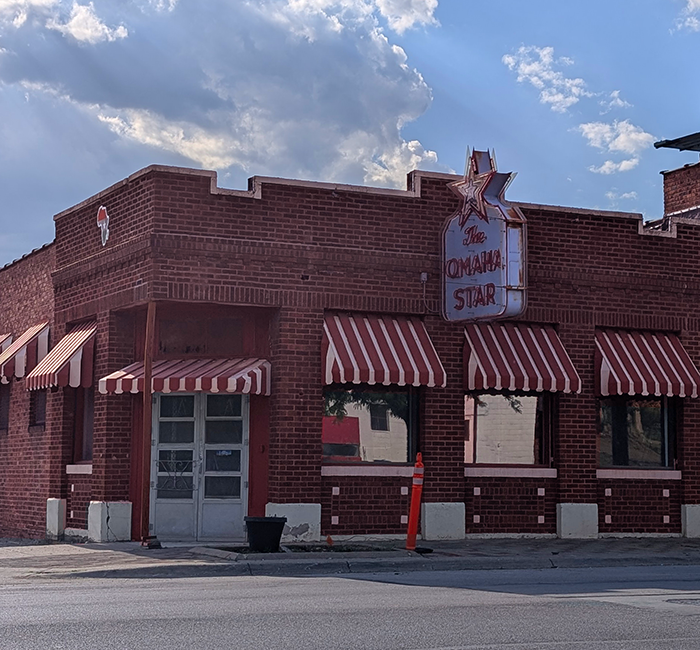
The Omaha Star building

OmahaNebraska.com here with…

Terry D. Sanders, CEO and publisher of The Omaha Star newspaper.

Please tell us a little bit about what you did before and how you came into the position with the paper.

I have been a serial entrepreneur, and I was previously the site manager for the Fair Deal Village Marketplace. I am on the board and currently the executive director of the Mildred D. Brown Memorial Study Center, which at the time owned the paper. In 2020, the board decided to change leadership of the paper, and because I had journalism experience, they recommended me. I accepted as an interim publisher, and In February of 2020 I became the interim publisher. At that time, I was working a full-time job elsewhere. I became publisher in October of 2020. Of course, that is when the pandemic took over, so it was a challenge. But I met the challenge, and we’ve never missed the publication date since the paper’s inception on July 9, 1938.

Wow, that’s impressive. How did you manage and do things differently or pivot during the pandemic?

Well, most of our advertising came from stage productions and the entertainment industry. I had to beef up our stories, get more content, and work from a remote office initially while getting more content. The former paper’s content was like “Family of the Week” and community news. I would do Family of the Week, but I would stand across the street and take their pictures on the front porch and do some things a little bit differently so that there was no physical contact.

It’s been a changing world in many respects, especially in the digital age here. How have you and the Star adapted to that?

Well, we still publish a physical newspaper weekly, every Friday, and we have a digital subscription that people can obtain so they have choices. And we are very present on social media: Facebook, Instagram, TikTok, and LinkedIn. We have tried to keep up with the times while still maintaining our original format of newspaper.

What originally drew you towards journalism and community leadership?

I was a journalism student at Creighton University, and I graduated in 1978. While I did not pursue journalism immediately after graduating from Creighton, I still did things PR wise for my business as well as other entities I was involved in. So I’ve always been in it, just not the written end like I am now.

What has it been like leading such a historic and respected paper?

It’s been wonderful. I am originally from Omaha, so I was familiar with The Omaha Star, but I did not know the founder personally. I was aware of her in the community and the impact that she had, and I feel as though my job is to carry on that legacy.

What role do you feel The Omaha Star has played in preserving community history, culture, and strengthening and connecting the community?

The Omaha Star, as I said, has been around since 1938 and we have archives dating back to the 1940s. So we have been part of preserving the history of the community, and we continue to do that and to cover stories that are positive in concept because we are the “good news” newspaper and always have been since the inception of the paper. I feel that we contribute culturally to the good news, and we spotlight and feature people throughout the community, not just the North Omaha community but the Omaha community as a whole, and give people hope.

What are some of the things that people should check out that they may not know about and maybe some that they should already know about?

Well, they should certainly check out our paper. As I said, we publish weekly. Our subscription rates are $50 for a whole year.  [https://www.omahastarnewspaper.com/subscribe] I always say you can’t take a carload of kids to McDonald’s for that amount of money. And just to see some of the articles that we feature, we are heavily into community. We have recently added a sports section, so that will attract male subscribers to our paper if they were not already reading it.

That is a really important thing to include for the area.

Yes.

What advice would you give young people interested in journalism or storytelling?

I think it’s very important to write—physically write—not just on the computer. While I write stories, I don’t rely on artificial intelligence, but I certainly use it for some of the things we have in the paper. We have a word search puzzle that is written in AI. I do the subject, ask for terminology to put in the puzzle, and then I put it in a scramble program so that it scrambles. I’m not writing a word search every week, but I certainly have a concept. I think it’s important for young people to be able to write and communicate.

What role do you feel that newspapers and digital publications should play, other than reporting the news?

I always tell people that newspapers are breadcrumbs to the past. You can put something on social media and 15 minutes later you probably can’t find it, but when it comes to newspapers, there is a definite paper trail. I think it’s important to remember that and keep it in mind.

Our culture is so fleeting and so engaged in seconds of edutainment, so to speak a few.

Yes.

You spoke earlier about the Fair Deal, which I’m interested in also covering, and then the foundation. Could you tell us a little bit more?

In 2023, I established the Omaha Star Institute [https://www.omahastarinstitute.org] , which is a 501 corporation, and that corporation acquired the newspaper from the Mildred D. Brown Memorial Study Center. Our status as a 501 corporation allows us to get funding as well as have a more public-facing entity. We are presently converting the offices of The Omaha Star to a museum featuring excellence in black journalism. And we are restoring the home of Mrs. Brown, which was right behind the apartment.

Wow.

Our offices are moving to the building that is right next door, and there is a wall opening between them. And then we’re establishing the Omaha Star Park and Walk of Fame, which is on the corner. The park has a bust of Mrs. Brown that was erected in 2007 done by Littleton Austin, who is a Fine Arts teacher and sculptor at Creighton University. There will be bricks that people can purchase to memorialize their names or their legacy, and stars also. So those are some of the things that we are doing at The Omaha Star.

I noticed quite a bit of construction there. When will the external project be finished?

The external project will be finished during the fourth quarter.

And then we received the monies from the Mellon Foundation to establish two permanent exhibits, and those will not open until next year.

Next, I would like to hear a little bit more about the Fair Deal, please.

The Fair Deal Café used to be known as Black City Hall in its heyday. The Omaha Economic Development Corporation purchased that property and established a shipping container village on that site. I was the site manager for that when it first came out of the ground, and it houses entrepreneurs within our city.

Thank you so much and thank you for all that you’re doing to preserve history and lead in all of that. 

Well, thank you very much.

The Omaha Star
2216 N 24th Street
Omaha, NE 68110-2213
402.346.4041
https://www.omahastarnewspaper.com


Omaha Interview: Rodrigo Ramirez Sanchez, Omaha Green Book


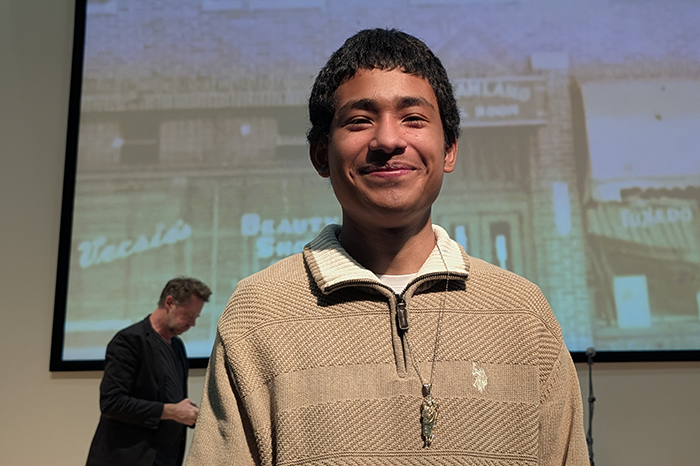
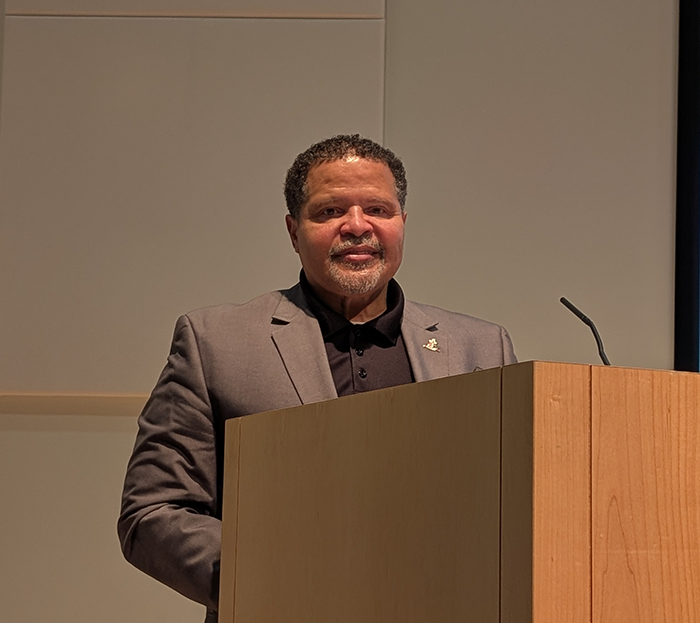
Rodrigo Ramirez Sanchez in the Stanley and Dorothy Truhlsen Lecture Hall at the Durham Museum

OmahaNebraska.com here with…

Rodrigo Ramirez Sanchez.

Tell me a little bit about yourself, how you came to work on the project, and your project.

So a little bit about myself: I’m a junior now. I worked on this project about three years ago. In middle school, certain people got chosen to be part of this program going into freshman year, and I was one of the lucky ones to get elected for this. My project was the Walker Hotel. That’s the one I researched about. Being a part of this program made me realize how much history Omaha has. And growing up in North Omaha, knowing all this stuff happened in my neighborhood, and now as a junior taking Omaha history, I see that all this history in Omaha is pretty interesting, more that I live in North Omaha. So I’m really fortunate to be able to be a part of this exhibit.

How did you do the research?

I didn’t really know a lot about the history of Omaha until this program. and we researched it on websites and stuff, and we went on a field trip to visit where the Blackburn is right now, where the Walker Hotel was, and we’ve seen different sites and all this. And after we finished our little project, and then, yeah, that’s pretty much how I finished the whole project.

You mentioned earlier that this changed your life and had an impact. What was that?

It really did, because now I know everything back then, it wasn’t easy for colored people and stuff. And North and South Omaha just have a lot of history, and that’s places I’m always around. So yes, and it made me realize there’s a lot of history in Omaha and there’s still more for me to learn about Omaha.

It’s amazing how much the history is in the city. I’ve been delving into it a little bit. But wow, you just keep going and keep going. What are you thinking of for maybe a future project to work on?

Future project? I would have to see and learn a little bit more about Omaha and maybe write a little something about another project or something.

What takeaway can you give people for the project that you worked on? And what would you like people to know or remember?

The Walker Hotel was one of the most popular in the Green Book traveling guide. It was one of the more popular ones. It was a motel and a restaurant, I believe. Downstairs it was a restaurant and then upstairs was the motel. I hope all this history keeps on going forward for other kids to learn about it and stuff.


Omaha Interview: Kristine Gerber, Speaker and Arts Series: Omaha Green Book Sites


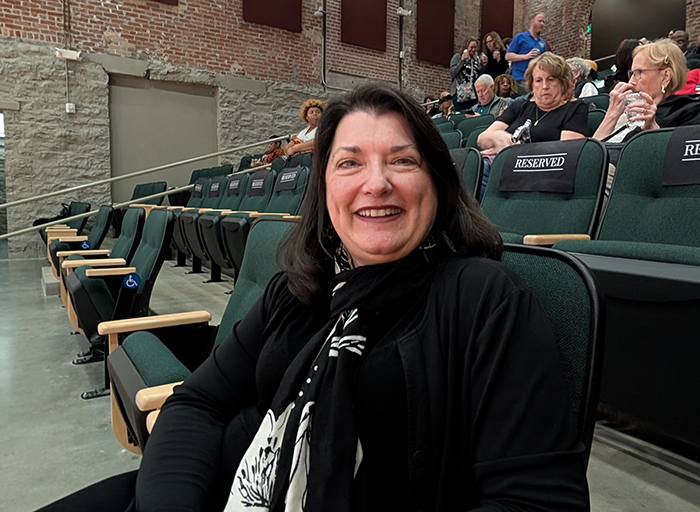
Kristine Gerber seated in auditorium before her talk in the Stanley and Dorothy Truhlsen Lecture Hall at the Durham Museum

OmahaNebraska.com here with…

Kristine Gerber.

Tell me a little bit about what you’ve done before and then about your involvement in the project.

I’m a local historian, so for the past 25 years, I have worked to tell Omaha’s stories. I’ve worked at the Omaha World Herald doing books. I’ve worked at Restoration Exchange Omaha, trying to save old buildings. And so now for the last five years, I’ve worked for Omaha Public Schools, helping students and teachers uncover and share Omaha’s diverse history.

Something I’ve been very interested and excited about is following the history of people here, the area, the buildings, what happened and then what’s going on and then where maybe the future is going. Tell me about your involvement in this project…how you got involved.

I’ve been working with ¨¨Making Invisible Histories Visible¨¨ for five years now, and every year we have a different subject or project and I get to pick it, which is always fun.

Wow.

So in 2023, I decided to do the Green Book project. And I picked that because I had seen the Green Book movie, but I also knew the Smithsonian had a Green Book exhibit going around and I had seen it and it was amazing. and I just was curious. I’m, like, well, I’m sure Omaha had some Green Book sites, but where were they and how many? And I thought this would be a good project for our kids and our teachers to do.

I understand Omaha’s Green Book sites had some unusual pieces to it compared to the rest of the country.

Candace C. Taylor, who’s a national scholar of the Green Book, will say that in most communities, 80% to 85% of the properties were African American owned. But in Omaha, only 60% of the properties were African American owned. And the reason for that is in North Omaha, where a majority of African Americans live, there was also a large Jewish community. These Jewish-owned businesses included delis and liquor stores that were open to African Americans. And so there was some Jewish, but then there were also just some also European immigrants, that knew that they should be open and welcoming to African Americans. And there were Green Book sites in North Omaha, but there also was an African-American community just across from the stockyards around the 30th and Q area, so there were three sites in that area.

Do you have a favorite section or exhibit or something that people should not miss when they go visit?

You know, what I really like is the trunk. So the trunk shows what an African American family had to pack for a trip. Unlike white Americans who could just go and not think about these things, African Americans had to think about “What if we can’t get something? We have to be prepared.” So in the trunk is a gas can filled with gas in case they couldn’t find a place to stop. They had things to cook with, like a big pot and some food. They had tents or sleeping bags in case they couldn’t find a place to stay. And they had a big cooler with food that they had made in case they couldn’t find a restaurant. So all of these things they had to think through. One of the lessons that we had our kids do is we gave them a Green Book, and we said, “You need to plan a two-day trip, but you can only stop at Green Book sites.” I had them start in New York because I wanted to give them a fair chance and have it so there would be lots of places. So they had to take a two-day trip starting from New York and going in any direction, okay? And they could only stay, gas up, go to Greenbook sites. Within like 5 to 10 minutes, they’re, like, “Oh, my God, Mrs. Gerber, this is really hard.” I’m, like, “I know.” They’re, like, “I’m going to run out of gas.” I’m, like, “Well, you have to think ahead. And when you can find gas, you’ve got to fill up your gas can, you know?” I think I could just see the light bulbs going off. And it just was a key moment for my students to realize how unfair it was and how hard it was. It shouldn’t have been so hard.

It’s important that history becomes something more than just you read.

Yeah.

That however it is, you can try to experience it, that you can.

Yeah.

And this is a very clever idea.

Yeah, exactly.

Is there a question you would have liked me to ask that I haven’t asked?

Let’s see.

Because I feel like I’m missing…

Well, no, no, no. So one really fun thing is when we found out the Smithsonian had an exhibit, as part of my programming, the Smithsonian actually was involved. I got to know their education person, and she gave us some lessons, and they have the exhibit online because they developed it during COVID so you could look at it online. And I kept saying, “You need to bring the exhibit to Omaha.” And I am really involved in the Durham…have been forever. I’m, like, “You need to bring it to the Durham.” And they’re, like, “No, no, it’s already full. And we’re retiring it, and blah, blah, blah.” So after we were done with the project, I sent all the kids’ projects to the Smithsonian. And they were like, “We have never known someone so persistent,” and they decided to send their exhibit to Omaha, and this is the last place it’s going to be shown, and then it is going to be retired.

And then there’s a whole Omaha section.

Yeah.

So more livable moments connecting with the actual area we live in.

Yeah, because we were able to share all this great information with them.

Thank you.


Omaha Interview: Eric L. Ewing,  Speaker and Arts Series: Omaha Green Book Sites


OmahaNebraska.com here with…

Eric L. Ewing.

Please tell me a little bit about things that you’ve done before in your life and then how this project started.

Well, I’ve been having the honor of serving as the executive director for the Great Plains Black History Museum for the last nine years. I come from a health care background, having served in the military for 20 years where I worked in healthcare. I currently still teach health care management. I’ve been having the fortunate opportunity to work here for the Great Plains Black History Museum and  serving as its executive director where we’ve had an opportunity to tell some stories that may have either never been told or have been undertold through others. And so we’ve been having an opportunity to bring more awareness to the rich history of African Americans and what it brings not only to the city of Omaha, but throughout the Great Plains and throughout America.

Thank you. Tell me a little bit about how this project got started and then your involvement here.

Well, Ms. Kristine Gerber worked for “Making Invisible History Visible” a few years ago. That project works with high school students. Back in 2023, she had a group of students who did some research to locate the Green Book sites that were here in Omaha.  There were a total of 30 Green Book sites here in Omaha. The students found those spots and researched them, and they found old pictures of the buildings and then newer pictures of those buildings that were still standing. The interesting thing about it is that with other Green Book sites throughout America, maybe 20% of the buildings are still standing. But here in Omaha, it’s unique, where 36% of the buildings that served as Green Book sites are still standing. And also, not all the Green Book sites were located in North Omaha. There were three Green Book sites in South Omaha on Q Street.

I know you’re going to talk some more about those later, but tell me some of your favorite ones for the area.

My favorite two, as far as hotels, is the Broadview Hotel, also referred to as the castle, because it does look like a castle. It was in the Green Book a few years. It’s one of the more noticeable places in North Omaha. And also, even though it’s no longer standing, the other place that was really intriguing was the Patton Hotel, because the Patton Hotel served as a place where the black porters could stay, musicians would stay as they were traveling throughout America and had any time to spend overnight, as well as the chefs that worked for Union Pacific. So those are my two favorites.

Your involvement in the project here… tell us a little bit about that.

When the Durham got an opportunity to get the Smithsonian’s Green Book story, we collaborated with them to be able to tell the Omaha story. That way, Omaha folks could see that while all these things were happening throughout history, they also got a chance to see that Omaha wasn’t just on the sidelines: Omaha was a part of that history.

So, you brought Omaha to life within this exhibit.

Yes.

Please tell us a little bit about why this is so important and everyone should come see the exhibit or learn more about the Green Book.

Well, I think it’s important because it’s a part of history. Again, it’s a part of history that a lot of times goes untold, and it’s an opportunity for folks to see, as I mentioned earlier, as things were happening throughout America, they were also happening here. So it’s important for folks to know these things because it helps them see their role, in particular, in history.

Is there a question you would have liked me to ask that I didn’t ask?

“How can folks learn more about the Great Plains Black History Museum?”

I was going to ask you a separate one on that later, but yes, go for it. Tell me more about the…

Well, the Great Plains Black History Museum has been in existence…this year we’re celebrating our 50th anniversary. It was started by Mrs. Bertha Callaway, and it started in the old historic Webster Building. We’re now currently operating out of the historic Jewel Building, which was the home of the Dreamland Ballroom and other venues. We currently occupy part of the first floor, and we’ve had the fortunate opportunity to be there for almost nine years. We’re open Wednesdays through Saturdays from 1 to 5 pm.

And that website and phone number?

The website is GPBlackhistorymuseum.org. Our phone number is 402-932-7077.

Thank you.

You’re welcome.


Omaha Interview: La Kesha Johnson, Owner Imperial Printing*

OmahaNebraska.com here with …

La Kesha Johnson with Omaha printing equipment in the background

La Kesha Johnson.

Please tell me a little bit about yourself and how you came to own your business.

I discovered that I was a creative person back when I was working in the corporate world. I worked at Bank of the West corporate building and as a creative person, that was something that was just like, no, I can’t do this.

So in 2019, I started to explore YouTube for business ideas. One morning, Youtube suggested a video of a guy screen printing T-shirts in his garage. I watched that video at least 20 times, and I was like,”Man, all I wear is T-shirts and hoodies!”

In late 2019, I bought my first piece of equipment: a heat press. Then a few months later, COVID happened and the bank sent us home to work. So from 2020 to 2023, I spent a lot of time just trying to teach myself the entirety of the screen printing process. Everything was closed, so I couldn’t take classes or anything. But in 2023, I decided it was time to invest in some in-person training with my mentor in Texas.

I ended up landing my first big order in August of 2023. So I decided to jump ship because at the time the bank was in the middle of a transition.

I ended up quitting the corporate job September 6, 2023.

What kind of things do you print?

I specialize in screen printing. T-shirts, hoodies, anything you can wear.

I also do what’s called digital printing. Some people may know that as DTF (Direct to Film). So that’s basically just me doing a transfer. I offer embroidery as well.

I also specialize in signage: tablecloths, backdrops, retractable banners.

So a lot of people tend to come to me to get both as a package in one place.

What kind of kind of companies have you worked with before?

I do a lot of nonprofit work. At least 50% of the jobs I get are from local nonprofits.

The other portion of my work comes from a combination of small businesses like coffee shops. I also get a lot from con­­­­tractors.

What types of apparel have you printed?

The bulk of my work is T-shirts but I also do a lot of hoodies when it gets cold.

I do a lot of zip hoodies and jackets. I occasionally get hats.

Is there a question you wished I would have asked?

My most favorite thing about what I do has nothing to do with the printing.

I love when I get to meet people in person, walk into their establishment, and see

the excitement on their face. It makes me so happy to see people get so excited to see their new apparel!

Another one of my favorite parts about the process is doing the test print. That moment where I get to see that image coming together for the first time, it’s just so great, and I love it.

I get to give back. I get to directly see the impact that I’m making on these businesses and the people that get to wear this apparel. So, that makes me excited!

Call Imperial Custom Printing in Omaha at (402) 290-5538 today for your custom apparel printing needs!

Imperial Custom Printing
Screen printing shop in Omaha, Nebraska
(402) 290-5538
https://imperialcustomprinting.com

* This is a paid advertisement.

Omaha Interview: Dawn Myron of the Durham Museum

Dawn Myron with holiday sweater in front of the Durham Christmas Tree

OmahaNebraska.com here with…

Dawn Myron. My title is the Senior Manager of Marketing and Brand.

Please tell me a little bit about yourself and how you came to be in your position.

I have been working in the non-profit world for quite some time, and in 2016 I came to the Durham Museum from the Salvation Army Kroc Center here in Omaha. I started as a graphic artist here, and I’ve held a few different roles in my time in the marketing area. One of the things that I love about this place is how generations connect. I think that the traditions that the museum helps to cultivate just are so heartwarming, and of course, the history that we tell. It’s so important to share that history and to get all generations excited. It’s work that I really love doing, and I love how there’s always something new at the museum, whether it be a new exhibit, a new event, or a new education program. I’m just really excited to be here.

Tell us a little bit about the lighting event today.

Okay. So tonight is the kickoff to our Christmas at Union Station, presented by FNBO. It’s an annual event. This will be the 50th year that the Durham Museum is doing Christmas at Union Station, but it is an event that predates the museum. The museum opened in 1975, but our home, Union Station, Union Pacific has been bringing in a tree to be the centerpiece of the Suzanne and Walter Scott Great Hall—that’s what it’s called now—a live tree has been brought in to be the centerpiece of the Christmas festivities since Union Station was a train depot in the 1930s, so it’s pretty special. Union Pacific, when they started the tradition, they would actually go to the Pacific Northwest and they would get a tree from the Pacific Northwest, bring it by rail here to Omaha. But today we don’t go as far to find our tree. We actually search for nominations here in the metro area. We usually have about 30 to 40 families who nominate their tree, and we go out and we look at them. We find the one that is the perfect tree.

A full view of the Durham Christmas Tree bedecked with ornaments, snowflakes and lights


We really got a special one this year for the museum’s 50th anniversary. It’s big, beautiful tree, and tonight we are actually going to light it up with over 1,000 feet of LED lights, and it’s got a beautiful tree topper on it with a big 50 on it to celebrate our anniversary. And at 7:00 we are going to light the tree, and that will be the start of Christmas at Union Station.

A box of sugar cookies waiting to be decorated

This season we have a lot going on. We’ve got cookie decorating.

Side view of Jordi and the Jitterbugs performing in front of the Durham Christmas Tree

We’ve got Jordi and the Jitterbugs, who are going to entertain us and help us rock around the Christmas tree tonight.

A Christmas Elf poses for us by the Durham Switchboard. She helps Santa and takes calls from visitors.
The Jolly Old Elf himself, Santa, waves at the photographer for a great picture. Thank you Santa!

And we’ve got Santa. So if kids want to share their wish list with Santa, they can meet him down in Santa’s cabin and share everything that they’re looking forward to this Christmas. Also, new for our 50th, we have a brand new activity, and that is a sock skating pond.

I am quite curious about that.

People of all ages wait in line for the Sock Skating Pond
Children sock skate happily on the treated floor piece amongst pictures of Christmas trees with parents photographing this special moment.
A child peeps out of the slippery surface warning sign with the reason for its placement to the right (fallen skater)

Yeah, so it’s pretty fun, and it’s kind of a new twist on an old tradition, and we’re all about tradition here at the Durham Museum. We’re super excited about that. And then throughout the season, we’re going to have Santa every day. You can slide and glide on the sock skate pond all season long.

A split poster style sign with the white gown and text (WOVEN WITH HISTORY: TIMELESS TEXTILES FROM THE AK-SAR-BEN COLLECTION, THIS WAY ) for the Aksarben gown exhibit and the image of a hockey player wit text (HOCKEY FASTER THAN EVER, THIS WAY ) on the right

We’ve got some really fun exhibits too, some really interesting exhibits. A traveling exhibit, we have a hockey exhibit. It’s really interactive. And then we have a local exhibit that we curated that talks about Omaha’s history with hockey and kind of our trifecta of the Mavericks, the Lancers, and the Knights. And if sports is not your thing, we also have a beautiful exhibit that features the Aksarben gowns. It’s gorgeous, yeah. So a little something for everyone this season at the Durham Museum.

Thank you. A little bit about the tree and the family?

Yeah, so this year’s tree was donated by C.J. and Stephen Carr. They are from La Vista and just a really fun nugget at their home, which they are new homeowners.  They just moved in a couple months ago, and when we had selected the tree, the previous owner had nominated it for Christmas at Union Station. When we selected it and found out that the home was being sold, we weren’t sure that we were going to get the tree, but when they heard about the tradition and what it means to be a Christmas at Union Station tree, they were completely enamored and wanted to participate as well. Plus, the tree was gigantic and just dwarfed their house. They didn’t have any space in between really their front door and the tree. It had totally overgrown its space in the yard and was starting to become problematic for the homeowners, so it was kind of a win-win for both of us. But we talk about history, and one of the really cool things about their home is that it was one of the first houses built in La Vista. A lot of tradition and history there too, which of course we love, being a history museum.

La Vista has a very interesting history all to its own, too.

Let’s see what else there is at the Durham. What’s coming up next?

After Christmas?

After Christmas.

Okay. So we are going to be announcing our 2026 exhibition lineup very, very soon. I’ll give you a little sneak peek as to some of the things. One of them that we’ve already announced is the Negro Motorist Green Book. And so that delves into the history of blacks traveling in America and kind of using the Green Book and the stories there. And we also are tying that in locally and talking about the locations here in Omaha that were part of that. We’re actually partnering with a few other entities to tell that story here in Omaha. In addition to that, we’re going to have some exhibits that, like the Green Book exhibit, are very history-focused, one related to the 250th anniversary of the United States. And then we’re going to also delve into some pop culture and the history related to pop culture. We’ve got a Disney exhibit we’re bringing in. We’re going to be doing something with Legos this year. And then we’re also planning on bringing back the White Christmas exhibit that was so popular, but we’re going to expand that. So quite a few fun things and interesting things we’re bringing into the new year.

Thank you very much. And are there any questions you wish I would have asked that I didn’t yet?

Let’s see… You know what? I would love to tell you a little bit about a few more activities that we’re going to be having in December. So this December, one of the things, if someone’s interested in stories like how Christmas at Union Station came to be, or how the museum kind of renewed this tradition, I really encourage people to check out our new “behind the scenes” tours. One of our museum educators will walk people through the hidden history behind that activity so you can get to learn a little bit more about it. So that’s a great thing if you want to come and sign up for that. In addition to that, we’ve got great winter camps for kids. I also would highly recommend that folks check out the Holiday Cultural Festival, which is December 5th. That is a tradition that in some form or another has been going on for 34 years, and it’s an opportunity to celebrate all the different cultures that make up the people of Omaha and the region. We have 35 cultural groups who are going to be joining us for that. There will be music, there will be gifts, there will be food. It’s just a really special event.

That’s one of my favorite events.

Oh, have you been to that?

I love that event.

Yeah, so very cool. I’m glad you have enjoyed that.

So many things here too. I was glad that I finally became a member.

Thank you for being a member. We really appreciate that.

Durham Museum
801 S 10th St.
Omaha, NE 68108
(402) 444-5071
https://durhammuseum.org

Check out events here!
https://durhammuseum.org/calendar

Omaha Interview: Gladys Harrison of Big Mama’s Kitchen & Catering

Feeding Community, Preserving Legacy: An Interview with Gladys Harrison of Big Mama’s Kitchen & Catering

Few restaurants in Omaha carry a legacy as rich—or as rooted in love—as Big Mama’s Kitchen & Catering. Since opening its doors in 2007, Big Mama’s has become a destination for soul food, community connection, and generational entrepreneurship. We sat down with Gladys Harrison, owner of Big Mama’s Kitchen, to talk about her family’s history, the evolution of the business, and the vision driving its future.

Gladys Harrison

Growing Up in Big Mama’s Kitchen

My name is Gladys Harrison, and I’m the owner of Big Mama’s Kitchen and Catering.

Gladys laughs when she says she “started working at the restaurant basically at birth.” Before Big Mama’s was a brick-and-mortar restaurant, it was an in-home catering service run by her mother, Patricia “Big Mama” Barron, for over 40 years. Everyone in the family had a job—including the little ones.

As a child, Gladys washed dishes, helped fill piping bags, traced wax-paper liners for cakes, and even learned to make icing roses by hand. “I was licking the cake batter off the spoon too,” she adds. “Food and family were always intertwined.”

When Big Mama began catering outside the home, the whole family pitched in—prepping, loading, delivering, and setting up events. Later, when weekend food sales began out of Big Mama’s home kitchen, Gladys became the designated emailer, flyer-maker, and menu creator.

“I was born into Big Mama’s Kitchen,” she says.
And by the time the family opened their first official restaurant in 2007, Gladys and her sisters were already seasoned veterans.

Finding Their First Location: A Leap of Faith

In the mid-2000s, conversations about revitalizing North Omaha were gaining momentum. Gladys and her mother attended community meetings hosted by organizations like the Empowerment Network, eager to be part of rebuilding the neighborhood Big Mama had grown up in.

During one meeting, they met Gail Ross, director of Turning Point, an organization housed on the former campus of the Nebraska School for the Deaf. Gail heard they were looking for a restaurant space and repeatedly encouraged them to consider a cafeteria space on the campus.

Big Mama refused—three times.

The fenced-in campus looked too much like an old school, and the dining room still smelled like 1960s cafeteria food. But after prayer, reflection, and much persistence from Gail, Big Mama agreed to take a look. Once they stepped into the enormous, fully equipped production kitchen—complete with walk-ins, a tilt skillet, ovens, and the beloved pellet-ice machine—the vision finally clicked.

Gladys remembers: “My sisters and I said, ‘Mom, this is it.’”

They stripped out the cafeteria furniture, repainted, brought décor from Big Mama’s home, and created a warm, kitchen-table atmosphere. Big Mama’s love of yellow and leopard print made its way into the dining room, because—as she always said—“leopard is not just a print, it’s an attitude.”

They opened on December 4, 2007, and held their grand opening on February 4, 2008—Big Mama’s birthday.

Overcoming Challenges and Gaining National Attention

Financing the restaurant was a battle. Banks told Big Mama she was “too old” and that her daughters didn’t know enough to run a restaurant. But with help from the Omaha Small Business Network, a small loan, retirement funds, and credit cards, the family opened their doors.

Then came the surprise that changed everything:
“Diners, Drive-Ins and Dives”.

“Had it not been for that show, we wouldn’t be here today,” Gladys says. “It brought people then, and it still brings people now. Every single day, someone walks in because they saw us on Triple D.”

In 2016, Big Mama’s was invited to join the new 75 North development, a mixed-income, community-focused neighborhood on 30th Street. The new restaurant—a bright, modern, window-lined space—was designed to be part of a food-hall environment. Big Mama participated in the design, though she passed away before the new space opened in January 2020.

A few months later, COVID-19 arrived.

Everything changed. Large gatherings vanished. Full-service catering disappeared overnight. Customers wanted individually boxed meals. The team had to reinvent processes—again and again.

“We’ve pivoted more in the last five years than at any point in our history,” Gladys says. “But we’re still here. The food is still made the way Big Mama taught us.”

A Vision for the Future: Feeding the World, Creating Opportunity

Big Mama’s dream was clear:
Feed people all over the world.

Gladys doesn’t envision franchising—not when the food is real, hand-seasoned, and handcrafted. Instead, she and her sisters expanded in a different direction:

The Seasoning Line

The signature fried chicken seasoning—passed down from Gladys’s great-grandmother—was once blended in-house by hand. Now it’s professionally produced, labeled, and ready for retail nationwide.

The line includes:

  • Fried Chicken Seasoning
  • No-Salt Seasoning (a family favorite)
  • “Pitmaster in a Bottle” Dry Rub
  • “On Anything” Seasoning
  • Cornbread Mix (over 100 years old)
  • Golden Fry Mix

This expansion opens the door to grocery stores, specialty markets, and online national shipping.

Prepared Meals & SNAP Accessibility

Gladys also envisions heat-and-eat meals—healthy, low-sodium, home-style dishes that families, seniors, and caregivers can easily warm at home. She hopes to see them available in local markets, nursing homes, assisted living facilities, and eventually via SNAP benefits.

“This can create living-wage jobs and real economic opportunity,” she says. “Food can lift families out of poverty.”

The Heart of North Omaha

Beyond the restaurant, Gladys speaks passionately about the cultural and economic importance of North Omaha.

“North Omaha has always been vibrant,” she says. “There’s immense talent, deep history, beautiful culture. We’ve contributed so much to the city’s growth.”

Events like Native Omaha Days and Christmas in the Village showcase the community’s strength and draw people from across the country. Big Mama’s, thanks to its national exposure, has long been a quiet tourism engine—bringing visitors, hotel stays, and local spending into the city.

“We once had a couple fly here from England just to eat at Big Mama’s,” Gladys recalls.

Encouraging the Next Generation

When asked what advice she has for aspiring entrepreneurs, Gladys offers a simple truth:

“Whatever you love to do—find a way to monetize it. When you enjoy the work, it doesn’t just create income. It brings joy.”

Holiday Offerings

Big Mama’s is preparing for a busy holiday season with a full heat-and-eat Thanksgiving catering menu, including:

  • Smoked, roasted, or deep-fried turkeys
  • Cornbread dressing
  • Macaroni and cheese
  • Sweet potato pudding
  • Red beans and rice
  • Sweet potato pie
  • And more family favorites

All dishes are prepackaged in oven-ready containers with heating instructions.

The team will close Thanksgiving Day through the following Saturday for a much-needed rest and reopen December 1.

Black Friday Seasoning Sale

All seasonings make excellent holiday gifts, and several items—including recipes from Gladys’s upcoming digital cookbook—will be available at special Black Friday pricing.

A Legacy of Love

As we wrapped up our conversation, Gladys reflected on her mother’s mission:

“My mother was adamant about making the world better than she found it. That’s what my family and I are trying to do—use our gifts to make Omaha better for everyone.”

Big Mama’s Kitchen continues to honor that legacy—feeding the community, creating opportunity, and proving that soul food is more than a meal. It’s connection. It’s culture. It’s love served hot.

Big Mama’s Kitchen
2112 North 30th Street Highlander Accelerator, Suite 201
Omaha, NE 68111
(402) 455-6262

The Heat and Eat Holiday Catering Menu

PDF Version:
BMK_Holiday_Catering_2025

Holiday orders are being taken for Christmas.


Omaha Interview: Lalibela Ethiopian Restaurant – Sibhat Gebre Michael, Owner

OmahaNebraska.com here with…

My name is Sibhat Gebre Michael. Currently, I’m the owner of Lalibela Restaurant.

So, you were talking to me a little bit about the history of the restaurant…

Yeah, the restaurant has been open the last 15 years, since 2010. Since then, it has been a family business. Nothing changed, everybody’s the same. The only difference is the owner’s name. Everybody’s still doing the same thing.

The menu has changed a little bit. Can you tell us about the menu?

Do you think it’s changed? I don’t think it’s changed. We got a new print and a new picture we took, but we kept the same menu ever since the restaurant opened.

So everything is the same?

Everything is the same.

We might take out some items, but for now, everything is the same. In the future, we’re trying to expand more. We’re trying to add more desserts. That’s in the future, and we’ll see.

You have some very classic Ethiopian foods, and I’ve tried many of the dishes, and I just love them. My favorite, as everybody here knows, is Gored Gored.

Gored Gored, a cubed beef dish with salad and pepper mixture is shown on injera (flat circular bread made from teff)

Yes, we do, we do.

Please tell me a little bit about your food.

The only thing I would say is Ethiopian food is different than any other food. It’s like, even the spice we make, the Berbere or the Doro Wot, it’s different. It tastes different. We cook it for longer, and we have more spices in it. And yeah, my favorite one is combination. For the first-time people, I recommend a combination, which is every Ethiopian food, and you get it in a smaller portion, so on one plate pretty much you can try literally Ethiopia.

What kind of spices do you use?

The spice we use is called Berbere. Berbere has over 17 kinds of spices in it to make that different, distinguished taste.

I love that.

Yeah.

And tell us a little bit about the bread.

We call it injera bread. It’s made out of Teff flour, and it’s gluten-free, so it’s pretty much a healthy food to have.

I really enjoy that…the bread and all the spices and all of that. It’s probably good I don’t live nearby, because if I did live nearby I’d be here all the time because the food is so good here. 

Yes, it is.

And the people are so good here. Both mean a lot to me.

All right, thank you.

Please tell us a little bit about your journey here as owner. What did you do before? How did you become the owner?

It’s a family business. My uncle is the one who started Lalibela. The opportunity came, and I just jumped in. And now I’m the owner, and we’re running it as a family. Even though I’m the owner, it’s just a family business.

The family touch is really evident in everything.

Yes.

Special low table for coffee preparation and serving, includes cups, sugar and incense

Like you see right here, this is pretty much a display of how Ethiopians drink coffee. This is for a ceremony, a holiday ceremony. People gather…family, friends, they come together like me and you right now.

And somebody sits down right there, you see, like the lady, pretty much somebody sits right there and makes coffee from scratch. They brew, they grind it, and what you see is they understand coffee. The smell puts you in a good mood, good spirit. That’s how people start their morning. They drink coffee with the family, and they go about their day, and they come home at night.

Any foods or dishes that you would like to talk about a little bit more? Or anything you want people to come here to try?

I would say the vegetarian is really good food. I recommend the vegetarian and the combination because it’s really different. I don’t know how to explain it, but like so many flavors in one big plate, so the experience is something you never had before.

I haven’t had the vegetarian one since you became owner, but there’s this cabbage

Yeah.

I love that. 

It’s the same thing …

Family recipe?

Yes, family recipe is passed down, so yeah.

I think those are always the best.

Yes, they are.

You have tea and do you have coffee now?

Yes, we have Ethiopian spice tea, and we have Ethiopian coffee, too. So the coffee is a little bit strong, but it’s really good. The originator of coffee… really, coffee comes from the region of Kaffa. That’s the original coffee. That really came from the Ethiopian word Kaffa. So we’re known as coffee drinkers. Yes.

Thank you very much.

All right, thank you, thank you.

Exterior of Lalibela Ethiopian Restaurant

Visit for yourself and enjoy the great food and hospitality of this Omaha restaurant.

Lalibela Ethiopian Restaurant
4422 Cass St, Omaha, NE 68131

OmahaNebraska.com Interview with Omaha Mayor John Ewing

Omaha Mayor John Ewing on the “Baby Bob” Bridge with the Bob Kerrey Pedestrian Bridge in the background

Hi, this is OmahaNebraska.com here with…

Mayor John Ewing.

This Baby Bob Bridge is pretty exciting on the connection. Can you tell us a little bit more about it?

Yeah, sure. I think it’s a critical piece of our infrastructure.

What it allows us to do is have the ability to connect to the trails that are in this area, the trails that are in Council Bluffs, and also connect the two cities.

One of the things I’m working diligently on is building a metro area economic development plan.

And these type of things, these type of relationships allow us to be able to build that trust. And when you have trust, then you can work faster and more effectively. And so this is just one example of being able to do that when we can build a bridge to each other’s cities.

What would you like to tell the people on the Iowa side to come see?

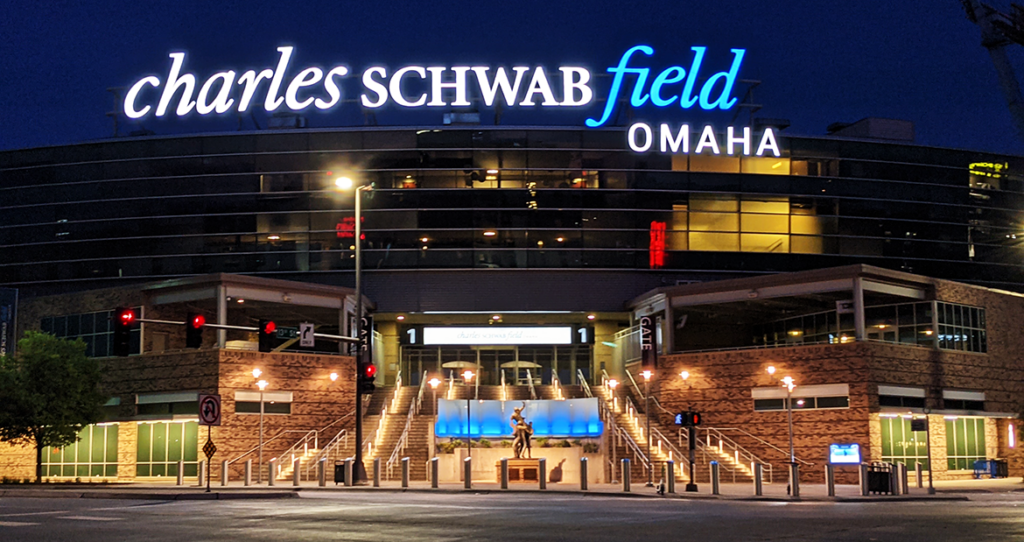
Well, I would love for them to come on over and check out the College World Series or other events we might have. At Charles Schwab Field, we have the CHI Center directly across the street from the bridge.

We would love for them to come over and frequent events there.

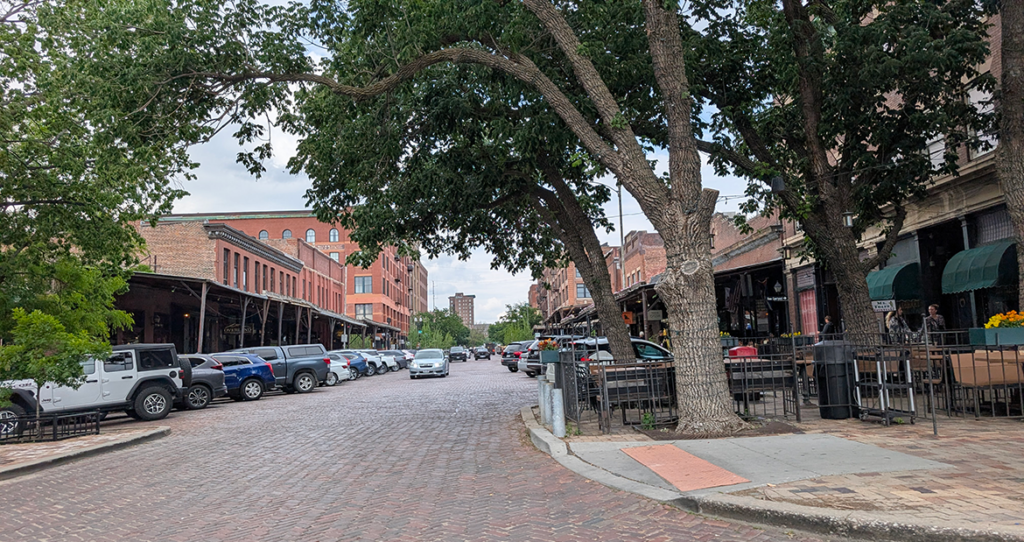
Also we have the Hilton Hotel, very close by, that if they want to just do a staycation and just take a few days away, come on over, enjoy Omaha and be able to enjoy the amenities that we have like the Old Market, the Zoo and other things like that.

And let’s build a partnership.

Thank you.

Thank you.


Omaha Interview: Larry Pence, La Festa Italiana Co-Chairman

Larry Pence, La Festa Italiana Co-Chairman

OmahaNebraska.com here with

Larry Pence.

This is one of the events that we all look forward to, La Festa Italiana. 

Please tell me a little bit about how it started and what you’re offering this year. 

Okay. Well, this is the 41st year of our festival. It has become probably the most widely attended festival in the city.

We used to have to compete against September Fest because they always had the Labor Day weekend, but that was discontinued last year. So now everybody in the city comes here over Labor Day weekend. Last night, there was no place to sit, inside or outside. It was absolutely packed, even with this rain. We thought people wouldn’t come, but they’re here.

It’s all about the food. We have 31 homemade Italian dishes. They can’t get that anywhere else in this city, so I think that’s why people come. That’s what they tell us, anyway. They come for the music, the food, and the wine.

I noticed you have quite a few of the most popular bands in the area, too.

Yeah, those three bands have been coming here for years. And every year when they finish, they immediately ask us to put them on the calendar for next year. So we rarely have to call to find entertainment because they want to come back.

What are some of your favorite foods? 

That’s a tough one. You know, everything is homemade. Probably the thing that we are most famous for is our meatballs. I think three years ago we made 3,000, and this year we made 7,500. We used almost 4,000 last night. People just can’t get enough. And it sounds weird over a meatball, but it’s a meatball you cannot get anywhere else. It is a true, original Sicilian recipe that no other restaurant in this city makes. So that’s why people come here.

I guess that’s going to be on my list to try here. 

Yeah, absolutely. And we have another Italian dish that you can’t get anywhere else in the city. It’s called Farsu Magru. It’s kind of a braciole. It’s basically Italian meatloaf, and inside are hard-boiled eggs and provolone cheese, pepperoni, onions, and peppers. And then you roll it all up, bake it, and the cheese melts inside. It’s delicious. Then they put marinara over the top of it.

Fried ravioli is another real popular item. Our friends at Pasta Amore made 5,000 raviolis for us this year. We have to boil them, and then we have to bread them, and then we have to fry them.

Chicken Sicilian is very popular. It’s basically a little drummette that’s deep fried and then herb butter is poured over it and tossed.

Our pizza is a true Sicilian pizza. We make it inside and outside. We have pizza ovens all the way along the back of the property so people can get it right out of the oven if they want it.

Calamari, shrimp scampi. You name it, it’s here.

What makes a Sicilian pizza different from other pizzas? 

Some people say, “Well, is it like New York pizza?” No, it’s not thin, it’s thick. Our friends at Rotella make the dough for us, and then we let it rise a little bit. We make a cheese and tomato pizza. We also make a sausage pizza that’s very, very popular.

How many years have you been doing this? 

Well, I’ve served as the chairman of the board of the society [American Italian Heritage Society] for many years. I am the co-chairman of the festival, and I have been for the last five years. We start planning three to four months in advance. And then we do all the cooking pretty much here [at the Palazzo].

Really? 

Yeah. We prep all the food. Anything that can be frozen, we prep months in advance, put in the freezer, and then we thaw it out for the festival. Some stuff we can’t freeze, so we have to make it fresh. But a lot of the things we serve, we can freeze them. Otherwise, we couldn’t cook enough food in one weekend because we couldn’t do the kind of volume we do. Like, the night before Festa starts, we had to boil 500 pounds of pasta.

Wow.

People say, “There’s no way you’ll use that,” but I tell them, “We’ll run out of pasta by Sunday.” One of our favorite items is mostaccioli and meatballs. That’s what people come for. That’s what we’re known for, anyway.

Can you think of anything surprising that maybe people don’t know that you’d want them to try or to experience?

Yeah. Sometimes people come to the festival, and they only come inside. They think that’s the only place they can get food. They don’t realize that there are five booths in the back.

One of the most popular booths out there is called fried dough. In Italian, it’s zeppole. Rotella gives us the dough, and we let it rise. We cut it in pieces about this big, drop it in a hot fryer, cover it with cinnamon and sugar. The line will be long until 11:00 at night. People can’t get enough of it.

If people don’t go outside and experience some of the things that are in the booths, they’ll think they have to stand in this obnoxious line and wait an hour to get food. They don’t. They can go anywhere on the festival grounds and find food. We make homemade lemon and chocolate gelato, and that’s popular. There’s a lot of stuff out there.

Thank you very much. 

You’re welcome.

American Italian Heritage Society
5110 N 132nd St.
Omaha, NE 68164