Millard Days 5:00–10:00 PM Carnival
6:00–11:00 PM Beer garden
6:00 PM Jeep Night
Andersen Park
13625 Cottner St.
Omaha, NE 68137 https://www.millarddays.com/schedule
Thursday, August 27, 2026
Millard Days 5:00–10:00 PM Carnival
6:00–11:00 PM Beer garden Andersen Park 13625 Cottner St.
Omaha, NE 68137 Community carnival and beer-garden evening https://www.millarddays.com/schedule
Issa Trap Symphony-Afro-Fusion Guided gallery experiences 4:00–6:00 PM; concert and mixer 6:30–9:30 PM Joslyn Art Museum 2200 Dodge Street Omaha, NE 68102 Paid Admission
Registration required
Walk-ins accepted if space permits. Kevin Paradise, Joe.EZ, AJII and Kusher Snazzy perform with Omaha Symphony string musicians. The program also features Ray Bae, Afrobaddie, Big Wade & Black Swan Theory, Jevon Woods and Menice “Mars” Blackman https://joslyn.org/events/issa-trap-symphony-afrofusion/
Friday, August 28, 2026
Millard Days 5:00–11:00 PM Carnival
6:00 PM Beer garden
7:00–11:00 PM The Damones Andersen Park 13625 Cottner St.
Omaha, NE 68137 Friday’s principal attraction is a four-hour live performance by The Damones https://www.millarddays.com/schedule
Night Market, presented by Veridian Credit Union 6:00–10:00 PM Turner Park at Midtown Crossing 3110 Farnam Street Omaha, NE 68131 Free and open to the public More than 50 local vendors, artists and makers, plus BluesEd, Omaha Street Percussion, Chad Lee, The Pinheads and other musicians https://midtowncrossing.com/things-to-do/events/night-market/
Millard Days Horseshoe registration 10:30 AM; tournament 11:00 AM; family activities noon–3:00 PM; carnival 1:00–6:00 PM Andersen Park 13625 Cottner St.
Omaha, NE 68137 Family schedule: face painting and balloon animals at noon, Dino Bus from noon–1:00 PM, kids’ tractor pull at 1:30 PM and ice-cream social at 3:00 PM. https://www.millarddays.com/family-day
North Omaha Music & Arts Festival (NOMAFEST) – Masterclass & Frank McComb
5:00 PM Masterclass
7:00 PM Concert
North Omaha Music & Arts
2510 N 24th St
Omaha, NE 68110 https://nomafest.org/
Omaha Chalk Art Festival
10:00 AM – 6:00 PM
Turner Park at Midtown Crossing
3110 Farnam St
Omaha, NE 68131 https://midtowncrossing.com/
Millwork Market
11:00 AM – 3:00 PM
The Ashton / The Dock
1229 Millwork Ave
Omaha, NE 68102 https://millworkcommons.org/
North Omaha Music & Arts Festival (NOMAFEST) – The Bar-Kays, MonoNeon & Keyon Harrold
6:00 PM – 10:00 PM
Gene Leahy Mall
1001 Douglas St
Omaha, NE 68102 https://nomafest.org/
Sunday, August 16
Omaha Farmers Market – Aksarben Village
9:00 AM – 1:00 PM
67th St & Mercy Rd
Omaha, NE 68106 https://omahafarmersmarket.com/
Omaha Chalk Art Festival
10:00 AM – 6:00 PM
Turner Park at Midtown Crossing
3110 Farnam St
Omaha, NE 68131 https://midtowncrossing.com/
North Omaha Music & Arts Festival (NOMAFEST) – Richie Love
North Omaha Music & Arts
2510 N 24th St
Omaha, NE 68110 https://nomafest.org/
Always check with the organizer for exact time and any changes.
The Defenders of Freedom Air & Space Show returns to Offutt Air Force Base on August 8–9, 2026. Kris Pierce, Chief of Public Affairs for the 55th Wing and Offutt Air Force Base spoke with us ahead of the event to share what’s new.
Parking Is Back On Base
Parking is returning to the base but you’ll need a free parking pass per vehicle to get on base. Passes, along with a list of what you can and can’t bring, are available at offutt.af.mil/air-show.
Pierce noted that no matter where you’re parked, you may have to walk some distance to get to the show, so wear comfortable shoes. Handicap-accessible parking will be available in every parking area.
What’s Flying and New
Pierce described a lineup built around the “America 250” theme, pairing older aircraft with newer ones. The F-35 demo team headlines, along with Tora! Tora! Tora! — the pyrotechnic-heavy Pearl Harbor reenactment — making its return after not appearing for many years. The Air Force Academy’s parachute team is on the schedule, and Pierce said Army helicopters are expected as well. The Red Bull team is back also.
A rare sight: the EA-37B, the 55th Wing’s newest aircraft, will sit alongside the EC-130 it’s replacing before the EC-130 retires this September — likely the only time the two will appear together.
Beating the Heat
Organizers have quadrupled the water available on-site and added two misting stations, with medical staff prepared for another heat wave. Guests can bring empty, reusable water bottles to refill. Pierce’s two big asks for visitors: bring ear protection (especially for kids) and a water bottle.
Stay in the Loop
For weather delays or cancellations, organizers will post updates on Facebook — either the air show page, the 55th Wing page, or the Offutt Air Force Base page. Questions can go to 55WG.PA@us.af.mil.
The show is free and open to the public. Getting your parking pass ahead of time will help things go smoothly on show day.
Come back soon to our Omaha blog to learn more about the Defenders of Freedom Air & Space Show 2026 with our interview with Kris Pierce.
The College World Series transforms Omaha into one of the most exciting sports destinations in the country each summer. Fans from across the United States and the world travel to Omaha for championship baseball, restaurants, nightlife, entertainment districts, arts venues, breweries, and local attractions throughout the city.
Whether you are visiting Omaha for the first time or returning for another year of the tournament, this guide will help you explore Omaha during the College World Series.
ABOUT THE COLLEGE WORLD SERIES IN OMAHA
The College World Series is one of the most recognized traditions in college baseball and one of the largest annual sporting events in Nebraska. Each summer, fans from across the country and the world travel to Omaha to watch the final teams compete for the national championship.
Omaha has hosted the College World Series since 1950 after local civic leaders worked to bring the tournament to the city. Over the decades, the event became deeply connected to Omaha’s identity and helped establish a national association between the city and college baseball.
Volunteer organizations, local businesses, civic leaders, and generations of fans helped shape the College World Series into one of Omaha’s most recognized annual traditions.
The tournament continues to draw visitors from across the country and world while helping shape Omaha’s national reputation as both a sports and tourism destination.
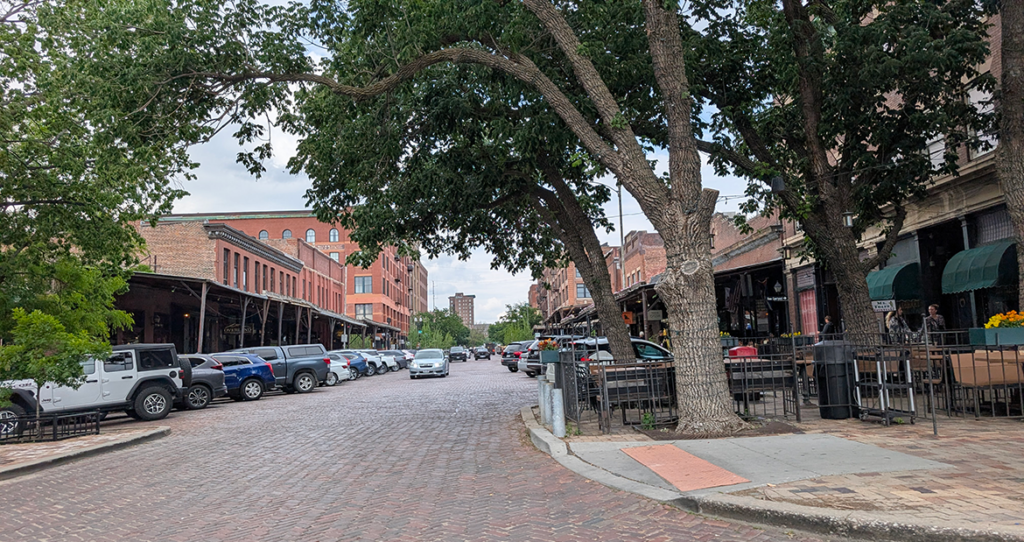
Midtown Omaha includes restaurants, coffee shops, international cuisine, and locally owned businesses located between downtown Omaha and west-central neighborhoods.
“There are no bad days in Omaha.”
— Anthony Holman
“The College World Series is just growing in national profile.”
— Amy Hornocker
“The College World Series is something that I think Omahans love and can’t wait for every year.”
— Mayor Jean Stothert
“You will fall in love with Omaha.”
— Mayor John Ewing Jr.
The College World Series offers visitors the opportunity to experience not only championship baseball, but also Omaha’s neighborhoods, restaurants, nightlife, attractions, arts venues, museums, breweries, and local culture.This guide will continue expanding with updated recommendations, interviews, local coverage, and Omaha visitor resources leading into the 2026 tournament.
Please visit back and learn more about Omaha and the fun things to do here!
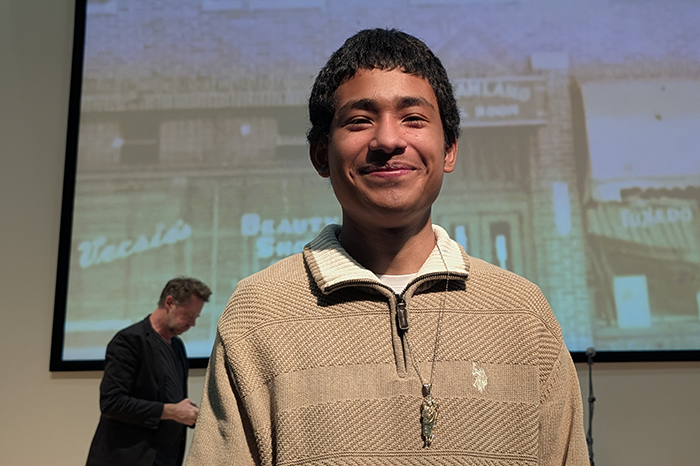
Rodrigo Ramirez Sanchez in the Stanley and Dorothy Truhlsen Lecture Hall at the Durham Museum
OmahaNebraska.com here with…
Rodrigo Ramirez Sanchez.
Tell me a little bit about yourself, how you came to work on the project, and your project.
So a little bit about myself: I’m a junior now. I worked on this project about three years ago. In middle school, certain people got chosen to be part of this program going into freshman year, and I was one of the lucky ones to get elected for this. My project was the Walker Hotel. That’s the one I researched about. Being a part of this program made me realize how much history Omaha has. And growing up in North Omaha, knowing all this stuff happened in my neighborhood, and now as a junior taking Omaha history, I see that all this history in Omaha is pretty interesting, more that I live in North Omaha. So I’m really fortunate to be able to be a part of this exhibit.
How did you do the research?
I didn’t really know a lot about the history of Omaha until this program. and we researched it on websites and stuff, and we went on a field trip to visit where the Blackburn is right now, where the Walker Hotel was, and we’ve seen different sites and all this. And after we finished our little project, and then, yeah, that’s pretty much how I finished the whole project.
You mentioned earlier that this changed your life and had an impact. What was that?
It really did, because now I know everything back then, it wasn’t easy for colored people and stuff. And North and South Omaha just have a lot of history, and that’s places I’m always around. So yes, and it made me realize there’s a lot of history in Omaha and there’s still more for me to learn about Omaha.
It’s amazing how much the history is in the city. I’ve been delving into it a little bit. But wow, you just keep going and keep going. What are you thinking of for maybe a future project to work on?
Future project? I would have to see and learn a little bit more about Omaha and maybe write a little something about another project or something.
What takeaway can you give people for the project that you worked on? And what would you like people to know or remember?
The Walker Hotel was one of the most popular in the Green Book traveling guide. It was one of the more popular ones. It was a motel and a restaurant, I believe. Downstairs it was a restaurant and then upstairs was the motel. I hope all this history keeps on going forward for other kids to learn about it and stuff.
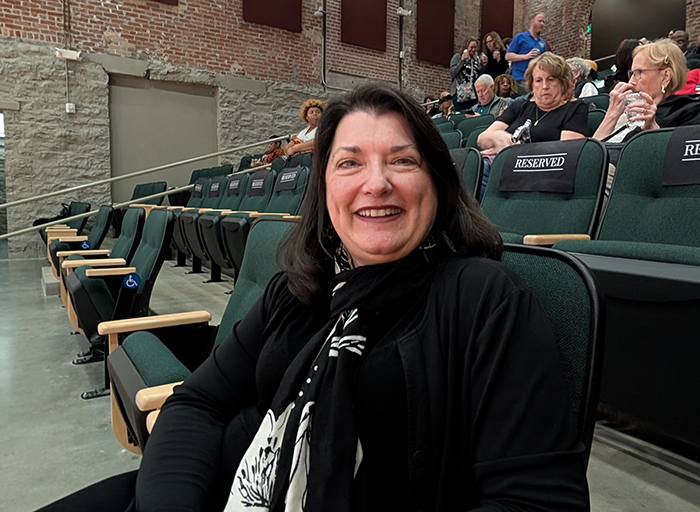
Kristine Gerber seated in auditorium before her talk in the Stanley and Dorothy Truhlsen Lecture Hall at the Durham Museum
OmahaNebraska.com here with…
Kristine Gerber.
Tell me a little bit about what you’ve done before and then about your involvement in the project.
I’m a local historian, so for the past 25 years, I have worked to tell Omaha’s stories. I’ve worked at the Omaha World Herald doing books. I’ve worked at Restoration Exchange Omaha, trying to save old buildings. And so now for the last five years, I’ve worked for Omaha Public Schools, helping students and teachers uncover and share Omaha’s diverse history.
Something I’ve been very interested and excited about is following the history of people here, the area, the buildings, what happened and then what’s going on and then where maybe the future is going. Tell me about your involvement in this project…how you got involved.
I’ve been working with ¨¨Making Invisible Histories Visible¨¨ for five years now, and every year we have a different subject or project and I get to pick it, which is always fun.
Wow.
So in 2023, I decided to do the Green Book project. And I picked that because I had seen the Green Book movie, but I also knew the Smithsonian had a Green Book exhibit going around and I had seen it and it was amazing. and I just was curious. I’m, like, well, I’m sure Omaha had some Green Book sites, but where were they and how many? And I thought this would be a good project for our kids and our teachers to do.
I understand Omaha’s Green Book sites had some unusual pieces to it compared to the rest of the country.
Candace C. Taylor, who’s a national scholar of the Green Book, will say that in most communities, 80% to 85% of the properties were African American owned. But in Omaha, only 60% of the properties were African American owned. And the reason for that is in North Omaha, where a majority of African Americans live, there was also a large Jewish community. These Jewish-owned businesses included delis and liquor stores that were open to African Americans. And so there was some Jewish, but then there were also just some also European immigrants, that knew that they should be open and welcoming to African Americans. And there were Green Book sites in North Omaha, but there also was an African-American community just across from the stockyards around the 30th and Q area, so there were three sites in that area.
Do you have a favorite section or exhibit or something that people should not miss when they go visit?
You know, what I really like is the trunk. So the trunk shows what an African American family had to pack for a trip. Unlike white Americans who could just go and not think about these things, African Americans had to think about “What if we can’t get something? We have to be prepared.” So in the trunk is a gas can filled with gas in case they couldn’t find a place to stop. They had things to cook with, like a big pot and some food. They had tents or sleeping bags in case they couldn’t find a place to stay. And they had a big cooler with food that they had made in case they couldn’t find a restaurant. So all of these things they had to think through. One of the lessons that we had our kids do is we gave them a Green Book, and we said, “You need to plan a two-day trip, but you can only stop at Green Book sites.” I had them start in New York because I wanted to give them a fair chance and have it so there would be lots of places. So they had to take a two-day trip starting from New York and going in any direction, okay? And they could only stay, gas up, go to Greenbook sites. Within like 5 to 10 minutes, they’re, like, “Oh, my God, Mrs. Gerber, this is really hard.” I’m, like, “I know.” They’re, like, “I’m going to run out of gas.” I’m, like, “Well, you have to think ahead. And when you can find gas, you’ve got to fill up your gas can, you know?” I think I could just see the light bulbs going off. And it just was a key moment for my students to realize how unfair it was and how hard it was. It shouldn’t have been so hard.
It’s important that history becomes something more than just you read.
Yeah.
That however it is, you can try to experience it, that you can.
Yeah.
And this is a very clever idea.
Yeah, exactly.
Is there a question you would have liked me to ask that I haven’t asked?
Let’s see.
Because I feel like I’m missing…
Well, no, no, no. So one really fun thing is when we found out the Smithsonian had an exhibit, as part of my programming, the Smithsonian actually was involved. I got to know their education person, and she gave us some lessons, and they have the exhibit online because they developed it during COVID so you could look at it online. And I kept saying, “You need to bring the exhibit to Omaha.” And I am really involved in the Durham…have been forever. I’m, like, “You need to bring it to the Durham.” And they’re, like, “No, no, it’s already full. And we’re retiring it, and blah, blah, blah.” So after we were done with the project, I sent all the kids’ projects to the Smithsonian. And they were like, “We have never known someone so persistent,” and they decided to send their exhibit to Omaha, and this is the last place it’s going to be shown, and then it is going to be retired.
And then there’s a whole Omaha section.
Yeah.
So more livable moments connecting with the actual area we live in.
Yeah, because we were able to share all this great information with them.
Please tell me a little bit about things that you’ve done before in your life and then how this project started.
Well, I’ve been having the honor of serving as the executive director for the Great Plains Black History Museum for the last nine years. I come from a health care background, having served in the military for 20 years where I worked in healthcare. I currently still teach health care management. I’ve been having the fortunate opportunity to work here for the Great Plains Black History Museum and serving as its executive director where we’ve had an opportunity to tell some stories that may have either never been told or have been undertold through others. And so we’ve been having an opportunity to bring more awareness to the rich history of African Americans and what it brings not only to the city of Omaha, but throughout the Great Plains and throughout America.
Thank you. Tell me a little bit about how this project got started and then your involvement here.
Well, Ms. Kristine Gerber worked for “Making Invisible History Visible” a few years ago. That project works with high school students. Back in 2023, she had a group of students who did some research to locate the Green Book sites that were here in Omaha. There were a total of 30 Green Book sites here in Omaha. The students found those spots and researched them, and they found old pictures of the buildings and then newer pictures of those buildings that were still standing. The interesting thing about it is that with other Green Book sites throughout America, maybe 20% of the buildings are still standing. But here in Omaha, it’s unique, where 36% of the buildings that served as Green Book sites are still standing. And also, not all the Green Book sites were located in North Omaha. There were three Green Book sites in South Omaha on Q Street.
I know you’re going to talk some more about those later, but tell me some of your favorite ones for the area.
My favorite two, as far as hotels, is the Broadview Hotel, also referred to as the castle, because it does look like a castle. It was in the Green Book a few years. It’s one of the more noticeable places in North Omaha. And also, even though it’s no longer standing, the other place that was really intriguing was the Patton Hotel, because the Patton Hotel served as a place where the black porters could stay, musicians would stay as they were traveling throughout America and had any time to spend overnight, as well as the chefs that worked for Union Pacific. So those are my two favorites.
Your involvement in the project here… tell us a little bit about that.
When the Durham got an opportunity to get the Smithsonian’s Green Book story, we collaborated with them to be able to tell the Omaha story. That way, Omaha folks could see that while all these things were happening throughout history, they also got a chance to see that Omaha wasn’t just on the sidelines: Omaha was a part of that history.
So, you brought Omaha to life within this exhibit.
Yes.
Please tell us a little bit about why this is so important and everyone should come see the exhibit or learn more about the Green Book.
Well, I think it’s important because it’s a part of history. Again, it’s a part of history that a lot of times goes untold, and it’s an opportunity for folks to see, as I mentioned earlier, as things were happening throughout America, they were also happening here. So it’s important for folks to know these things because it helps them see their role, in particular, in history.
Is there a question you would have liked me to ask that I didn’t ask?
“How can folks learn more about the Great Plains Black History Museum?”
I was going to ask you a separate one on that later, but yes, go for it. Tell me more about the…
Well, the Great Plains Black History Museum has been in existence…this year we’re celebrating our 50th anniversary. It was started by Mrs. Bertha Callaway, and it started in the old historic Webster Building. We’re now currently operating out of the historic Jewel Building, which was the home of the Dreamland Ballroom and other venues. We currently occupy part of the first floor, and we’ve had the fortunate opportunity to be there for almost nine years. We’re open Wednesdays through Saturdays from 1 to 5 pm.
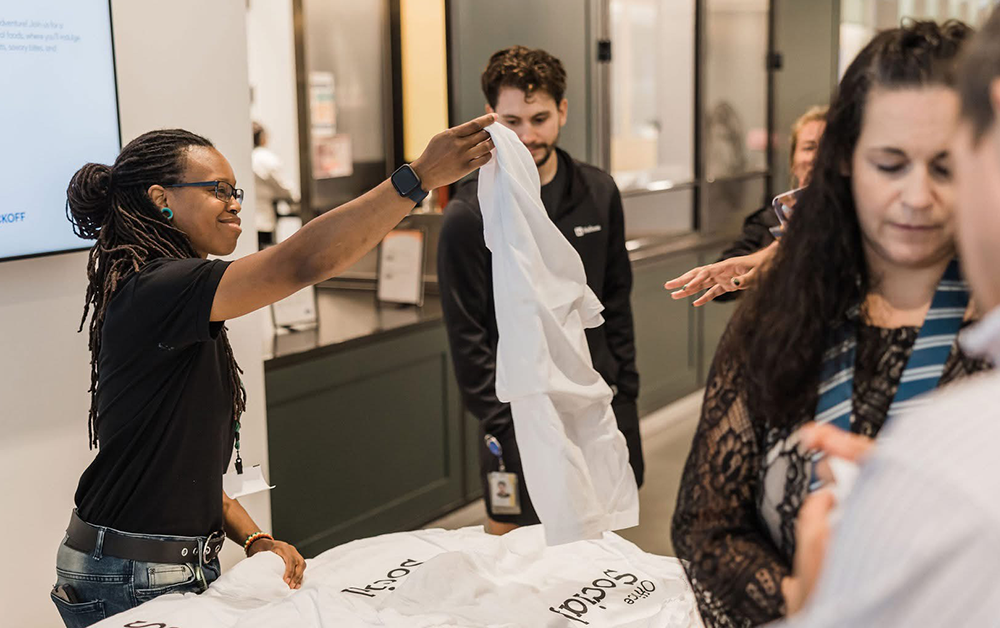
La Kesha Johnson with Omaha printing equipment in the background
La Kesha Johnson.
Please tell me a little bit about yourself and how you came to own your business.
I discovered that I was a creative person back when I was working in the corporate world. I worked at Bank of the West corporate building and as a creative person, that was something that was just like, no, I can’t do this.
So in 2019, I started to explore YouTube for business ideas. One morning, Youtube suggested a video of a guy screen printing T-shirts in his garage. I watched that video at least 20 times, and I was like,”Man, all I wear is T-shirts and hoodies!”
In late 2019, I bought my first piece of equipment: a heat press. Then a few months later, COVID happened and the bank sent us home to work. So from 2020 to 2023, I spent a lot of time just trying to teach myself the entirety of the screen printing process. Everything was closed, so I couldn’t take classes or anything. But in 2023, I decided it was time to invest in some in-person training with my mentor in Texas.
I ended up landing my first big order in August of 2023. So I decided to jump ship because at the time the bank was in the middle of a transition.
I ended up quitting the corporate job September 6, 2023.
What kind of things do you print?
I specialize in screen printing. T-shirts, hoodies, anything you can wear.
I also do what’s called digital printing. Some people may know that as DTF (Direct to Film). So that’s basically just me doing a transfer. I offer embroidery as well.
I also specialize in signage: tablecloths, backdrops, retractable banners.
So a lot of people tend to come to me to get both as a package in one place.
What kind of kind of companies have you worked with before?
I do a lot of nonprofit work. At least 50% of the jobs I get are from local nonprofits.
The other portion of my work comes from a combination of small businesses like coffee shops. I also get a lot from contractors.
What types of apparel have you printed?
The bulk of my work is T-shirts but I also do a lot of hoodies when it gets cold.
I do a lot of zip hoodies and jackets. I occasionally get hats.
Is there a question you wished I would have asked?
My most favorite thing about what I do has nothing to do with the printing.
I love when I get to meet people in person, walk into their establishment, and see
the excitement on their face. It makes me so happy to see people get so excited to see their new apparel!
Another one of my favorite parts about the process is doing the test print. That moment where I get to see that image coming together for the first time, it’s just so great, and I love it.
I get to give back. I get to directly see the impact that I’m making on these businesses and the people that get to wear this apparel. So, that makes me excited!
Call Imperial Custom Printing in Omaha at (402) 290-5538 today for your custom apparel printing needs!
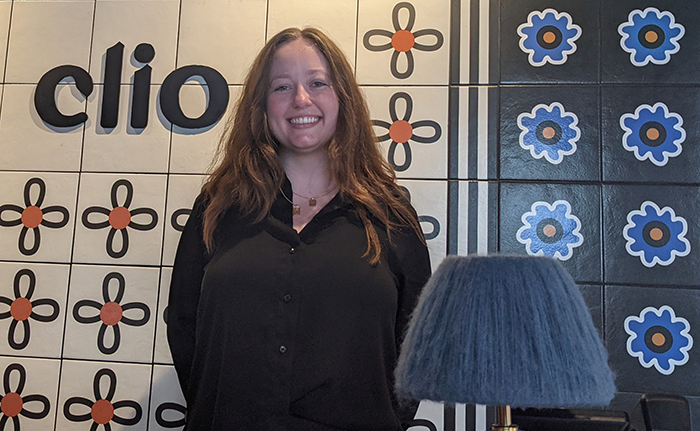
Lexi Christensen behind the host desk at Clio’s Restaurant
OmahaNebraska.com here with..
My name is Lexi Christensen, and I’m the General Manager of Clio in Omaha’s Old Market.
How long has Clio’s been open?
Clio opened on June 3rd just this last year. So just two months ago, we celebrated our birthday. So yeah, very fresh in the Old Market still.
And were you here when it opened?
Yeah, I was here June 3rd. But my time with Clio actually started on April 15th. That’s when our job fair started. We had a five-week hiring event where Monday through Friday 10:00 AM to 6:00 PM we were taking interviews, building our team both for the kitchen, but then for our front of house for our house servers and bartenders as well. So yeah, April 15th is when I started on the project.
Have you been in the Omaha area a long time?
Yeah, born and raised. So Omaha is in my blood, if you will.
So you have a really good feeling, especially for the Old Market area…
I think so. Yeah. My family is still based out west. I grew up off of 160th and Q and then I went to Creighton. I moved downtown when I was 18, and I’ve been in, like, the downtown, Midtown area ever since. Yeah. The Old Market’s definitely…as someone who’s from West Omaha, I didn’t appreciate it as much as I could have. But in my time at Creighton and then especially in the restaurant industry, I’ve definitely learned to truly love the space for what it is.
There’s so many amazing things about, you know, each neighborhood.
Yeah, 100%.
What did you do before you came to work for Clio?
Directly before Clio, I was the assistant general manager over at Plank, so Plank is within our parent company still, and I was the AGM [Assistant General Manager] over there for a year and seven months. And then before that I was a server at one of the steakhouses downtown, and then before that I was still in school. So I’m still relatively new in the restaurant industry, which is crazy to think about. I’m very lucky to have the support and the teachers that I’ve had in the past few years to get me to where I’m at right now.
I’ve been here a couple of times. The service has been amazing. The food has been great. You are doing so many things right.
Thank you. Yeah, it’s definitely been…as many things, it’s been a process. We’re still growing and learning every single day, but I’m very proud of the community we’ve formed within Clio, both with our kitchen team and then our front-of-house service team. Truly, just some of the most genuine and hard-working individuals I’ve had the pleasure of working with. And I think that’s what’s unique about Flagship, our company, too. We’ll talk a little bit more about that later.
We can talk about it now, if you’d like.
Cool, yeah. We’re part of Flagship Restaurant Group. Flagship started in 2002 when our four main owners kind of came together and started the first Blue Sushi. So Blue Sushi off of 144th and Maple is the OG restaurant in our company. And then we’ve expanded…now, I think Clio was restaurant number 40 if I remember correctly, so we have 40 different restaurants, between, like, eight or nine concepts in twelve or thirteen states. A lot of it is Midwest and Southwest focused, but we go a little bit east, and then I guess Denver is in us, too. But it’s mostly Midwest and Southwest, I would say.
So Flagship has Plank, Blue Sushi, Clio, and…
Yeah. And so in the Omaha area, Plank, Blue Sushi, Clio… we also have Memoir off of 10th and Harney. We have Blatt Beer and Table. So we have one downtown here and one out west—Roja out west—and then the Flagship Commons in the Westroads Mall, and then we have a few, like, really eclectic concepts in other places, right? So in Des Moines, we have this really cool kind of like island-tiki-bar-inspired place called Revival. So Revival is really cool. We have two bar-centric kind of concepts. One is called Ghost Donkey, so Ghost Donkey’s a Mezcal tequila bar.
I’ve heard about that.
Yeah, we’re actually gonna have one in Omaha at the end of September.
Ah, that’s why I’ve heard about it.
Yeah. And then also at the end of September, another concept, Champagne Lanes, or we kind of shorthand it to CPL. So Ghost Donkey and CPL are going to be here in Omaha in the next, like, month or month and a half. It’s going to come up really quickly. So those are really cool concepts. Champagne lanes is a concept where they do champagne on tap, so sparkling wine on tap with fried chicken bites, because champagne and fried chicken pair really well together.
I did not know that.
Yeah. So the champagne is, you know, nice and dry and it kind of like, makes your mouth kind of pucker a little bit. And then the greasy, kind of fatty, in the fried chicken complements it and balances out really well.
Okay.
So it’s just like a really fun pairing there, and then Champagne Lanes also has duck pin bowling. So mini-bowling; that’s where they get the “Lanes” part. And then we have this really cool concept in Phoenix and one in Texas called Palma. Again, kind of like island inspired, but they have a really cool menu there too. So yeah, they do. They, as in our owners and all of the minds that work together with this. They just do a really good job. The team that comes up with the menus for these concepts is pretty extensive, so it’s like, depending on the concept, it’s anywhere from four to like six or seven chefs that come together for these menu creations. And then our operations team, they’ll come together to kind of come up with the steps of service. So like how the store is run and operated, and that can be anywhere from like three to even like eight to ten people. You know, it’s a lot of really great people that are coming together to get these concepts going.
Sounds like a very collaborative experience, which is often, you know, richer in fruit than just one or two people together and then sounds like a lot of teamwork here on this side. You said you were trying to create a family within this.
Yeah, 100 percent.
How do you do that? It’s so hard for restaurants and places to get this kind of flow going that I see, and it feels like you’ve been here a while. I mean, you’re new and fresh, but the teamwork seems like it’s just been this way for years.
Yeah. Well, that’s a really big compliment. Thank you. That was definitely something that our management team strived for since day one. So even before our hiring event, I met with our head chef. His name is Donnie Topolsky. Donnie’s been with the company for going on, almost seven years now. For the first, like, six 6-1/2 years of his tenure, he was at the chef at Blatt West. So, Donnie and I had a brief meeting shortly after he got hired on to that position, and we are in this transitionary period, and in that meeting, Donnie and I came to the agreement that our goal is to make sure that our relationship between our front of house and our back of house and our relationship between all of these people are built on teamwork.
So when we were in the interviews, I think it was like the second or third question we asked every single candidate was “What’s your teamwork style?” And then we would follow it up with “What’s your relationship with front of house?” or “back of house?” So, that was definitely a precedent that we set really, really early on. And that was intentional because this is such a unique concept. It’s so beautiful. And you know, I’ve been very lucky. I’ve only ever worked with collaborative teams. I really like that my experience is like that, because that’s a little unique.
Not a lot of people come from restaurant backgrounds that are as collaborative as we sit here as my experience in the past is. So yeah, just setting that precedent literally since day one. And then I think it helps that it kind of trickles down, right, so our owners are all, like, very family-based people, like, that’s their priority, right? Making sure that our families are taken care of, ourselves are taken care of, and then we can take care of our job, right?
So, that’s something that is set from our owners, but then even specifically at our store level, all of us managers have weekly meetings. So, there’s three front house managers, myself, and then I have two AGM’s, and then we have our head chef and two sous chefs, so we all come together every Monday and kind of just talk about the restaurant. We talk about our goals. We talk about where we’re excelling, where we have room for improvement, and I think the team sees that and it definitely just helps with that positive energy that we have going on here.
Well, this is very different than other restaurants downtown and also other restaurants in the city. What’s sort of the inspiration for that? And could you tell people what makes Clio so special?
Yeah. So, the creative process of Clio went through a really interesting evolution. My understanding is that when they first proposed this idea of a wine-bar-themed restaurant, because that’s kind of what the foundation was, right? We have this awesome company sommelier who’s actually one of our managers here too. Her name is Shannon Salsbury. She’s just a genius, and she chooses really lovely wines. And she’s very, very smart about the wines that she’s choosing. So yeah, Shannon, and you know, Shannon and team kind of came together and said, “Well, how can we do a wine bar concept?” So, it started out with maybe just like an Italian influence and doing like an antipasti and charcuterie board, maybe some flatbreads. But then as they were traveling and doing research for what we can do with this space, they kind of came upon this Mediterranean restaurant idea and just ran with it. So, then they visited some really cool restaurants in Chicago and Austin, TX. And that’s where they got the big inspiration for Mediterranean. But the name Clio we borrow from Greek mythology. The Greeks have eight muses, right? So Clio is the Greek muse of history. And so we kind of took that as our opportunity to share the history of our families. Right? So when you go and look at, you know, all of the people that in that are in our company, like, we have so many influenced from the Mediterranean. We have folks that have family from Lebanon, from France, from Italy, some Greeks in there, too, right? So, the Mediterranean was our inspiration. And then where the flavors came from, kind of, is just what spoke to us from our families’ history.
It’s interesting because you look at the dishes and you’ll have harissa, which is from my experience just from Tunisia, maybe from other places, and then you, but you have somehow amazingly paired it with things you wouldn’t think…and then the harissa is not so hot. So I don’t know how you come up with all those flavors. It’s really interesting.
I’m never going to claim that I’m a culinary genius. You definitely don’t want me in the kitchen—I can tell you that much—but I can tell you that the way that the flavors complement each other is kind of where we get a lot of those expressions from. So yeah, 100 percent harissa is typically a little bit on the spicier side, but the way that we express ours with the trout fillet for instance, right? We have our harissa trout. Or we put harissa in our tomato sauces. And so the fattiness from the trout or the acidity from the tomato sauce does a really great job of cutting the spiciness and balancing out that dish really well. And that’s a huge theme across our whole menu. I think when you take a look at the menu, you may notice a few flavors and words kind of repeat themselves, but although they repeat themselves, they are shown in such different and unique ways.
That’s what I thought was also interesting, because I saw it’s like, well, this looks like it’s going to be the same as this, and it was not.
Right, yeah. My favorite example of that is in our mezze section. So mezze is kind of like a Greek word where it’s another word for antipasti, right? So small plate that can be coursed out. And we have our Turkish beef dumplings…
They’re wonderful.
They’re so good, and then we have our stuffed dates, and they both have this really beautiful tomato sauce. They have slightly different spices in them, but I think they taste pretty similar, but when they’re paired with the other items in those dishes, they’re such a different experience.
White bowl with square Turkish beef dumplings with harissa-tomato sauce dotted with sour cream and cilantro
Yes. I happened to try those, too.
Yes. So yeah, you can definitely speak on the Turkish beef dumplings, which I should also side note. Turkish dumplings are a little bit different than your traditional kind of like Eastern Asian dumplings, right? They’re folded very beautifully and intricately, but they look a little more similar to like a ravioli. So that’s how we compare it. It’s a little bit similar to, like, a ravioli, rather than, like, a Chinese dumpling, maybe. So yeah, like, the Turkish beef dumplings have this really beautiful pasta-like dough. And then it’s got that really nice beef center and this beautiful tomato sauce.
Merguez sausage stuffed dates swimming in tomato sauce
And then the stuffed dates have those dates, and again another beef center but wrapped in prosciutto. And they’re just so different and so unique, but still complement each other really, really well, so yeah, I love those two dishes.
I’m pretty sure you can’t pick one, but what are some of your favorite dishes or ones you would love people to try?
Yeah. So I was actually just talking to a table about this yesterday. I feel like when guests come here, they almost have to have all four spreads. So we have four house-made spreads that are beautiful. There’s hummus, there’s baba ghanoush, there’s labneh, and there’s muhammara. And you can get each of them individually or you can get a half-size portion of all four on one plate for $20. It comes with three pitas, and it is such a great way to start out the experience because it’s so many beautiful colors on the plate. The plate itself is really pretty, but then all of the flavors are so unique, but again, complement each other so well. I love to do all four and then get a little bit of spread on one bite and do all of it together because you get the smokiness from the muhammara, you get the creaminess from the labneh, you get just like that classic garlic hummus in there. And then the baba ghanoush, which is roasted and pureed eggplant, just like a very creamy texture. Super good. So yeah, that’s one of my top recommendations. I also think it’s a shame if you don’t get any of those kebab options. But you know, choose whichever kebab you like. There really is no wrong choice. They’ve got that salmon kebab and it has this za’atar seasoning on it. Za’atar is a very common Mediterranean seasoning. There’s thyme, there’s salt, there’s pepper. There’s one or two spices in there that I can’t remember off the top of my head.
Sumac?
Yeah, sumac’s in there, 100 percent. So the salmon kebab is delicious. We also have a chicken kebab, so we use thigh meat for our chicken. You’ll notice that. The thigh meat relative to breast meat is a little bit juicier. There is a little bit higher fat percentage, but it really does help with the tenderness of the dish.
There’s certain dishes where that is really the right choice.
100 percent, yeah. And then that final kebab option is a beef kefta kebab. So kefta is…you know, initially when they were going through the process, they were wondering if we could do like a beef and lamb mixture because I think that’s what traditional kefta is, if I remember correctly. But this one is mostly just a beef. So we grind beef and we put it in these little rectangular molds and then stick them on the skewer. And we grill them and then we put them in the oven, and it’s really beautiful. So yeah, any of those kebab options are great.
All of those kebabs come on a bed of saffron rice that we make fresh, I think twice a day because of how much we’re going through. And then there’s a cucumber tomato salad. We’ve got pickled sumac onions on there. We’ve got Juanita peppers, which are kind of like banana peppers. They’re a little bit on the spicier side. And then we also have a little dollop of hummus on there as well.
There’s a very large selection of wine, as you were mentioning before, and some cocktails. Could you tell us a little bit about that?
Absolutely. So like I said, Shannon is just a genius when it comes to wine programming. And I say that for a few different reasons. For starters, Shannon is very intentional with the wineries that she sources from. For Clio specifically, we don’t have any domestic wine in-house. All of our wine comes from the Mediterranean. We have bottles from Macedonia, Armenia, Italy, France, Turkey. We have some really, really unique flavors in there, which is really cool.
She also does a really great job with sourcing from wineries that are very fair trade. So whether they’re family owned and only have a very small business or they’re just like ethically and responsibly running their business. Making sure that all of the grapes that we have are hand harvested or have best practices. We like to source a lot of green wines too, so wines that don’t overuse water or pesticides, chemicals, any of that stuff.
Our cocktail list is made by Dustin Fox. He’s the bar program manager for the company, so all of our cocktails are from Dustin. And Dustin, again, is just a genius in his craft, where he does a really great job of getting classic cocktails but then putting a unique twist on them so that it’s unique to whatever concept that we’re catering to. We have a pretty small cocktail list. We’ve got three spritzers to choose from, so we have a very classic aperitiva spritz, kind of like an aperol spritz. We have a Hugo spritz, so it’s got that elderflower liqueur and mints in there, and then we have a limoncello spritz that’s actually topped off with a little bit of rosé rather than traditional prosecco. We still have really nice weather, so they’re great for patio. And then our cocktail list is six cocktails, all wonderfully paired together, but again, very similar to our food menu, so unique in their own way. So I think if a guest starts out with, you know, a spritz and then moves to a cocktail and then moves to a glass of wine, there’s truly no bad pairing in any of that, especially when you take into consideration all of the great food that’s going to come along with it as well. And then we have a really cool list of non-alcoholic cocktails too, so we’ve got three NA [non-alcholic] beverages. And then we have a few bottled and canned beers, and then we’ve got a couple of water options as well.
Any question I haven’t asked you that you would like me to ask?
Hmm. Well, I do like to point out that there are a few local places we partner with, because I love supporting local and I love being in a company that also supports local. So Miller Dohrmann Farm, that’s where we get our flour, our whole wheat grain, for all of the pita that we make. We also buy eggplant from them. So we have a few eggplant in those dishes and we’re moving through quite a bit of it, which is cool. So we support Miller Dohrmann and we’ve had a chance to host them in here and I’ve met them a couple of times. They are just such an awesome couple. They have such an awesome farm. They do a really good job over there.
We also work with Maven Bar, so Maven Social has a few bars in Omaha, but specifically in the Old Market we’ve got Berry and Rye down the street and then Laka Lono is actually our basement, so a tiki bar is owned by Maven right below us, and we source our perfect ice from them. So they like carve this ice, and it looks really perfectly clear. It’s really cool. It goes in a few of our cocktails. And then we also partner with Hardy Coffee. They give us our coffee beans for… we have an espresso machine back there, so we can make lattes and cappuccinos. But then we also make a cold brew concentrate, and that cold brew concentrate goes in our espresso martini.
Chocolate creme brulée with five artful dollops of cinnamon creme with mint leaf flags surrounding three mandarin orange slices in white bowl on marble table
Sounds good. I think it’s also in the creme brulee, no?
So the creme brulée has Turkish coffee in it. Those aren’t the beans that we source from Hardy, but the creme brulée does pair really well with the espresso martini. So I would say that’s one of my favorite pairings. If I’m looking for something like a little sweet treat, an espresso martini and chocolate creme brulée would be like my go-to pairing.
I guess another thing that’s fun to point out is the pita process is really intense.
I was guessing you made them here because it was very different and very wonderful.
We do. We make them fresh every single day. Yeah. So the pita that we have, the guests will come to find out that have a little bit of a nice crisp on the outside, but mostly they’re really soft and fluffy, but they’re not chewy by any means. Like they don’t overwhelm your palate. They don’t overwhelm the flavors that you’re pairing it with.
And lovely pockets with those too. I haven’t seen pita with pockets in a long time, and that’s what I’m used to.
Yeah. So we have this really amazing pizza oven back there that we actually got custom made for our store. I think we had it travel all the way from the East Coast somewhere, right? So yeah, we brought it in quite the distance. And that pizza oven just does wonders. It’s mostly an oak wood, if I remember correctly. But it’s a wood fire, a little gas-assisted as well. But it has that very nice, smoky flavor without overbearing anything. And so, yeah, our pita process starts with our starter, right? So it’s a sourdough pita, and so we have this starter dough that we feed every day, and from that starter we portion out the dough, and you know, I see the prep cooks back there rolling it out and… Day of production, we have one of our cooks come in at 6:00 in the morning, and he’ll start just like pumping out pita. He’ll, like, roll them out on the trays and then get the trays and start putting them in the oven. And then we keep them stored very, you know, organized. And then when it’s time to have service and the guests order them, we’ll put them in the oven again so that when the guests order it the first time it doesn’t take ten minutes to make a pita. So yeah, it’s a very intense process, but we do a really good job, I think.