OmahaNebraska.com, here with…
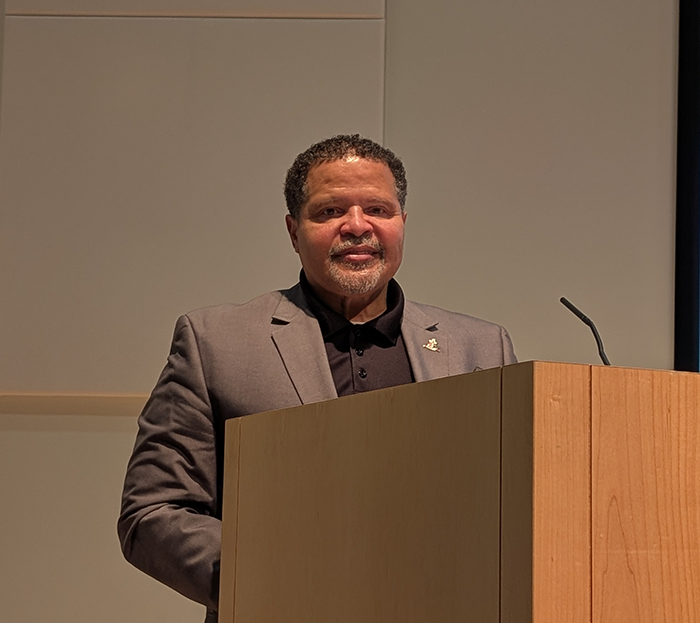
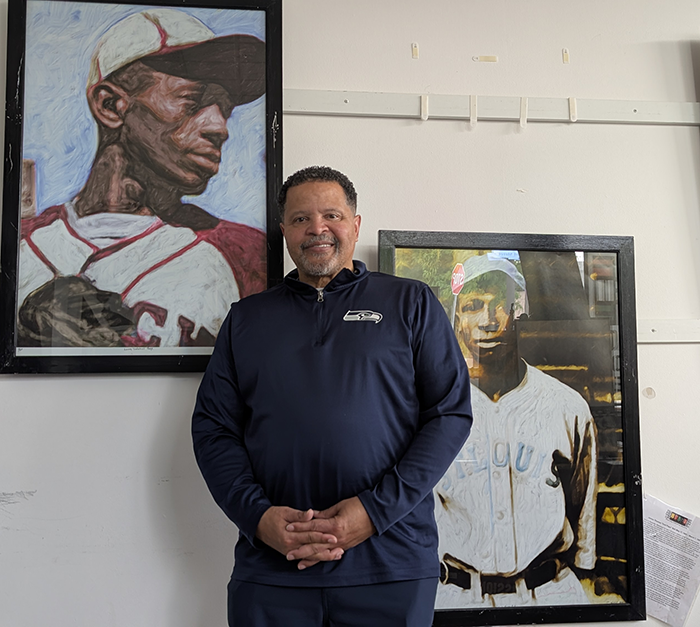
Eric L. Ewing, the Executive Director at the Great Plains Black History Museum.
I understand this is a very auspicious year as well.
Yes, this is our 50th anniversary. In June, we’ll be celebrating that event through our Jubilee luncheon.
Please tell me a little bit about how the museum got started and then how we end up here today.
Well, Mrs. Bertha Calloway was the founder of the Great Plains Black History Museum. We started at the original location, the old historic Webster building on Lake Street, and we operated out of there up until the mid-1990s, and then for a brief period of time, closed our doors, but then reopened them. And then when we reopened them, we were actually doing traveling exhibits, and then we found a temporary home at the Crossroads Mall, and we were there in 2017. In August of 2017 we actually relocated down here in the old historic Jewel building right here on 24th Street.
Tell me a little bit about your exhibits and collection.
Right now we have two permanent exhibits that folks can see throughout the year and seasonal or new exhibits that are currently on display.
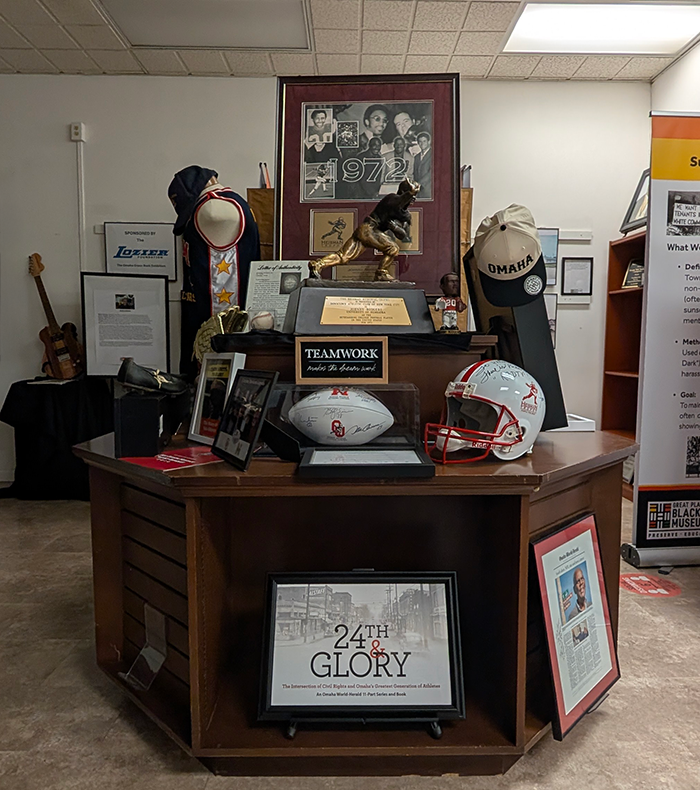
We’re opening up our League of Our Own, Negro League Baseball, focusing on the history of the Negro League and some of the individuals that played in the league, as well as some of the women that played in the league as well. One of our permanent exhibits is the Hate and Hope exhibit, which talks about the history of hate in America as it pertains to African-Americans and about hope and possibilities in African Americans’ successes here in Omaha and throughout the country.
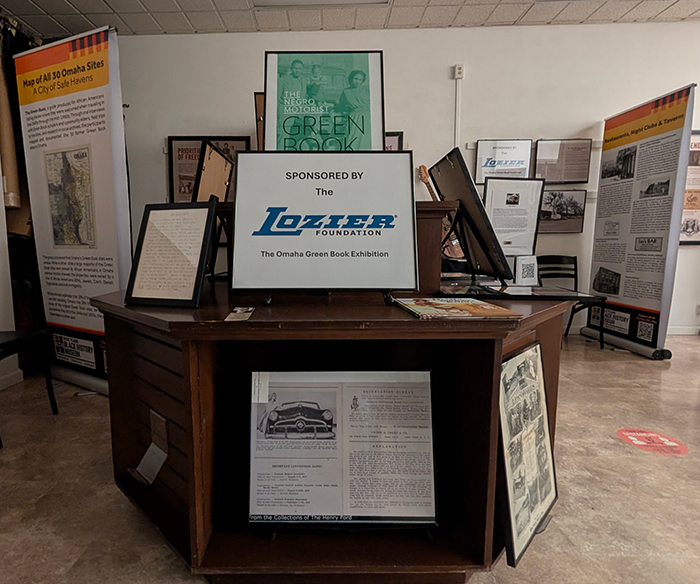
And currently, we’ve extended our Green Book exhibit, focusing on the thirty Green Book sites that were here in Omaha. Some were here in North Omaha, and there were also three individual institutions that were located over in South Omaha near the packing houses. In addition to that, we put up Black Citizenship in the Age of Jim Crow, a canvas exhibit focusing on the history of African Americans from right before the start of the Civil War up until the mid-1960s during the Civil Rights Movement. And then we also have our 24th and Glory exhibit, which focuses on historic African American athletes from the late 1960s to the early 1970s, focusing on athletes from North Omaha.
Some pretty amazing stories for that. I was here a while ago and I purchased two books, one for me and then one to give away at an event I went to.
Was it “In Their Own Image”?
No, it wasn’t that one. But now it looks like I have more books I need to buy. That one looks really good.
Yeah. That book captures some of the things that have been in our archives as far as photos that are currently being cataloged up at the Criss Library at UNO.
I understand you have tours also.
Yes, we have tours. We’re open Wednesdays through Saturdays from one to five, and folks can schedule tours by appointment. They can go to our website, which is gpblackhistorymuseum.org, to schedule a tour, or they can just drop in and then we take them on a tour. And then I also share with folks that although our hours are generally Wednesdays through Saturdays, like I mentioned, if those particular days don’t work for you and you want to come in or want to bring a group on a Monday or Tuesday, just let us know and we’ll make sure we’re open and available for that.
I’d like to learn a little bit more about how the museum got started and how the collection grew over time, and if you’re looking for any artifacts or things that might be displayed in the future.
Well, it started, of course, with Mrs. Calloway. She received a grant from the city to open up the museum in the historic Webster Building. I’ve been told that she had various artifacts, but she also got artifacts from people in the community. When folks would move out of a home, in some cases they wouldn’t take some of their things with them. Sometimes they would leave things like photos and old artifacts, and she would then collect those things and add them to our collection. After the building got opened up, then community members would donate and drop off various family artifacts to the museum to be added to the collection. And we’re still doing that somewhat as well. As a matter of fact, just today we had some artifacts dropped off pertaining to President Barack Obama. Sometimes community members drop off various artifacts to the museum. One thing we don’t take anymore is sometimes folks want to bring in old magazines, maybe old Jet magazines or Ebony magazines or different type of magazines. We don’t collect those much because a lot of them have been digitized and are available that way, so we don’t take them because they would take up too much space. But we accept other physical artifacts and add them to the collection. One thing we share with folks is that we appreciate any donations that they may provide us. But we do let them know that although you’ve provided this donation, this artifact may not necessarily be displayed until it can be tied to an exhibit that focuses on that particular subject or area.
It must be hard to try to coordinate and bring the story out and find the things with common threads.
Sometimes it is, and sometimes as you get the various things, you can see that you’re getting a lot of things that share a similar story. Then that’s how you develop an exhibit. With the hate exhibit that we have here, the reason we were able to develop that is because of artifacts which we had received and that kind of fit a narrative to tell that story about hate. But then again, not wanting to just focus on that area, then we created the exhibit on hope, because we wanted to have something beyond the negative horrible things that may have occurred in history and to tell some of the more positive things that have also occurred in history.
Thank you. Is there a question you wished I would have asked?
I did mention the 24th and Glory exhibit, didn’t I?
Yes.
Okay. One thing I always share with folks is that our museum is the only museum in Omaha where you’ll see a Heisman Trophy.
Oh, I’m not sure if you’re aware that the results of the Omaha Tourism Award came in. And although we didn’t win, we were runner-up this year.
Congratulations, I did see that.
So, we just have to try harder next year.
It’s pretty amazing.
And I don’t know if you’ve also seen the renderings of our new facility that we’re looking to build basically right next door to the old historic Webster building. Yes, so we’re currently at 40% of the funds raised for that, but we’re still working to get 70% or more, so we can break ground to be able to provide larger and better service to the city of Omaha.
In 2025, we had visitors from over 47 different states and from 11 different countries. We had almost 14,000 interactions for the year 2025. When I came on board in 2017, that year we had a little over 2,500. So folks are coming to us now. Once we get into the new facility, we know that more folks will come and we’ll be of bigger and better service to the community.
Thank you.
All right, you’re welcome.
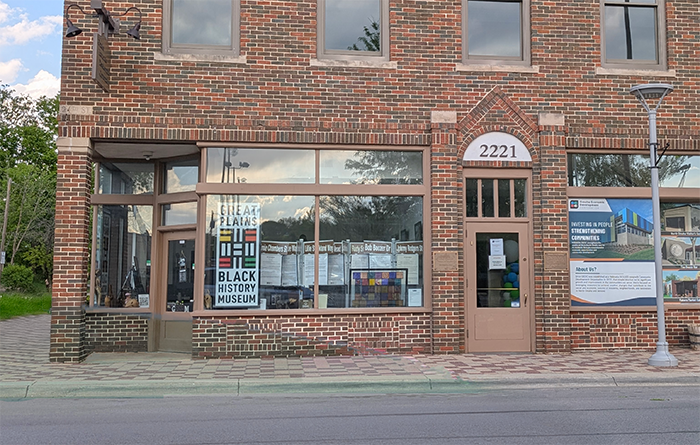
Great Plains Black History Museum
(Jewell Building)
2221 N 24th St.
Omaha, NE 68110
(402) 932-7077
https://gpblackhistorymuseum.org