Omaha Interview: Kari Kawa Harding, of Johnny’s Cafe

Exterior of Johnny’s Cafe

OmahaNebraska.com Interview with Kari Kawa Harding of Johnny’s Cafe

Omaha, Nebraska.com here with …

Kari Kawa Harding stands in front of the doors of Johnny’s Cafe

Please tell me a little bit about what you did before you became owner and your earlier days here.

Yes. My grandfather started the restaurant in 1922, and then my father and my Uncle Jack took it over in the early ’60s.

So I did grow up being here. Not as much as people think I was, but I do remember driving up to the back and hearing all the mooing, and flies would be everywhere. It smelled awful, but they always said it was the smell of money. I do remember all of that.

I went to a hotel and restaurant management school at the University of Nevada, Las Vegas. Then I worked for Marriott Corporation in California for a couple years, and then I decided to come back and work for the family. My sister Sally also came back, so we both have taken it over now. My uncle has passed away and my father is semi-retired, so Sally and I are both running it now.

The restaurant industry is really hard, and there was a whole lot that happened with COVID. Tell me how you kept going and things you learned that might be good advice to other people. 

To be honest, COVID was very, very difficult. We had never seen anything like it. We had gone through recessions. Closing of the interstate. People always wanting to go to the new place. But this was something we’d never seen. We’d never had the government tell us, “You have to close.”

And you still have bills to pay. This is a very big building, so you still have power, water, everything that you just have to keep paying.

We just really put our heads down. And as soon as we were able to open, we did three weeks later. While we were closed, we did “Easter to go” for people and stuff like that, so we did a couple of things here and there. But on the other side of it, we’re known for steaks and prime rib, and that isn’t really what people think of “to go.” And I think also at the time people were so nervous that they didn’t want to pay for high-priced items compared to places that were doing pizza and fast food.

We were very fortunate in that we did receive federal grants that helped us stay open, even though it was a long time coming. We really worked hard and got lean and mean because it was very slow for a very long time,  and I think it was a mixture of people being nervous and everything else that was going on.

We did try to think outside the box. We would do huge holiday meals to go for people, like packages for 4, 8, or 12.

We did TV dinners on Friday nights that were chop steak with gravy or chicken fried chicken with chicken gravy which was a big seller.

I think it taught us a lot about how to get lean and mean to sustain, because it took quite a while until things got back to normal. And I think we kind of felt at the time that we’d never seen anything like that, so we thought once we opened, people would be dying to go out.  People were very scared, but I think  it helped us that we’re a well-known name. We have high ceilings here, and we really spread out tables. We did everything we could to make people feel comfortable. We’re both happy and proud that we survived it.

We’re glad you’re still here. You’re one of my favorite restaurants. 

Wonderful

Interior of Johnny’s Cafe looking out to open front doors with plaques and images showing decade by decade the history of Johnny’s Cafe
Plaque hangs on the wall at Johnny’s Cafe showing historical images of the Cafe and people

I enjoy coming here. The staff is great, the food is great, and I love all the history.

It is fun to see.

Tell me a little bit about your grandpa and how he started it.

He was an immigrant from Poland, so really our last name is Kawalowski. And when he came over, he was around 12 years old.  He came with an aunt, and he was just happy to be here. They shortened his last name to Kawa. When I  was growing up, people used to think I was Japanese or something, but I was like, “No, I’m from Nebraska.”

My grandfather came to Omaha and he worked a little. During World War I he had a job in a kitchen. Then when he came back to Omaha, he bought a little bar. The name on the bar was “Johnny’s,” and my grandfather’s name was Frank Kawa. The story goes that he didn’t have enough money to change the paint on the building. We’re not even talking neon, we’re talking paint. So he would answer to the name of Johnny and he would sign things “Frank Johnny Kawa.”

It was just a little bar with eight tables. The old pictures show people who have guns on them, and oil lamps are on the walls. It was in South Omaha, which was kind of the Wild West in the ’20s. We didn’t find out until much later that he was a beer runner. He was well known and making a lot of money, and they were after him. Once Prohibition was over, I think he decided to go legit. He decided to really seriously get into food and drink.

As the story goes, Johnny’s just grew. As the stockyards grew, there were so many people around all the time. They were open for breakfast, lunch, and dinner. And they just kept adding on rooms every which way they could.

They talk about in the ’50s when there was sawdust on the floors and they’d have to hose it out every night because of everything on everyone’s boots. They were open from 6 am to 1 am every day, and they just grew with the stockyards.

My grandfather died in the early ’60s. I never met him, and my mother never met him either. And then my uncle and my father took over the restaurant. And then Sally and I were proud to be part of the next generation, and we took over in the late ’90s.

So this started out as a bar and then it came to this location? 

It’s always been on this corner of 27th and L. Probably the really oldest part of it is the corner of 27th and L. There used to be a door right there. If you walked out now you would probably get hit by the cars going by.

I don’t even really know the old walls or anything. I mean, they’ve really changed it around. In the ’70s they changed it to what it is now. And they really did change it a lot. It used to be a lot of little dining rooms and all this stuff. The original part, though, would be the corner of 27th and L, and they just added on.

What’s your capacity here?

For the dining room, full capacity would be 175. The party rooms are 125. And the bar is about 75.

So you can hold anything from date night or just coming here to enjoy the food like I do, to really larger events.

Yes, yes, we do parties. We can do private parties up to 120. We have closed down for private weddings that are over 300. But we also have the booths which everyone loves, so it’s great for date night. And we have the old-school bar, which a lot of people love. They just like to go in there and have a cocktail and pretend they’re in the past.

Right now I’m looking at this beautiful wine area with the stained glass. Could you tell me a little bit about it and the wine that you offer? 

This was built in 1971 when they redid the whole restaurant. They really wanted the restaurant to have what they called a “handsome feel” with the red walls, the dark wood, the red leatherback chairs, the wine cellar. They were very much into promoting wine, because they felt it was a good match with beef and prime rib. So they had it built. I believe the person who did the stained glass was from Omaha. They did all the J’s and the grapes. We have wines in there. Our wines range anywhere from $20 to… I think we go up to $180 bottles, but most of it is affordable. We’re here to sell wine and to match. And we want your dinner to be a wonderful experience.

And so we don’t age wine. That’s not our goal. Our goal is to match it with our food. But we do sell wines by the bottle, in the glass, at lunch and dinner.

We do wine tastings twice a month, which are $30 a person. We have different wine people that come in and you taste five wines. Then we do hot and cold appetizers with it.

T-bone shaped arches and forest mural in the background, wide view
T-bone shaped arches and forest mural in the background, closer view of aches

What are some of your favorite foods here and some of the most popular dishes?

I think what got us on the map definitely was our steak and prime rib. Everything is corn-fed beef from the Midwest. We age and hand cut it all here, so we have our own butchers. All of our soups, dressings, gravies, they’re all homemade from scratch, which I think tastes much better.  AndI think that puts us on the map because I don’t think a lot of people still do that.

But the menu is well rounded. There are other things. If you don’t want beef, there is seafood, fish, chicken items.

We do a lot of old-school specials at lunch, which we’re kind of known for because a lot of people don’t do that.

We have oxtails on Tuesday. Thursday they do actual roast turkey and dressing, where they’re actually cooking whole turkeys.

Every Thursday?

Every Thursday at lunch.

Wow.

Turkey and dressing. And then I think my favorite is the tenderloins. I do like petite filet or chateaubriand. I think the prime rib is always wonderful. We slow roast it.

We do fresh salmon. We do a sea bass at night with a lemon piccata sauce, which is wonderful.

And we also do old-school four-piece fried chicken, which you’d be surprised how much we sell, because people like that. We also do chicken that is more heart healthy, like a ginger chicken, which is a chicken breast marinated in ginger and soy sauce and grilled.

So we try to have a little bit for everyone.

And then also our desserts are homemade, too. I forgot to say that.

Oh, wow. Tell me a little about your desserts.

We have a pretty large dessert menu. We have creme brulee. We have bread pudding served warm with a Jack Daniel cream sauce.

We have a warm apple crisp served with a scoop of ice cream.

We have apple, cherry, and pecan pie at all times. We also have plain cheesecake or Oreo cheesecake. So there’s quite an array of desserts, and they’re all homemade.

And then we don’t always have it, but once in a while he does make homemade carrot cake, which people go crazy for.

Any favorite memory stories from when you were little or now? 

I do always remember that when I was little, like, we would drive up, and being girls, I think we would always tell our dad, “Oh, my gosh, it smells terrible. And all these cows are mooing, and there’s flies everywhere.” And he would always tell us it was a smell of money, which I think is what every cowboy and rancher in Nebraska would say.

I do remember in the ’80s, the stockyards were still open, but barely, and a cow got loose and was running down L Street. No one could decide exactly what to do. So the police are out there, the Humane Society is out there.

The cow started coming toward Johnny’s, and they were afraid it was going to hit the big front doors, and they didn’t want it to ruin anything. The police and the Humane Society couldn’t decide what to do. So my uncle took serving trays and threw them as Frisbees to the cow to get it away from Johnny’s. The story actually made USA Today.

Oh, wow. I was thinking, this is a bad direction for the cow to run. 

It is. It is. It might be served.

How did the stockyards change everything when they went away?

The amount of people in this neighborhood had slowly been dwindling for quite a while after they decided to get rid of the stockyards.

They really thought seriously about moving Johnny’s, like, maybe out west. And I think they just decided it was a historical place and they should stay where they are.

We’ve seen a lot of transitioning in south Omaha, both bad and good, but we’re proud to always be, like, one of the footholds that was always here. So that was very hard.

The stock yards were dwindling, and by the time they closed, they had been gone for quite a few years because there was hardly anything going on there, and there were not many people going through. And right around the same time, the Interstate was closed for a couple years as they redid everything around us.

So it was a hard time in that you really had to know Omaha, how to get into here, because you had to come the back way. This was before GPS and before you could talk to your phone about how to get here. After they finished the Interstate, they did make us a cement island. People are very scared to take the frontage road because they’re afraid they’re getting on the interstate.  We used to spend so much time on the phone telling people how to get in here.

That was my concern the first time I came here, and the second and the third time, and then I got used to it. 

We would be on the phone all the time telling people, “You’re not gonna get on the Interstate. It’ll take you in.” So that did make it easier when there was GPS and people understood that. But still to this day, on big weekends like Berkshire when there’s a lot of people out of town, there’s people who ask, “How do I get in there?”

But you don’t really have a choice when you’re dealing with Nebraska roads: they do what they want to do.

Today, GPS took me because I was in a different location. It was like a historical journey almost to get here. And it’s a real testimony to your resilience and being able to pivot but still keep the core value and the core wonderfulness of what’s Johnny’s. 

South Omaha has always been where the immigrants go. And really, the packing plant jobs pay great money, so there’s always been a melting pot around us. It has changed over the years but it works to our benefit, too, because those are people that want to work and want a job.

Is there a question you wish I would have asked that I didn’t or something people don’t know about Johnny’s that you’d like them to know?

Steak for lunch with scalloped potatoes, salad and broccoli and cauliflower

I don’t think a lot of people realize that we’re open for lunches Tuesday through Friday. Our lunches range from $11 to $24, but you can get a soup, a meal, a roll, a potato for $15, and it’s cooked to order. It’s homemade. That’s almost the same price as fast food. I don’t think people realize that and that we do have more than just beef at lunch.

Something for people to keep in mind is that we will be open for both Easter and Mother’s Day. We do a limited menu from 11:30 to 2:30 on both days, even though usually we’re closed on Sundays. I think we’re a nice choice for Easter or Mother’s Day if you don’t want to cook.

Thank you.

Johnny’s Cafe
Omaha, NE 68107
(402) 731-4774
https://www.johnnyscafe.com

Omaha Interview: Sam Laughlin, Executive Chef at Noddle Hospitality (on Sammy’s and Tiny’s at Aksarben’s Inner Rail)

Sam Laughlin at Sammy’s with menu in background

OmahaNebraska.com Interview with Executive Chef Sam Laughlin at Noddle Hospitality

OmahanNebraska.com here with…

Sam Laughlin.

Tell me a little bit about your restaurant.

So, Sammy’s here. We’re not an all-natural but a very little preservative sandwich shop. We like to use healthy ingredients sliced to order for our sandwiches, as in our meats and our cheeses. We like to use local ingredients where we can. So, like our lettuces and our tomatoes, when we can use them, we do try to use them. We like to use local brands like Rotella’s as our bread supplier. Any of our chips and things like that, we like to use a lot of gluten-free options and just different items to kind of make the whole community welcome, including people with food allergies or dietary restrictions and also while making a little bit of a healthier option in the [Inner Rail] Food Hall as well.

They were talking to me about your lunch meats.

Our ham and our turkey as of now have no preservatives in it. They are strictly ham and they’re strictly turkey.

That’s impressive.

There’s no meat glues or anything that binds the meat together. So that’s why sometimes when you see us slicing, they tear a little bit more easily because it doesn’t have those preservatives and those glues and such to hold things together.

I didn’t know there was a meat glue.

Yeah. So back in my culinary days, we used to use a gastronomy technique that you could fuse two pieces of meat together to make a certain shape or to make a certain design for those meats as well.

Tell me a little bit about what you did before this and then how and why you started the restaurant.

So, before this I was a cook at multiple places around town: Via Farina, Jackson Street Tavern, Stirnella when that was opened… Au Courant… and that’s kind of where I finished my big extensive culinary journey. Like, learning around town was Au Courant, and then I went out west and helped open up Lost Rail Golf Club as well, that golf course. Helped start their food program working with another chef, eventually taking that over and running it myself. And then now coming back down here. I just kind of wanted the change of pace. Being in the restaurant was fun, and I want to get back into it for sure, because I wanted to change it up and kind of start something a little bit fresh. We also owned Tiny’s over there. That used to be my nickname around town as well.

Oh, so you’re also Tiny’s?

Tiny’s Pizzeria or Tiny’s Pizza Joint, and just kind of been a local around town and kind of earned my nickname Tiny from being made the chef at Au Courant and kind of just wanted to start up the sandwich shop that we felt would benefit Omaha. You know something a little bit more fresh, a little bit more clean, and something that comes from Omaha.

What are some of your favorites? You would have two hats here—restaurants. Tell me what your favorites are here and tell me about your favorites at Tiny’s.

Okay, so my favorites here are—I would say the number one, the Godfather. It’s like our version of the Italian club or Italian sandwich. And then I would say our The Mark, which is our #10, which is basically a Cubano sandwich or a Cuban sandwich. And then I would say for sure the Tuna Crunch. The Tuna Crunch is special because we make our own tuna salad in-house. But we also do a nice, healthy serving of crushed potato chips on the top to then add the crunch to the tuna. And then for Tiny’s I would say the Hot Girl for sure is one of my favorites. And then the Margherita Pizza as well.

I don’t remember which pizza I had. I’m going to have to look at the list, but it was fantastic.

Yeah. I appreciate that. Thank you. The same thing was over here. We’re trying to make the healthier option… the same thing we’re trying to do at Tiny’s as well. We understand that it’s pizza and there’s cheesy deliciousness going on, but like our dough is 100% sourdough so it’s a little bit healthier on your stomach. It’s not too heavy on your stomach. Our ingredients, we use Grandé  cheese, which is again a no-preservative cheese that we like. There’s no caking agents or anything like that in the cheese that we use, but we also like to use local ingredients over there like our mushrooms from Flavor Country Farms. We love them. They serve us with some beautiful mushrooms for our Fun Guy pizza and then also…

That’s what I had.

Yeah, yeah, yeah. Okay, that’s a really good one. That’s one of my personal favorites. But the same with the Hot Girl [pizza] and the honey. The honey we use is from a local farm called Miller Dohrman Farms. We get the honey delivered to us by them as well. Beautiful, beautiful farm, and it’s a sense of community that I like to bring to the restaurants that I worked in and that I have worked in the past. It was beautiful seeing the community come together, all the farmers and all the different people that it takes to make a restaurant great.

That is beautiful.

Thanks. I appreciate that,

Why did you pick this area and Inner Rail?

Because Aksarben is growing, it’s beautiful. It’s becoming a community more and more every day, and I can see it. I’ve seen what Noddle Hospitality have done with the… at the Inner Rail, Sonny’s, all of Zone 6, like, it’s been a beautiful journey being a part of their team and being along with them and them helping me grow and do the things that I want to do in this community as well.

Sammy’s Sub Shop
Inner Rail Food Hall
1911 S 67th St.
Omaha, NE 68106-2965
https://www.innerrailfoodhall.com/restaurants/sammys-sub-shop

Omaha Interview: Mouth of the South Restaurant Interview with Samuel Voss, Part Two

OmahaNebraska.com Interview with Samuel Voss, General Manager of Mouth of the South Restaurant in West Omaha, Part Two

Please tell me a little bit about Ryan Ernst coming here, because both of you weren’t born here.

No, Ryan had family here as well, so he was raised kind of all over. But he had family here and came up. He kind of migrated north, and he just got into the food scene, and ever since then it just is the thing that drives him. And so that’s how he got here. But I was already a Midwest person. Didn’t really travel much until later on.

I’ve been around now.

Probably six months ago I was in New Orleans for about a week. And I was actually disappointed. You see all these cool pictures and Mardi Gras happening, Bourbon Street, all these things sound amazing. But I got down there, and it smells. Like, this city stinks. It’s cool to look at, but the smell and the heat and all that stuff. I didn’t find anything good to eat until the third night when we went to Drago’s and we got their char-grilled oysters. Amazing. Like, we should have gone here the first night. The second night, I’d take a Big Mac at that point. I was so disappointed because we serve better food here than you can get there. Ours has better flavor. Ours has better presentation. The rice isn’t cooked to death. Sometimes when you heat a sauce that has a has a roux in it or it’s thickened, sometimes if you get it too hot, it breaks. And so sometimes there’s oil pooling on the top, and that’s kind of what it was and just really disappointing. So I was, like, man, there’s gotta be somewhere where I’m gonna hit a home run. That third night we went to Drago’s, and I was like, this is probably the best I’ve ever had.

But for me, New Orleans was kind of one of those things where it’s like I’ve been there, and I’m good now. I know what we do, and I know what they do…

You have an amazing culinary background, you’re in a good place, and you went to New Orleans and just…

I wasn’t I wasn’t over thrilled.

This makes a really great testimony. You work here, and it’s really great.

I think the greatest thing that came for me out of New Orleans was I did a couple of tours like city tours, and their history is amazing…and the history of music, because I’m a music guy. And so you didn’t know a lot of these artists came out of New Orleans. You’re like, I didn’t know Harry Connick Junior was the one that helped build this music center where these kids that have no future can go in and learn how to play instruments and learn how to play music. I had no idea of any of that. And even touring the above-ground cemeteries, that was super interesting. So the history of the place was just amazing. And then it was at that point when everything clicked. Then it’s like, boom, the story comes from…you know, people in New Orleans eat red beans and rice on Monday. And you’re like, well, why do they do that? I could eat it Tuesday or I could eat it Friday or Sunday. Well, they do it on Monday because it’s an entrée that you can start on the stove and you don’t need to watch it. And Monday was laundry day, so back in the old days, these ladies are just with their washboards, their pot of red beans are just boiling away, simmering on the stove while they’re just grinding, washing laundry. And you’re, like, that’s what they ate on Mondays, because that was laundry day. Who knows that? Who, walking in Omaha, Nebraska, knows that? So some of those little nuances to the stories made perfect sense. But the history and the tourism and the architecture were probably the highlights of that trip for me.

You said he had family here…when did he get the idea for a restaurant and then starting out in Florence? I’m just curious.

Oh, boy. I would say… I’m not sure, exactly, of the dates. It was something that he wanted to do. Obviously, trying to get into this business is really difficult, and it’s very costly. We have some pretty unrealistic restrictions. too, in the city with build outs and trying to go through plumbing boards and getting inspections done is kind of challenging, so I’m sure he had some obstacles there, but it’s always been something he wanted to do. It was always in his heart, just waiting for him.

It was the right opportunity  when the location came up down on 30th and Florence. Even to this day, I wear this jacket or the shirt. I’m always in something that says Mouth of the South. And when I’m at the store, I’m stopped, like, “Oh, my God, you work at Mouth of the South.” I’m, like, “Yeah.” “I just love that place. When are you coming back to Florence?” And it’s like, “Well, there’s not really a location in Florence right now, but we do have the Lakeside location of 168th and Center, and visit us out there.” A lot of the same menu items from day one. A little bit of menu evolution that went on there, a little bit, but probably 60 to 80% of the menu is still the original from day one.

It must be hard figuring out what to keep and what to change. As you said, people’s tastes are evolving or can be influenced by different trends.

Yeah. Sure. Sure it is, and literally this business is all about trial and error. There’s not any equation like a perfect equation where you could get online and compute “I want my restaurant to be very successful.” There’s a lot of components that go into this business. This is probably next to the medical industry, and I always joke… because my good friend is a nurse and so we always chat. It’s like you have so many working pieces in your industry with medicine, so I can equate all the different medications to ingredients. If you make a wrong move to a patient and they’re harmed or whatever, I could do that too, if I don’t abide by guidelines for temperature and time. So, just like Chi Chi’s, the chain that closed years and years ago, they found a foodborne illness in green onions that tanked their corporation, something as simple as that, and it got back to somebody didn’t wash their hands. There’s so many working pieces. Like, from the vendors, you need to make sure that you’re getting reputable suppliers with products to make sure that you don’t have anything coming in that’s contaminated. And then it’s how do you train and teach your staff to handle things properly and cool them correctly and follow things correctly and reheat correctly and hold it correctly. There’s just a lot, and so this business is really, really complex. That’s the thing. Sometimes when you get on Food Network and you see these competitions, it’s all about the glitz and glam. And I just sit there and I chuckle, and… like, there is so much more to it than “Oh my gosh. you burn a salmon and the whole night just went to heck.” There’s so much more behind that.

 Not just fast, fancy chopping for 25 seconds…

Right.

 It’s hard work.

Right. If I could take 14 minutes to put a garnish on an entree, I certainly would do that, but it’s not… When you’re in the… and you got tickets to move, and you’ve got people to serve…because in my history, what I have realized in this business is people coming in, they get hangry. They want to eat right now. They don’t want to wait. And I don’t blame them cause I’m the same way. When I go somewhere, I’m like, “I am starving, and I want to eat.” I don’t want to wait 45 minutes for something to come out, or 30 minutes. I want something quick.

 But it’s also amazing to say I’m where you are.

Right. And so that’s where you the balance comes in, to teach your staff on how to do that and how to execute that the right way. Don’t cut corners. You don’t get anywhere in this business by cutting corners. Just don’t. And that’s what I teach, too. You can’t rush something. We don’t microwave anything, so don’t even think about it.

 So nothing is microwaved.

Yeah. We don’t use a microwave at all. And even our freezer space is super, super small. We don’t have a lot of things that come in frozen, either, so it’s fresh. And like I said, we process, we make, and we sell. We do it in small batches. So it’s the freshest that we can get.

Mouth of the South’s Shrimp and Grits, artfully placed in a bowl on wooden table by window with sun streaming in to the restaurant

I enjoyed the meal that I had here. The shrimp was very fresh. It didn’t seem like it was sitting in a freezer forever.

Right.

And then the peppers were really good. What kind of peppers were those?

Those are poblanos, and we get those fresh. And again, like, when I say literally we do everything, we’ve got a team back there that roasted peppers. And then they wrap them and then they’ll stand… and I’m like, holy cow, there’s got to be a simpler process for this. But there really isn’t. And they love it. Like the Hispanic crowd that we have back there—amazing workforce for us. Love them. They’re just literally like a family. They’ll stand back there for hours just peeling the burnt pieces off of these roasted peppers. And that’s what we put in things, so it’s…

There was a little surprise with the shrimp in there, and it was just like at the perfect timing. You’re enjoying all these flavors. And then there was the pepper, and it was really enjoyable.

Awesome. I appreciate it. So yeah, that’s it in a nutshell. That’s Mouth of the South. It’s always evolving. There’s always things coming. We sort of got menu ideas stabilized to where we want to go, and now I think it’s time we…because dining out is more than just grabbing a bite. It’s more about, you know, you want an experience. If you’re going to…especially in this day and age, we hear the word inflation so much and it’s like I understand that word, and how do you then create a better value for somebody that’s coming to your establishment to spend money with you? You’ve got to give them a better experience. That’s what it is.

When I go out to eat, I love to just chat with the server, because it’s more than just… Of course they’re taking care of me, but they’re not my servant. I can form a relationship with somebody and ask, “How are you? How long have you worked here?” Because I always ask those questions when I go out. And I always frequent places that I find somebody that’s interesting like that, where my service was just the best I’ve ever had, and then I tend to go there. I’m a creature of habit. If I like the product and I like the service, I always go back. And so that’s kind of what we preach here: Just get to know your people. Just give them what they expect. Don’t cut corners. Don’t rush. Never ask anybody to hurry up or leave. Even if there is a wait, they have the table for as long as they want it. And that’s just kind of how we operate here. And we have a lot of good people, too, and I think it gets back to the character of the person as well. Everybody here gets along. There’s not a single person on our team that we have an issue with. Everybody just knows what to do. They’re willing to come in, they’re ready to take care of people, they’re ready to give good service, they’re ready to sell a really great product, and they’re ready to get somebody to come back. We want repeat business because that’s the way that we can showcase what we’re doing.

But like I was saying earlier, our next plan of attack is our bar offerings on that side, to kind of elevate cocktails a little bit. So we’ve got a bunch of new glassware that we just got in. We’re going to be making a few changes there, just with some better things. Trying to get some local things. Maybe instead of using an off-brand vodka like a normal bar does, just provide a good vodka like a Tio’s. There’s no reason to put a really crappy vodka in something nice that you made. And the syrup from scratch, that you’re just going to load it down with this garbage vodka.

Yeah, this just seems to need to have a better partner. I haven’t had anything here, but when you’re spending that much attention to detail and trying to keep the food more like food instead of some of the other things we have out there, it makes sense that you’d want to do that as well.

Yeah, yeah.  We do want to elevate it. And like I said, that’s kind of my motto. Every day that I walk in, I look at something and say, “How could we do that better?”

So constant ideas, creativity, innovation…

Have to. Yeah, have to every day. You just can’t… and sometimes you get those places that are just unwilling to look at the menu, or like, “There’s nothing wrong with my Caesar salad.” You’re right. It’s not. I’m not saying that it’s wrong. It’s good. But I think your dressing could be better. Maybe if you used anchovies in there like a true Caesar salad, it might be a little bit better and have a little bit more robust of a taste instead of just it tastes like mayonnaise with a little bit of Parmesan cheese in it and maybe a crack of black pepper, right? Or there’s no reason why you’re buying pre-cut lettuce. Like, lettuce should be fluffy, and the edges shouldn’t be brown, and it shouldn’t be soggy and dense. Lettuce should be nice. Okay, well, is there a farm somewhere where we could buy locally grown lettuce, you know? And that just where my mind is always at… like, what can we get? How can we do it better? Even from a layout. Like, does the layout of the restaurant makes sense, or are people kind of packed in here like sardines? Do I want to sit this close to somebody else if I’m sitting here, like, they’re trying to have a good experience and so am I, but I feel like we might be part of the same group, right? And so there’s just some of those…

Yeah, in some places it’s way too tight.

Right. So it’s just thinking outside of the box in those ways, and it’s every day. You just walk in, even when you park your car. You look at the patio, like, “Oh, wow, our patio…”

Yeah, it was very inviting.

And in the midsummer, it’s like, “Oh, there’s wrappers out there. I gotta go get them, because they blew off the table” or “Could the landscaping be better?”

Thank you. Thank you so much. Favorite menu items are things people should try?

I would say probably my go-to is gonna always be the shrimp and grits.

Yes, it’s amazing.

We have the best grits. Like I said, I always chuckle every time I pass a Waffle House, and I was like, “Man, I used to love their grits,” and I think they just boil them with water and there’s nothing to them. Maybe a little salt. They’re just kind of flat. But then I got here, and ours are just fluffy. It’s just like clouds, you know? And you got that Gouda coming through, and you taste the butter and it’s just real. Our burgers are really good. We hand patty those in-house so we’re not getting like a pre-done, pre-grill-marked or pre-frozen patty or a “puck” is what they call them. So we patty those. The crispy romaine salad is really good because we do the crispy tasso, which is like a Southern-style New Orleans bacon. Sometimes when people hear the word tasso, they’re like, “Oh my God, what is that?” It’s like, “No, you’re going to love it. It’s cured, it’s salty, it’s crispy. It’s just like bacon. And then we make our famous black peppercorn dressing the real way, with eggs and all that.

 Oh, I’ll have to try that.

It’s really good, and we take the Gruyere and we shave it. So you’ve got nice strips of Gruyere in there, and then we make our croutons out of French bread. We toss those in oil and some herbs, and we cook those, so it’s a really solid sandwich. A lot of people love the kicking chicken, but I’m not a I’m not a carb guy, so I don’t eat a lot of pasta or bread. I try to stay more on the whole-muscle meats. I love the Bourbon Street Surf and Turf because that’s got the crawfish and the Hollandaise on it with blackened shrimp and the mashed potatoes with garlic and real butter. It’s super good.

 I’m very full, but now you’re making me kind of hungry and wanting to try something.

It’s super good. Super good. And we have a Gouda ale right now that’s really delicious.

 I saw that. That sounds really strange.

It’s really good, and we use Abita beer. That was a nice thing, too, I forgot to add about touring New Orleans. We try to feature as much Abita products as possible because they’re based out of New Orleans. I toured their brewery while I was there. I got a VIP tour.

 Oh, nice.

It was amazing. I got to try a lot of things that we can’t get up here in the Midwest. And I was just, like, bummed. I’m, like, “Why? I want your… your blueberry wheat beer was delicious.” I think people here would really love that. But so I would say for the most part, that. And obviously the bread pudding. Once in a while, I’ll snag a bite if somebody’s got one. I can’t eat it, obviously, for the for the bread and the carbs. But we’re known for that. It won awards here in the city, #1 Bread Pudding in Omaha.

 Ooh, okay!

And we do a Bananas Foster cheesecake that’s really phenomenal.

I saw the description on that. That looked really good.

Yeah. It’s, like, bruléed bananas, and it’s just really tasty. The brownies that a lot of the younger kids like those, like the teenagers. It’s just this big brownie that comes all bubbly with this praline frosting and a big bowl of French vanilla bean ice cream, and homemade chocolate sauce that we make with… there’s whiskey in it. Yeah, it’s just… there’s so many things that are just really good.

 Thank you. I’ve got a lot to look forward to for next time.

Sure.

Thank you. I appreciate the interview.

 Visit this Omaha restaurant at:
Mouth of the South
16909 Lakeside Hills Plaza
Omaha, NE 68130
(531) 375-5399

Omaha Interview: Mouth of the South Restaurant Interview with Samuel Voss, Part One

OmahaNebraska.com Interview with Samuel Voss, General Manager of Mouth of the South Restaurant in West Omaha

Samuel Voss at Mouth of South Restaurant

Tell me your name please and a little bit about the restaurant and how you came to be here.

Okay. My name is Samuel Voss.

Mouth of the South is a restaurant that I visited when it was in Florence on 30th. I ate there, had no clue that I would ever work at it. You just never make those connections at that point. I just loved it from day one. And I think back then, I don’t even know what I had. It was something like a kicking chicken, I think. It was just a small place and that’s how it started. Ryan built it from basically nothing.

Obviously there was a fire 10-plus years ago; that one burnt to the ground . It started with a smoker that caught on fire. It took the building. And so he looked and looked to rebuild because it’s just his passion. He found a spot on 72nd and Ames. There’s a Baker’s right there. There’s a Home Depot. I think there’s a seafood place in there now. A little bit too big of a building; it just never really fit.

And so then he opened up Lakeside . Gosh, I think this was on Year 5 or. 6. And this has really been kind of the bread and butter. It just fits the area, the people…just a really supportive community that really, really love it. And it’s just doing great.

 It’s home now

It is.

He comes from a little bit of a background… his family is from New Orleans. And so the thing sometimes that I get discouraged about is there’s an education piece that comes along with this concept. And so when people hear of Southern food, they automatically think of soul food, and so both are really good.

Cajun Creole is not soul food, and so sometimes there’s a misconception there or a stigma. But soul food kind of generates more of like your Georgia area, kind of the more of the Bible Belt, and Cajun Creole is specifically, like, Louisiana, that kind of sell. So you’re going to have more seafood heavy, and it’s more robust in spice and flavor. People come in sometimes and they’re, like, “Oh my gosh. I thought you would have fried chicken on your menu,” and it’s just not in the cuisine. One of my favorite things to eat is fried chicken, but I wouldn’t expect that here just because of my background and being in this industry for 28 years and doing the culinary school thing at a really young age and living in Chicago, a big city, for many, many years.

So I kind of understand what all these cuisines are, and that was just my expectation. I understood it from day one, and I loved it. He’s really good with flavor. His palate is really good. He just knows how to pair things together, things that work, things that don’t work. And he’s not unwilling to try things either, which is really good, too. As we know, we (chefs) are as good as our last meal. That’s been the saying in the culinary world forever. And palates and taste do evolve. What was good yesterday isn’t necessarily good tomorrow, and so you’ve got to evolve and change. I say that the Food Network and all that stuff has just ruined restaurants, because now everybody has become a foodie with no formal training. Sometimes when I watch those shows my head just explodes. It’s like “That’s not what that’s called” or “That’s not the processor” or “That’s not the true way to do it.”

 Where did you go to culinary school?

At Le Cordon Blue in Chicago.

Wow.

I graduated in ’07, many years ago, and restaurants have just been something that was in my DNA. My mom was from a huge Catholic family, and cooking was the thing that always brought everybody together. But it’s just been an interest to me. I love that in this concept it’s small, but it’s mighty. People sometimes underestimate what it is or, or maybe just don’t know what it is or aren’t willing to give it a try. And I think once they kind of step out of that… over the line or out of those boundaries, they love it and they understand it. This is one restaurant, I would tell you, that since day one has been true scratch, 100%. There’s not a lot of restaurants here that can say they mix up, case, and smoke their own sausage.

 Yeah, I was really surprised and really happy about that [real made from scratch cooking including the sausages].

Right. We process all of our meats. We cure a lot of things. We smoke everything here. There’s very little that we get in besides butter and milk—we don’t have a cow out back. where you know, I can churn butter. I can certainly do that, but it just seems to be a waste of time for me. But to really put the focus into scratch. And I think when you do that, you can control not only the taste or any of those things, but you can control the quality. You can also control what ingredients that you’re then selling to your guests to then consume. Like, we’re having meatloaf. There’s no reason for it to have red dye in it. Like, what’s the reason for that?

 Oh, my. I didn’t know it could have red dye in it.

Right? I want our meatloaf to have beef, and I want it to have onions and aromatics and vegetables. And maybe a few eggs and a handful of bread crumbs or two. And that’s truly what meatloaf is. But, you know, a lot of places where they get it out of a package, you have no idea what you’re eating. So that’s a big thing for me too. Outside of the restaurant, I try to eat as clean as possible. And so inside the restaurant, it really just makes me excited that we don’t add artificial flavorings to things…even in the bar, with the bar drinks. And that’s been kind of an MO for Ryan. We make the peach syrup, we make the blueberry syrup, we make the strawberry syrup. And so when somebody wants a flavored lemonade, we don’t run and get this red jar of things or this yellowish off-colored jar of something that sort of remotely tastes like a peach. We make it with real peaches in the back. And so it’s sugar and it’s water and it’s lemon juice and it’s a pinch of salt and it’s peaches. And we boil that and maybe add a little bit of natural agave or sweetener to that. And that’s really sort of in every component and aspect in this restaurant. I’m really excited to be a part of that, and it’s good to know that people really support that because it is seeming to be more of a lost art, I guess, in a sense. I can open a can or my sister can open a can of green beans. Sure, they’re going to keep you sustained, but they’re not good. Let’s just get some fresh green beans and maybe, you know, blanch them a little bit, sauté them with a little avocado oil or olive oil. A little bit of sea salt, and call it a day. We don’t have all that junk. If you turn the label over and there’s all this other additives in there, it’s like it doesn’t make any sense. And like I said, that’s kind of been Ryan’s thing from day one. It just impressed me coming on, because I didn’t have that expectation, joining Mouth. And I knew what the food was, but I didn’t know how it was made. I knew how it looked, but I didn’t know like what the process was or how it was prepared, and it was just interesting to see that.  He’s got stacks of recipes everywhere and he just writes them all the time.

 Wow.

And so it’s neat to do that, but it’s been a fun, fun ride cause I stepped from kind of multifaceted concepts. I’ve done a lot of things. I worked at Coco Pazzo in Chicago in the NBC Tower. I was executive chef at 19 years old. I wasn’t even old enough to drink, and I was running an eight-million-dollar piece of business in downtown Chicago. So I’ve done, that and then it’s just… you know, when you’re at a young age you want all that glitz and glam, and then as you start to mellow out a little bit, you’re just like…I’m content with good. I’m content with great. It doesn’t need to be big or a lot, but I want it to be good.

I think you want to experience a lot of things, see what’s out there, and then eventually you learn what’s important to you. And for some people, maybe it’s staying here. And for other people it’s making other choices.

Yeah. And you know that.

But without doing that, then you don’t know how valuable right here is.

Right. And scratch is just something that just fits in my vocabulary, and that’s why I appreciate here. When I was growing up, a canned good to me meant something else than it meant to another kid in my class. We didn’t have 10 cans of carrots or 10 cans of corn. It was a Mason jar. I grew up on a farm. We had all kinds of animals, and we had a garden, and that was a different meaning to me. It’s like “What is this tin thing?” “Oh, that’s a can.” I’m like, “Oh, my God. Mine comes in a Mason jar. I’m not sure where you got that thing.” But that’s how we ate as kids. So, just kind of starving for that. Even to this day, I do a lot of my own preserving and canning at home just because I know the benefits of it.

 It’s something I wanted to learn and do once, but I haven’t found anyone to…for that process. It looks pretty laborious.

It is, but it’s easier than you would think. It is. You see all these gadgets, and then everybody has a different method of doing things. And you have to sanitize the jar and you gotta boil this and you gotta simmer that and peel this. It’s not as daunting as it appears. Actually, in my case, I think it’s actually therapeutic to just stand there over a boiling pot of tomatoes, making stewed tomatoes and you’re just jarring them up. You’re in your own world. You’ve got music on in the back and the dogs are laying across the room, and you’re just doing your own thing. And all of a sudden it’s just gratifying to hear all the little pops and tings on the lids as soon as they seal as they sit there and cool down. That’s really cool. And even jams and jellies, sauces, and all those things, I make from scratch. In this restaurant, too, there’s a lot of things we make, all the way down to the Bloody Mary mix. There’s obviously stuff that we have to get, like the raw ingredients, natural ingredients. We’re not going to make cheese, for example, because it’s very hard and it’s risky if you don’t time and temperature control it just right. Bacteria can do really horrible things to people. But that’s maybe something that we might learn at some point, I don’t know, but it is what it is. Now, most mozzarella I can make. I can make that with my eyes closed, or cream cheese, or all that stuff. But I’m not going to make a wheel of cheddar or a great big wheel of Parmesan or whatever it is.

 How did you end up coming here from Chicago?

I’m from the Midwest, eastern Iowa, and I actually moved here probably five or six years ago, maybe. I was doing a long-distance relationship and just realized, like…when you hear Nebraska on a map, you’re just like, “Oh my gosh, that place sounds boring.” Like there’s nothing in Nebraska, and I know what it’s like driving across western Iowa, and then you get to Nebraska and it’s twice as long and there’s nothing. So anyway, I came here and I was just like, “Holy moley!” Omaha’s a city of food. There’s restaurants everywhere. If you want anything at any time of the day, you can get it, and it’s a 20-minute drive or a 15-minute drive wherever you’re going. You go all the way north, all the way south, east, or west, and it’s still 20 minutes. And so that’s how I ended up here. But I ended up back in the Quad Cities after Chicago during the recession. It was really tough in the city in, like, 2008, 2009. It was really tough. So I actually went back and ran the restaurant that I worked in, going through high school. I had an opportunity to take it over, and I did that, so that’s how I got here. But and then just the corporate thing… I worked at a restaurant over at Village Pointe, an Italian place. They went belly up probably six months ago, but I sort of had an inkling that it was coming. It was poorly run by a corporate office, and that’s when this became available. And then Ryan and I just clicked from, like, day one. We are just, like, literally the same person on the same level.

 Wow.

We always say to each other, “Just get out of my head.” We could probably finish a sentence if we wrote half of it on paper, I could probably write the rest of that sentence, but we’re just on the same page. We’re working on some new menu items. We’ve got some ideas that we’re going to launch, starting out with brunch, because I feel like brunch is one of those things where you’re just out for the day to relax. You just want to have something good, sit down and have a conversation and make it a social event. So we’re going to attack our brunch menu first. And in the office, even, here, there’s just things that we have done that we have printed and posted to the wall with notes like “This is awesome, but I think it needs this” or “I like the idea of that, but I think it needs sunnyside up eggs instead of over easy.” And then, like, “This one’s a go. This was spot on—everything about it: the taste, the presentation, all of that.” So what we’re working on now is just dissecting, thinking outside of the box, to where…you know, I like to go out and have an omelet or a thing of scrambled eggs, but I can get that at home. If I’m going out, I want to have something that’s a little bit elevated, something that I wouldn’t normally eat at home, or something that I might not even select at all if it was an option, like would I eat avocado toast if I went out? But this sounds really good. I certainly wouldn’t make it at home because I don’t eat a lot of carbs, but I’d eat the avocado, I’d eat the crab salad, I’d eat all of that stuff. But it’s trying to get that and pass that along to people that really appreciate it. So that’ll be coming out here probably in the next two to three weeks.

Mason Jar Lighting, one of the unique features of the Mouth of the South Restaurant
Mason Jar Lighting Section

Visit this Omaha restaurant at:
Mouth of the South
16909 Lakeside Hills Plaza
Omaha, NE 68130
(531) 375-5399

Omaha Interview: Ryan Barry of Willie Dogs and Willie’s Ice Cream

OmahaNebraska.com’s Interview with Ryan Barry of Willie Dogs and Willie’s Ice Cream

How did you come up with the idea of Willie Dogs?

A few years ago, I originally thought I would just kind of get a hotdog cart to make some extra money and have a lot of fun. But soon, I realized there was a gap in the market as far as a nice local made hot dog.

Of course, New York’s got theirs. Chicago’s got theirs. So, my intent at that point was to create Omaha’s hot dog while doing everything as locally as possible. So, we do it from scratch by hand. These are all natural casing cold smoked hot dogs.

What were the ideas or flavors running around your head that were inspired Omaha?

Omaha to me is always kind of been the home of beef and baseball, right? You know, we’re the home of you know, stockyards and a lot of a lot of baseball, Men’s College World Series and other things. And it kind of always frustrated me that like we didn’t have something that kind of represented Omaha during those times or that took those things into consideration. So, for me a lot of those flavors were of course a natural casing that was the must have there’s something about that snap that is just like, it just it just hearkens back to that old-fashioned-Old World style of of making sausages and things of that nature.

I grew up obviously with the Stoysich families around and other butcher shops. My wife’s family was a butcher shop family as well, the Bickels family. So, we have this idea of this flavor. We’ve had these sausages, these hot dogs, we’ve made it home. It was really about taking that that flavor profile and kind of sharing it with the rest of the city.

You have a lot of different flavors from time to time. What are your favorites? The different specials that you have…

Yeah, so I think my favorite is always goes back to the Willie Dog itself like that’s, you know, it’s like your firstborn.

That’s my favorite. I haven’t tried all of them yet…There’s just something about the Willie Dog that I just have to have.

Same. Same. Yeah, I think you know, the Willie Dog. I really do think the scope for the sausage is probably the greatest sausage you have ever had. It’s just really good. It’s a quarter pound sausage. It’s natural casing. It goes to a hickory snow process. So, it’s a little bit more smoky flavor. A little bit more cured. A little bit coarser grind. A little bit more fat to it. So, it’s just a tasty sausage.

Man, I think. I think if I had to pick a favorite, it would be less a different sausage. It would be more about some of the toppings we’ve done. I think the opening weekend topping was really awesome. That was a roasted garlic goat cheese with the bacon that went over really, really well. Anytime we do anything with goat cheese, I’m usually a fan of it.

I like goat cheese too.

Yeah, most recently we did a whipped goat cheese with a balsamic onion jam and that was pretty darn tasty.

Of course, Willie Way, not just because it’s named after me but because it is my favorite.

Where does the name Willie come from?

It’s definitely one of the, you know, probably more prominent questions that we get. My middle name is William. My son’s middle name is William were named after William Barry that originally came from Ireland. And so that’s kind of where Willie started to come from. And then we also kind of like to joke in our family that Willie Nelson is our spirit animal. So that’s why we spelled it the way that we do.

I was suspecting it might be a middle name or something..

I’m Ryan William Barry. My son is Carter William Berry and our relative emigrated from Ireland, United States, William Barry.

We have always a couple of different types of sausages. There’s always the smoked sausage and then always the Willie Dog and we have some other ones that filter in how. We also do pretzels. We will look at the different ways so I do a kind of classic style which is just buttered with salt and cheese, which we have a new cheese we’re using now that we are making like little ale and beer cheese ale which I really dig and so hopefully everybody else is. You can also do cinnamon roll pretzels, so we’ll coat it with butter tossing cinnamon and sugar and then it gets topped with our house made cream cheese frosting. Or a salted caramel pretzel where it starts out the same way as the originals with the new gets a twist with our new caramel sauce.

One of the surprises I had when I was trying to different things at your restaurant was your baked beans. Those were so good and I was not expecting that.

Yeah, so the baked beans was normally something that on the hotdog carts or food trucks that we would only view during the College World Series because we were in one spot for a longer period of time as opposed to a couple of hours like like a normal food truck event. And so, we did it every year at the College World Series. There’s people that come from other states, other cities that will come just to get the beans and the dog from us during the CWS and when came to Inner Rail, obviously we wanted to offer some other side options and some other things that weren’t always you know, hotdog related, and so that we decided to bring those smoked peach baked beans here. So, take peach pie filling and smoke that. Take our big beans and they smoke those and then we marry it all together and then smoke it again.

Those were just so good.

Yeah, they’re pretty, pretty darn tasty. Some people look and they see smoke peach baked beans and I go “peach”? I am like, just don’t knock it till you try it. I’ll give you a free sample, if it’ll help change your mind.

How did you come to Inner Rail? Please tell us a little bit about it?

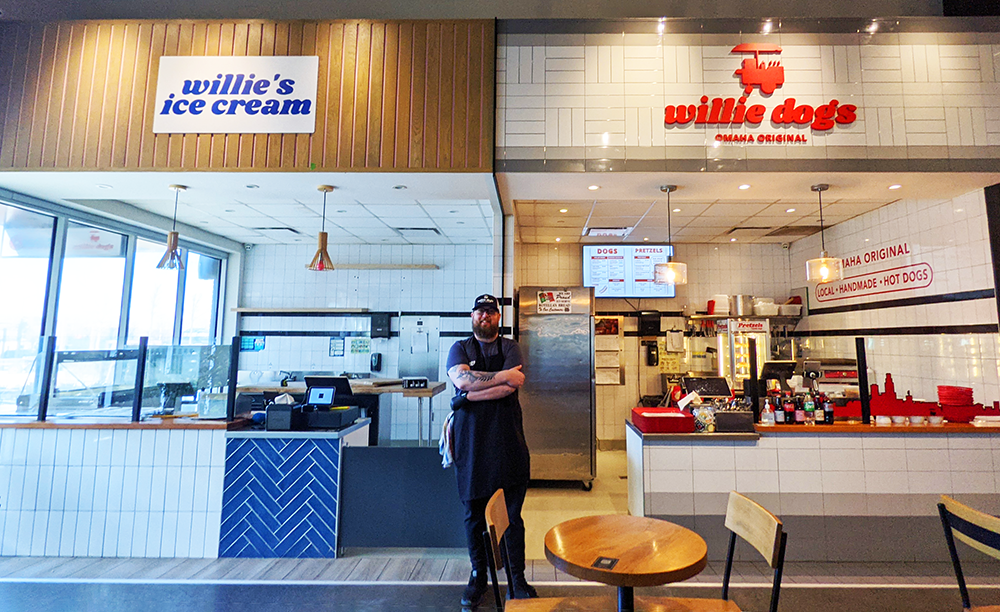
Yeah, absolutely. That’s a great question. So, Inner Rail kind of came after us. There is an individual that works for Inner Rail. His name is Wes. We were both part of Culinary Team Nebraska which is a competition culinary team. It’s very high level like fine dining, very highly scrutinized competition and working for Inner Rail, someone in Inner Rail had said that they wanted to bring a hot dog in a new concept. And Wes says,” Hey, I you know I’m on a competition team with the guy that makes his own hot dogs. You should reach out to him,” which they did. We had a nice meeting here at Inner Rail and within about five minutes, it became pretty clear to everybody sitting at the table that maybe this would just be a good fit for Willie Dogs. Already we had the branding. We already kind of had the messaging. We already have the dog and the sausage and some of the other things that we already go into the toppings. And so yeah, they came after us and gave us an offer to come in here. And it’s been pretty awesome so far to the point where we’re expanding into another stall here with another company.

Please tell us about that.

So yeah, absolutely. So, one of the things that I’ve always kind of prided myself on with Willie Dogs is that it really kind of pulls on some of those nostalgia strings. Those nostalgia heartstrings.

There’s something about that old world style that natural casing, that snap. That just is not around anymore. A lot of our older clientele go again now that that’s the hot dog I remember from when I was younger.

Taking some of the that same marketing and that same kind of brand identity and applying it to a different option, like a dessert option is how we’ve landed on Willie’s Ice Cream is to really hearken back to some of our kind of good old fashioned ice cream shops. The soda fountain type shop, you know that scooped ice cream, malts, shakes, sundaes, and banana splits. Really not trying to reinvent the wheel but what we’re doing and what’s on the menu, we’re just trying to do very, very well.

And then it’s also going to be a fudge shop so we’re going to be making homemade fudge here at the Inner Rail.

Will you be having an Omaha spin?

An Omaha spin within the ice cream shop? Yes. So, there’s a lot of desserts a lot of things that are very famous around here, but butter brickle ice cream was actually invented here in Nebraska in Omaha. And so taking some of the notes from some of the more classic dishes, you know, and some of the famous splits, trying to kind of recreate an era.

We are trying to get as local as we can with all of our ingredients. So, the milk that we use is local. The ice cream that we’re using comes as local we can get it. It’s only a couple hours away. And so, we’re trying to tie it in as close as we can.

In some of the menu ideas that we have down the road for some of the specialty sundaes and stuff, we’re really trying to tie into the to the old Aksarben area and hearken back to some of those horse racing times.

When will Willie’s Ice Cream be open?

Shooting for February 2.

Check out Willie’s Ice Cream at Inner Rail and visit back here for more stories.

For up to date news on the opening or any date change, visit:

https://www.instagram.com/williedogsomaha
https://twitter.com/WillieDogsOmaha
https://www.facebook.com/williedogsomaha
https://www.williedogs.com

Inner Rail Food Hall
1911 S. 67th St
Omaha, NE 68106

Omaha Restaurant Review: Mouth of the South-Southern Grub

Image of a purple sign for Mouth of the South restaurant on brick building with many stairs

I ordered the Bayou burger with onion rings and coleslaw.

Image of onion basket with large onion rings and ketchup

The onion rings came first, were great and a great surprise. The breading was  super light and flaky and not oily. The onions were an impressive size and cooked perfectly.  So far, these are my favorite onion rings in Omaha! (Please send me your favorites to try in the future.)

Image of a very tall burger with one patty but many layers described below and a big bowl of coleslaw on white rectangular table

The burger was medium to well-done and blackened. There were layers of red onions,  bleu cheese, pickles, lettuce, tomatoes, comeback sauce and blackened shrimp. It was so tall it was hard to get all in on the first bite.

The waitress asked if I wanted salt pepper and hot sauce.  I liked the salt and pepper on the onion rings and the hot sauce. The  Louisiana Hot Sauce went well with both the onion rings and burger.

Image of interior of Omaha restaurant, Mouth of the South with tables, chairs and long view into kitchen

A special thank you to Skyler for the recommendation to try this Omaha restaurant in the Old Market out!

Image of the Old Market street with purple sign for Mouth of the South restaurant

Mouth of the South-Southern Grub
1111 Harney Street
Omaha, NE 68102
(402) 502-4545

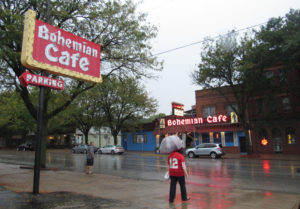
Bohemian Cafe, a Landmark Omaha Restaurant, Closes Today

With warm hearts and warm smiles, we remember the Bohemian Cafe.

omahanebraskabohemiancafecloses5463

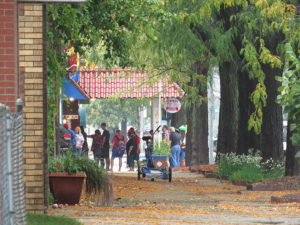
Rain didn’t stop the long lines from forming on the closing day.

omahanebraskabohemiancafecloses5476

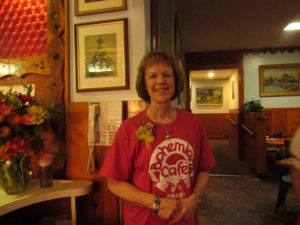
Marsha greets her guests.

omahanebraskabohemiancafecloses5478

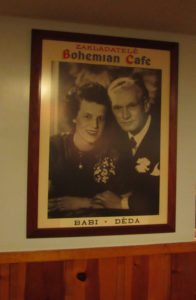
Grandma and Grandpa

omahanebraskabohemiancafecloses5479

Haleyn Ringenberg, York Czech Queen, came in full costume.

omahanebraskabohemiancafecloses5486

Many people came before the Husker game.

Bohemian Cafe
1406 South 13th Street
Omaha, NE 68108
http://www.bohemiancafe.net