Check out the Omaha Farmers Market on Saturdays at the Old Market!
Old Market (1011 Jackson Street)
May 3 through October 11
8:00 a.m. to 12:30 p.m.
Check out the Omaha Farmers Market on Saturdays at the Old Market!
Old Market (1011 Jackson Street)
May 3 through October 11
8:00 a.m. to 12:30 p.m.
Check out the Omaha Farmers Market on Sundays at Aksarben Village.
67th & Mercy Road
May 4 through October 12
9 a.m. to 1 p.m.
https://omahafarmersmarket.com/aksarben-village/
Check out the Omaha Farmers Market on Saturdays at the Old Market!
Old Market (1011 Jackson Street)
May 3 through October 11
8:00 a.m. to 12:30 p.m.
The Omaha Farmers Market is back at Aksarben Village!
Check out the Omaha Farmers Market on Sundays.
67th & Mercy Road
May 4 through October 12
9 a.m. to 1 p.m.
https://omahafarmersmarket.com/aksarben-village/
It’s back and starts this weekend at the Old Market!
Check out the Omaha Farmers Market on Saturdays at the Old Market!
Old Market (1011 Jackson Street)
May 3 through October 11
8:00 a.m. to 12:30 p.m.

OmahaNebraska.com Interview with Joe Cong and Yi Sun of Blue & Fly
Blue & Fly Asian Kitchen
721 S. 72nd Street
Omaha, NE 68114
(402) 504-6545
Omaha, Nebraska.com here with…
Joe Cong: Joe Cong…
Yi Sun: And my name is Yi Sun. You can also call me Joy.
How long have you had the restaurant?
Yi Sun: This year is exactly 10 years. We’re very, very happy, very proud of that.
What did you do before?
Joe Cong : I came to the United States in 2007 and worked at my parents’ restaurant for a couple years. And you know, working with the parents is always stressful. At that time I was young and I could not handle the stress, so I decided to move on and do something different. I joined the Army National Guard and served with the Guard for six years. During that time I married my wife Yi, and we decided to start our own business, our own chapter, so that’s why we started this restaurant.
What did you do before?
Yi Sun: Before I came to the United States, I worked as a tour guide. My college major was tourism management. Many times I talked with foreigners who visited China, and they asked me, “Hey, where’s the good food in China?”
That was very easy for me to answer because I was born in China, and I know what is good. I asked them, “Hey, what do you guys like? Do you prefer seafood, do you prefer spicy food?” I would always get them to a good restaurant.
When we decided to get married, I came to the United States. The first year I had nothing to do, so I was just cooking for him. And then I asked him, “Hey, I really miss some good Chinese food. Take me somewhere to eat.” When we searched, they said, “I’m so sorry. We only have some American food here, like broccoli chicken, peanut butter chicken. You want to try that?”
I said, “What’s that? Are you sure that’s Chinese food?”
He said, “Yeah, that’s Chinese food here, you know.”
And we try, we try. I forgot that restaurant’s name, but we tried that. It’s not bad; it’s just a different. And he’s Chinese, too. He was born in China. And I told him, “I want our Chinese food.” We cannot find it in Omaha.
So then later we went on vacation. We went to Chicago, and we visited my auntie in New York. In those cities you can easily find traditional, authentic Chinese restaurants. You Google and they come up, or you ask your friends or family, and they will tell you. So we start thinking, like, “Hey, maybe that’s a good chance for us. Maybe we will have one traditional Chinese restaurant in Omaha.” That’s when we started thinking about it, to organize and plan it. Since he had worked with his dad for a couple years, he knew… not everything, but a little bit about how to run a kitchen and he knew how to cook. He learned cooking in China, before coming to the United States. So it’s like, “Hey, maybe we can try it.” At that time we were 25, 26. We were still young, so we didn’t know how much it would cost. We didn’t know how much time we were gonna spend in this business. But because we were young, we just tried it and we just did it.
Joe Cong: For me, it was more like another fear. And because, you know, Omaha was a big, growing city by that time and we had almost everything almost, but we didn’t have decent Chinese food. So I saw that. In other places, they have really good, authentic restaurants…Korean restaurants, Japanese restaurants, Chinese restaurants, they all have that. But here we had nothing like that. So me and my wife started to think about it, like, “Hey, that’s not available for people here.” And by that time we had a lot of international students from UNO or from the University of Bellevue, and they were also looking for authentic Chinese food.
And so that’s why we started thinking about it and then planning it and saying, “Why not just cook some food that we ate when we were growing up?” and also give that to our local customers. Let them try our food and know the history about our food or the culture about our food. Now, ten years after we started, it seems like we are on the same page with a lot more people. They come here, start with American Chinese food, and then slowly transfer to traditional Chinese food. We see that happening a lot. And everybody, so far, seems like they all like it. So, I think I made something.
It’s really good here. As I was saying earlier, it took me a long time to find you.
I had different friends growing up. So I learned that–and it’s not just in America–but when people start restaurants with their food and culture and go to other countries or cities, they change it for the local population. While that doesn’t have to be bad, it’s no longer authentic. And if you happen to know the difference or you wanted to try something authentic, it’s hard to find.
Joe Cong: Don’t get me wrong, we twisted it. We changed a little bit for our recipes, too, but we didn’t change them. We made them less spicy or a little bit sweeter. We made small changes, but we didn’t change the main part. The technique, the original idea, everything like that is still inside the dish that we present to you. We do make it a flavor that’s more acceptable for locals…yes, we are…but everything else stays as original as we can.
What are your favorite dishes here?
Yi Sun: Oh, it’s a lot.
Yeah.
Joe Cong: Too many.
It’s a good problem. Good for you and a better problem for us [customers].
Yi Sun: Yeah. For me, like, for example, I like the sauteed green beans with garlic. That’s not only my favorite, that’s most of our customers’ favorite.
Another day I have a customer…that’s a very funny story. They are regulars, she and her husband, and they always come here, and one orders the green beans and the other tries another dish which is newer to them. One day he waved to me and said, “Hey, could you please come here? I need help.”
I felt very nervous, wondering what was wrong with the dish. I asked him, “How can I help?”
He said, “Could you tell me the recipe for these green beans?”
I said, “Oh…”
He said, “Oh, you know what? I can buy it. I can buy it.”
I said, “Yeah, I know you can buy it, but I don’t know it either. That’s from the chef, top secret. He won’t tell me. That’s the reason he asked me, ‘Hey, you need to raise my salary every year. That’s the reason all the customers keep coming back.’”
He was laughing, because he was just teasing me. He wanted me to know how much they love that dish.
So that’s one of my favorites. And another of my favorite dishes is scrambled egg with tomato.
I haven’t tried that one.
Yi Sun: Yeah, that one actually has been my comfort food since I was a little girl. I think if you ask any Chinese person, “Hey, do you like scrambled egg with tomato?” they will tell you “Yes,” because that’s our comfort food.
There are different ways to make it. Some families make a little bit sweeter or they make it a little bit salty. But I think in every family, the parents or the grandparents will make that dish for the kids. Like when I was younger, my dad and my mom would make that dish. If they asked me, “Hey, what you want?” and I said, “Oh, I don’t know,” they would make that dish for me. If I felt very sick or very down, they would look at me and say, “Oh, I will make scrambled egg with tomato,” and I would be very happy. I would think, “Can I make some noodles as well?” The juice goes to the noodles. So it’s a very typical family dish, like maybe barbecue for American people. When the spring is coming and the weather is so good, you remember backyard barbecues with your family. That’s what families did. So every family will do that for their kids, for their members.
So that’s one dish. And more for meat… for me, like shredded pork with spicy garlic sauce. One reason I like it is because it’s very rich. It has a good amount of different vegetables and the protein, which is pork. And the sauce is very flavorful… sweet, spicy, garlicky. And so in one dish, you can have vegetables, you can have meat. And the flavored sauce is very good. It’s good for any rice or noodle or bun. That one is one of my favorites. And the seafood, I would say the fish with vegetables in hot chili oil. That one is very good. The oil with all those peppercorns and red chili, Sichuan pepper, gives a very good flavor to the dish, to the fish, to the veggie. Some customers have said, “Oh, well, it’s maybe too much for me. I cannot handle all that spice.” But it’s not that crazy. All those spicy aromas, all those spicy flavors… it goes to the fish. And you can easily pick one and feel like it’s flavorful. It tastes spicy, but it’s not that bad. So I would say this dish is on my top list.
I’m going to try that one later too.
Yi Sun: Yeah, yeah. And also I will say another fish dish is the fish with pickle cabbage soup. When the weather is very cold or when I’m not feeling very well, I want some soup that can warm me up. He won’t ask me. He’ll just make the fish soup and say, “Hey, here you go. That’s what you want, right?” Yeah, fish soup is very, very good as well. Yeah, that’s for me…that’s for myself.
Joe Cong: For me, it’s more like simple, easy stuff. Shredded pork with stir-fried spicy and sour shredded potato. That’s my go-to. I love it. There’s no other. It has potato, a little bit of bell peppers, a little bit of carrots in it. And somehow, everything mixed together with the spiciness and the sour tart into it…everything together, it just amazes me…
Yi Sun: Yeah, that’s the Chinese way to eat potato. Sometimes when I serve that dish to the table, the next table customer says, “Oh, what’s that noodle dish?” I say, “That’s not noodles. That’s shredded potato.” That’s how Chinese people eat potato. We don’t bake it We don’t do the french fries. We cut it, we shred it into very thin pieces and then we stir fry it with some vinegar, no sugar, maybe a little bit of salt, or mix like seasoning and it tastes like a spicy, sour. Yeah. That’s also another very typically Chinese dish. Most Chinese people, if you ask them, they will say, “Oh, I know that dish. I love that dish.” Yeah. And some of them, they don’t like spicy. They will ask me, “Hey, can I make that one not spicy?” I say, “Yeah, that’s no problem.” People just love it. See, even though some of the dishes are supposed to be spicy, but because they love it, that’s okay. “I don’t eat spicy. Can you just make a non-spicy version? I’ll still eat it.” That’s how they show their love for this dish.
I’ve noticed that the palate is more adventurous in Nebraska than it was when I first moved here. So you’re able to find places where you can get spicy… At that level, it was very hard for a long time.
Yi Sun: That’s what most customers are concerned about. Because I’m working in front, I know most of the customers, and I understand what they want. Some customers come here to try our food, but they’re a little bit afraid that it might be too spicy for them. We want to tell them that we can always adjust the spiciness.
Joe Cong: Sichuan cuisine is famous for its Mala flavor. But it’s not all about Mala flavor.
Yes.
Joe Cong: And Sichuan cuisine, we’ve actually been seeing a thousand dishes with a thousand different flavors. You have sweet, like sweet and sour pork tenderloin. You have steamed, which is like boiling stuff, steaming stuff. And you have freshness with soup. You have Mala, this kind of stuff you ever see. And you also have a sweet and savory with the red rib. You know all that. So it’s not only about Mala. I know there’s a lot of restaurants before us that give information about like, “Hey, Sichuan food has to be very spicy.” But no, it’s not all about that. It definitely has more…hundreds more different flavors into it rather than just Mala itself.
I think your approach to cuisine with preserving it, but yet making it custom for the customer, is really nice.
Joe Cong: Yes, we can, and we would love to try the best we can. Some dishes I cannot touch it because you touch the meat bone with it. But at least I can lower the heat, lower the spicy level of the customer’s meal to the minimum. And also I would love to try my best to make my diners happy. I want them to enjoy their food. Why not? That’s my job, right?
I come here a lot, and I see that enjoyment, and it spills out into the street. The customer is happy, and they’re happy to people when they leave. So it’s a very beautiful thing.
Yi Sun: Yeah, we try our best to do that. We want the customers to be very happy to come here.
Actually that’s one thing that makes us very proud. Some of our regular customers have been coming here since the first year we opened, and in the beginning they always ordered American-style dishes like broccoli chicken. But when they kept coming, they would become curious about traditional Chinese dishes: “Hey, what is the other half of the menu? I never touched that, but it sounds interesting.” They would ask me for suggestions and say, “Hey, I like this flavor, I like this meat. Would you recommend something?” I would say, “Okay, that’s no problem.” And all our staff want to help. And then gradually they know more about the traditional dishes. They maybe find their favorites over there and when they are coming here, they will never go back to the American-style dishes. They become a Chinese food expert and say, “Oh, today I want a spicy food. So I want this, this, this, and another. I want kind of like a sweet. I want to try this one.” And they ask me, “Hey, is this one sweet as well?” They will throw me some questions…you know, professional questions. And when they come in with their friends, they say, “Hey, you guys don’t need the menu. I will order for you, and I’m sure you guys will like it.” And all their friends are laughing and saying, “Oh, you really know a lot right now.” That’s something that we like to see.
At the very beginning, we chose this location because it is very close to UNO, UNMC, and Creighton. At that time a lot of Chinese exchange program students were studying over there or working over there. We knew what some of those Chinese people were like me when I first came to Omaha and I tried to find a restaurant that served traditional Chinese dishes, but I couldn’t find one.
But right now our goal has changed a little bit. We not only welcome Chinese customers who come here for dishes with their traditional hometown flavor. We also welcome the local American customers who come here because they want to try authentic Chinese food. They come here to try something different, and then one day if they have a chance to visit China, they won’t need help deciding what to eat. They can open up the menu and know what dishes they like and what they want to try. So that’s our goal right now. Like the story I told just now, I feel like we are close to that goal because a growing number of customers are familiar with authentic Chinese food. They know how to order, and I’ll tell them, “You don’t need my help anymore. You already know everything.”
Sometimes a customer will come in with a group of friends who try to ask me questions, and the customer will give them the answer. I’ll say, “Okay, then you don’t need me.”
That’s a very good sign. Yeah. You’re an ambassador already.
Yi Sun: Yeah. I feel very proud, very excited. I don’t know how to express that feeling, but that’s right.
There are other restaurants that have two menus. You get a menu, and the other menu is secret, but you have to ask for it. When I first came here and asked for the other menu, I was very happy to be told, “No, no, this is the menu right here.”
Joe Cong: We purposely did that. We know that a lot of other restaurants have two separate menus, and you have to ask for the other menu. Why do they do that? Why not make all of their dishes available to the public? Why not let more people know about it? Why put a barrier in between? Sometimes I think that’s too big of a dream, but my final goal is for more people to know about traditional Chinese cuisine.
Traditional Chinese food is slow-cooked comfort food of high quality with a thousand years of history behind it. In the last 50 or 60 years, new immigrants from China have wanted to make their lives easier and own a restaurant, so they have made easier versions of Chinese food for local American customers: fried chicken with sweet sauce, broccoli with brown sauce, noodles with a ton of sauce, things like that. I understand why they did that, but over time it changed everything. In the next 20 or 40 years I hope Chinese food does not become like that. Chinese food is not something you get on a cheap plastic plate with a Styrofoam cup at a fast-food restaurant. I hope people will be able to sit down, take their time, and enjoy their food. I hope that’s what’s going to happen.
Is there something about the restaurant or the food that you haven’t mentioned that you think people should know but they may not know?
Yi Sun: I have another story. One day an Asian lady, she might have been Cantonese, came into the restaurant with her grandson and three of her American girlfriends. The ladies were middle-aged. They ordered lunch, and the three American ladies ordered American-style dishes, like broccoli chicken or Kung Pao chicken or sweet and sour chicken. The Asian lady ordered rice noodles with meat, a traditional Chinese dish.
The American-style dishes were ready to serve quickly, because American dishes are easier to make. When I brought the three American dishes to the table, I told the Asian lady, “Hey, I’m so sorry, ma’am. Your dish is on the way. It’s almost done.” Then she said something that I’ve never heard a customer say: “Oh, that’s okay, no worries. I know that Chinese food takes a longer time to cook.”
Sometimes I have to tell a customer, “Hey, I’m sorry. Our traditional Chinese dishes are made from scratch, and we cook everything fresh, including the sauce.” It normally takes a longer time to do this, and I explain that to them. But that lady told me, “Hey, no worries. I know Chinese food takes a longer time to cook. It’s not a big deal at all.”
I went back to the kitchen and told Joe, “Hey, that customer told me it’s okay. She knows Chinese food.” He felt like, “Oh my God, that makes my day.”
Joe Cong: Restaurants sometimes get busy or get slow. We only have two people cooking on the line, and I’m the only one who can cook traditional Chinese food. During the weekend, it can get really busy. I’ll get backed up with the traditional Chinese food, and it’s pretty much a one-man show. I try my best to push dishes out, but the bottom line is I have to push dishes out with quality. I cannot “easy it up” and make something that I don’t completely like or care about. On the other hand, our whole restaurant team would love every person who comes in the door to have a happy and good time. If something goes wrong, if we made a mistake or food take too long to prep or anything, there must be a reason behind it. I’m asking for forgiveness or for information to see what really happened. Think about it this way: in our team, there’s nobody who will ever purposefully ruin your day or night here. We definitely try our best, but if something bad happened, I will apologize. Let us know, and we will try our best to make you feel better. We are always trying to improve ourselves, step by step.
And also, there are differences between a western dining experience and a Chinese dining experience. Let’s start with the easy part. A lot of customers ask me, like, “Hey, why does this dish only have a vegetable and nothing else? No meat, no protein, just the vegetable by itself? And why does this one have only meat and doesn’t have any vegetables? It’s not a balanced meal.” Yes, this dish is not a balanced dish. I understand that. But also you have to understand that when you go to a restaurant in Asia, everybody eats family style and shares their dish with everyone else at the table. Each person orders food, one by one. You pick a vegetable, she picks a meat dish, he picks a mixed dish, she picks a soup or seafood, everything like that. So there are five, six, seven, eight dishes that come to a table, and everybody shares from the whole table. So overall the meal will be balanced for this whole table. It’s a bigger-picture balance.
In a western restaurant it’s different. If I go to a steak place and order steak, I want a salad, I want a little bit of green beans, I want a little bit of chili, and I want a little bit of fries. So I have protein, starch, vegetable—everything together on my plate. But there’s no sharing from my plate to your plate.
So that’s the big difference between the Chinese dining experience and the western dining experience. In a Chinese restaurant, there are five or six dishes for the whole table. Each person has their own plate, but the food is in the middle of the table. It’s a sharing dish, a sharing table, a sharing experience. Everybody shares the food from the dishes in the middle of the table. I think that’s the biggest difference between Asian and western dining cultures.
I understand that this can cause a lot of confusion for restaurant customers. Millions of times, she has come into the kitchen to tell me, “Joe, hurry up. Everybody is waiting for that one dish. And everybody has their dish sitting on the table and not eating because one person is waiting for their dish. Come on, come over there cooking?” I’m like, “Come on. How many times do I need to explain? First come, first served. You’re slowly waiting, you share with each other.” But I understand the cultural difference.
Yi Sun: That’s a cultural difference, yeah.
And you get very funny looks at the restaurants if you do want to share your food.
Yi Sun: Yeah. And for Chinese people, when the first dish is coming, everybody will pick up their chopsticks and start eating. But for American people, they are kind of like, “Oh, mine’s coming, but yours is still not coming. I will wait for yours to come, and they we’ll eat together.”
That’s a big difference.
Yi Sun: Yeah, that’s a big difference. But with more and more people right now, I will ask them, “Hey, do you guys want to share each with each other?” I always give them a sharing plate on the corner.
Oh, nice.
Yi Sun: So if you want to share, that’s a very good choice. So some of them will say, “Yeah. I kind of want to try this.” So if they start sharing, that’s the good part. I won’t force them, but I will kind of like guide them to “Maybe we can share.” We can try sharing.
So we like to do it. Yeah. My family, when we’re out, we like to share things.
Yi Sun: Yes, especially when people come in with their family, not with co-workers or something. Yeah, they don’t mind. “Oh yeah, I want to try. That looks good.” I try to do that. And yesterday I had a customer who is a very good friend. Last night we were busy. He said, “Hey, you guys are busy. So how can you cook? I feel like every dish that comes out of the kitchen is different. So how does Joe make it?” I said, “Yes, we have a total of 200 dishes on our menu. And some days it’s easy, like if we have orders that are very similar, Joe can make them together and they’ll be ready more quickly. But if there are 20 tickets and no dishes are the same…
Joe Cong: That’s my nightmare.
Yi Sun: Yeah. When we have a full house, all the customers are sitting there thinking “Why are there so many tables with nothing on the table?” It’s because we have 20, maybe 30 tickets, but nothing is the same. All he can do is cook one ticket, one dish, and then go to the next one.
And also sometimes customers are confused about why another table is getting their food before they are, even though the other people came in later. They’ll tell us, “You guys say, ‘First come, first served.’ So how did that happen?” That situation can happen because the other table has the same dish as a to-go order or maybe with the table before them.
Joe Cong: So like I said, we have two cooks here. One of them can make American food only, and I can make everything. But during busy times, I’m only able to focus on traditional Chinese food.
Sometimes, there’s more American Chinese food that come in on the tickets. Everything will go quickly because me and him are cooking together, right?
But sometimes there’s fewer orders for American dishes coming in and more orders for traditional Chinese food coming in, and you will see things slow down because he’s cooking American dishes and I’m cooking Chinese dishes. But at the same time, you will see American dishes come out first because he cannot help me with the Chinese dishes. He tries his best to push dishes out, but that means lot of customers that came in earlier will get their food later.
You don’t want to tell the other fellow to slow down?
Joe Cong: I can’t tell him to slow down either.
Yi Sun: Yeah. If we have a chance to let customers have their food quick, we don’t want our chef just standing around. Then he cooks. We want everyone to have things to do.
Joe Cong: We try our best to keep every customer happy, but our ability is limited. I know an American customer comes in and sits down and they have their soup, they have their appetizer, they have their meal right away. But a customer who ordered traditional Chinese food is sitting there for 30 minutes, waiting for me to slowly cook everything.
Yi Sun: They are very confused, like, “Hey, where’s my food? That table just came in, and they have everything already, but where’s my food?” It’s hard to explain. I would like to explain it to everyone, but sometimes I just don’t have time to stand at the table and explain everything. Most of our customers are very nice. Every time I go over to apologize to them, they will say, “Oh, that’s okay. I’m very happy to see you guys busy.” And some of them, they don’t say anything, but they just don’t come back. It’s because here we are slow. But we are not meaning to be slow.
Is there any question I didn’t ask that you’d like me to ask?
Joe Cong: Second location. People ask us when we’re going to open a second location. Unfortunately, in the next couple of years, we probably aren’t going to have a second location. It’s just because traditional Chinese food is really dependent on the chef’s personality. If you eat here a lot, then you should know the food always varies. It’s different. Even though you order some food all the time, you experience with the chef’s experience, you feel the chef’s mood.
Like my mood for the day. For example, some days she’ll be nice to me and the food may be a little bit sweeter. Some days she’s mad at me and the food may be spicier, more hot, or have more of a grill smell. All that is because that affected our cooking.
My stove has a hundred thousand BTU burner. Everything happens quick, and one second can make a huge difference. So that’s why you need a good chef. You need a chef doing this for a long time, with experience, and has a responsibility to keep every dish at the quality that we can.
So no second location is what you’re saying.
Joe Cong: No, no second location.
But if someone were to read this later and maybe had the skills…
Joe Cong: Come here and apply, please! Come here and apply. I would try my best to teach everything, and yeah, let’s do it. Who knows? Let’s do it.
You never know what will happen.
Joe Cong: I have tried to teach about five or six different cooks, and to be honest, being a chef is not the easiest career ever. A lot of hours, always activities, with stress during the busy times. It would take a lot, so we’ll see. If somebody really wants to do the challenge, let me know. I would love to teach.
Thank you very much, both of you.
Blue & Fly Asian Kitchen
721 S 72nd St., Omaha, NE 68114
(402) 504-6545
https://www.blueflyasiankitchen.com
From our friends at Rescue and Reuse:
“
We are hosting four durable medical equipment collection and rehome events in Lincoln, Scottsbluff, Omaha and Kearney in 2024-2025 to recycle/rehome equipment, diverting it from the landfill and to assist persons with disabilities and their families by providing an accessible and cost-effective option to recycle/rehome.
If you have questions about these events, please contact Executive Director Kimberly Carroll Steward at director@nrcne.org .
Omaha Rescue and Reuse Event:
Equipment Drop-off Days:
Tuesday & Wednesday, April 8-9 (12-5 pm)
Thursday, April 10 (12-7 pm)
Friday, April 11 (8 am-noon)
Equipment Rehome Day:
Saturday, April 12, 2025 from 8 am-1 pm
Event Location: 8111 Dodge Street, Suite 141, Omaha, NE
Need moving assistance for equipment donations in the Omaha area?
If you have questions about equipment, here’s some potential resources to contact:
Assistive Technology Partnership (statewide)
Independence Rising (50 counties in central and western Nebraska)
HELP Equipment (Eastern Nebraska)
Chrissy’s Closet (Lincoln area)
Nebraska Methodist Equipment Loan Program (Omaha area)
”
More at:
https://nrcne.org/rescueandreuse

Omahanebraska.com is here with…
Emily Brewer.
Tell me a little bit about yourself and how you came to be at Millwork Commons.
I am an army brat, so moved around a lot growing up… kind of fostered a love for people and new spaces early, early on. I grew up in Colorado, went to school out in Bozeman, Montana, did a year abroad my junior year, so I studied in Spain. Love to travel, love to be in new places and spaces, and ended up moving to Omaha in 2010 because my dad had taken a government job out here.
I moved to Omaha after just having visited once, ended up really liking it. Learned quickly that if I didn’t only want to hang out with my dad, that I needed to make friends and form a community. And so naturally, the best way to do that for me was by volunteering. I found some great nonprofits in the area. I joined Big Brothers Big Sisters. So I was a Big for about 6 years.
I guess I would say I cut my teeth on the Omaha scene by working in restaurants, so I feel very fortunate to have worked in some really incredible restaurants with some wonderful people over…I’d say the last decade plus. But what got me out of the service industry and into maybe a different kind of service industry was the pandemic. Like many of us, when things were shut down and there was so much uncertainty, certain jobs either had to really pivot to being remote or to change how they operated. With restaurants, it’s pretty hard to wait tables remote.
I was unfortunately laid off from both of my restaurant jobs, and I spent the next however many months trying to figure out what I could be doing, because although I have three college degrees and a minor, I hadn’t really used them since graduating. I always just thought I would figure things out. I joke that they are dinner party degrees, so they’re good for conversation. Very liberal arts focused, but I just didn’t want to teach and wasn’t sure how to use them. I just knew I wanted to go to college and I did, and then afterwards I was like, “Okay, now what?”
Aside from traveling, which again the pandemic really shut that down for a while, I was feeling pretty restless. I ended up getting a job at a medical staffing agency here in Omaha and fortunately or unfortunately, during the pandemic, those were really booming. Travel nursing was a big thing. The pay was great for those wonderful nurses and doctors at the time, and so I took a job and eventually was doing… initially my role was community outreach, because that just kind of fell in line with things I already valued and was plugged into, but I was doing it on behalf of the agency I worked for. That then pivoted to a more internal role, being very employee facing, and so I did employee onboarding, I did events planning, I helped run some of our groups, certain DEI initiatives, all sorts of things, but I really loved interacting with and being face-to-face with employees. That was important to me. I love people. Also, I called it the three C’s—internal communications, culture, and community outreach were the main hats I wore.
And then… gosh, I’ve done some copywriting, just freelance for some agencies and companies around town. I’m not sure if I should name them or not. I don’t think it’s a secret. Is that—? Well, Omaha Performing Arts was a client. Yeah, there’s just some great people I’ve met through being out there in the community.
I love networking. It’s got such a dry term, but I really just enjoyed meeting new people, and so I was very lucky when I was approached about this role here at Millwork Commons. My title is community development manager, and I’m still fairly new in this role and I am still learning. I had some really incredible predecessors. I’m actually friends with both of these gals, and so it’s been really neat to see how the role is kind of evolving as Millwork Commons and the neighborhood itself grows… as businesses and tenants start to move in and they get their footing. It’s been really cool to see how people choose to activate the space, whether it is kind of an organic, natural flow where they’re coming in and working archetype with a coworker or a friend, or if it’s a planned meeting. There are just a lot of great things happening around the neighborhood. And so my role is to find new ways to activate the space, but also, to make sure that our current tenants are happy and are able to utilize it in a way that best suits their needs, whether it’s personal or professional.
Millwork Commons was thought of and planned and took a long time to develop. Do you know a little bit of the history of that, and why this particular space?
Not as much of the concrete history as some of my colleagues would, but a big mission and goal of the neighborhood and the folks who are actively developing Millwork Commons is to really push arts, music, tech innovation, and entrepreneurship, which I know are some exciting buzzwords, but really what Millwork Commons is hoping to do is to give community members, artists, creatives, whomever a space and a platform to—I hate to keep using the same words, but to innovate and to be creative.
As far as the overall vision for Millwork, it’s hard to be future-thinking without reflecting on how we got here. I’m learning that it takes a lot. You see the sausage, but learning how the sausage gets made is a completely different process. It’s trying to think broadly, as far as what does Omaha as a community want? And what do they maybe need that they themselves might not even recognize? And so with the dock, which is located in the Ashton Building within the Miller Commons neighborhood, that’s a space with a state-of-the-art video wall, a great sound system, and so we allow people to use that to show art, or we partner with “KIOS at the Movies” to show documentaries and things like that. We’ve used it for our One Million Cups presentations, all kinds of things. It’s one of those things where when you get people in a room or a space together, often they are greater than the sum of their parts. By creating a vibrant hub as a way to activate a space and bring people to a neighborhood, we hope that it can exist as a legacy neighborhood, as something that you see in other cities, where there are interesting and creative things happening, but not just arts and music…where it can be a tech-focused thing.
We are so lucky to have the Nebraska Startup Academy housed here as well, in the Mastercraft Building. There are some brilliant minds at work over there, and the fact that we have a space for tech-minded folks and those who exist more in the arts and creative world is amazing. We are neighbors with Hot Shops, and that is a slew of… a community in of itself, of some really, really wonderful artists here in Omaha and they are just across the street from us right here in Millwork Commons. It’s exciting to see who are our neighbors and who is visiting this space. My goal is to be a good steward of this neighborhood and a liaison between people …
Oh, another thing that’s great to mention is Millwork Commons is working to be a very sustainable neighborhood. We have native prairie grasses out in our space that we call The Prairie. So a lot of the design of the building, it being a historic site, that meant we weren’t leveling it and rebuilding it with cheap and also very costly materials. We were working with a structure that was here, to renovate it in a way that created less of a footprint, but also paid homage to what the structures were like beforehand. So the beams you’ll see when you walk around, or the exposed brick that we’re looking at right now, it was all very deliberate, but in an effort to lessen any sort of footprint and have a more gentle environmental effect. There are very smart people who are overseeing those measures, and I’m just grateful to be in a space that prioritizes composting and recycling and leaving a smaller footprint.

There’s a number of buildings here, and it’s grown slowly. Please tell me a little bit about each building that’s part of Millwork.
Well, there’s a teammate I would love to loop in, Jeff Slobotski and Steven Ausberg… they’ve both been with PGSA for a number of years and have feet firmly entrenched in the city planning world.
We’ve got the Hello Apartments that are just such a delight to visit. I love the branding that they’ve chosen. It’s a whimsical apartment building to live in, and I just think it’s a very cool space.
Dizzy Mule Apartments are open, and there will be retail there.
One of the things I’m always curious about and that we’ve been working on the blog is understanding how neighborhoods thrive. What helps them thrive? What helps them not thrive? And then how do they have a resurgence?
And so one of the things we learned over time was in this area Hot Shops that you mentioned earlier really had an impact on helping develop this area. And it’s interesting that you’re putting an emphasis on artists, and so were they. From what I’ve noticed with other places in other cities is that the artists take a chance, and obviously they can’t afford the fanciest place in town. They take a chance on the area and start to develop it, it starts to thrive. And then people get encouraged and excited by this, and then more development comes in.
So while in a lot of places, arts and science, arts and music and all of that are one of the first things to go, it’s one of the first things to help develop an area, which I find really fascinating.
Well said. I mean, truly, that’s a perfect way to phrase it. I think if you don’t give creatives—and you don’t just have to be an artist to be a creative, right?
Right.
You can just be someone who is passionate about something niche or something broad community wide, but I say “creatives” as kind of a broad categorization, but…
It’s innovators and entrepreneurs…they’re all creatives in some way.
Yes, exactly.
Even programmers. Yes, your language can be zeros and ones, or it can be watercolors or anything in between, but we want to give people a space. I think neighborhoods that folks are drawn to often have a center in creative arts because it scratches a lot of itches as far as aesthetics: you know, sight, smell, sound, touch, just an overall feeling, and not to get too hippy dippy, but I do think there’s kind of a palpable sense when, like, the energy of a space is more active. I mean, think about someone playing a show to a room of five versus a room of 200… even if it’s so silent in either scenario you could hear pin drop, there’s still this kind of electric shared energy.
And so neighborhoods that thrive. There’s some really cool ones in St. Louis, and there’s art-heavy districts in other cities…Denver. There’s tons of great pockets of neighborhoods, and I want to learn from them and emulate certain programming to give artists and creatives… entrepreneurs… a chance here. I think that there is also some grace in that there is room for things to fail first time around or maybe not get off the ground in the way we would have hoped or anticipated, but it’s just pilot programming, some of it, seeing, “Do people respond better to events at this time of day or that time of day? What about doing something over the lunch hour versus what about doing something after work?” You know, unfortunately, based on different work schedules, personal demands, family responsibilities, things like that, we can never find the perfect thing at the perfect time, but hopefully as I settle more into this role I can get creative myself and offer sort of a diverse range of things at different times, so that there are accessible programs for people who are interested.
And I’m very open and I very much encourage ideas from the community. For example, I met with someone who wanted to potentially host a bonsai workshop… the art of these trees. The Japanese art of pruning and growing and shaping these plants. But we talked about “Would that be something better suited to do in the dock for visibility?” And you know, it’s exciting to have people walk through and kind of be like, “Oh, what are you doing there?” Or I met with someone at Kross Strain, Sarah, who runs their programming… we talked about doing a Beers and Bonsai event. So people who sign up for this workshop, they get the materials, and then they can hang out and socialize and have a beverage if they’d like, but really, is that another fun way to activate a space within Millwork in partnership with one of our tenants? So yeah, I’m constantly floored by the really cool requests or ideas that people have shared. And again, if I had an unlimited budget, I would just say yes to everything, but until, you know… we’re a society that just trades in services and goods, I do have to keep in mind that I can’t say yes to everything.

I know that there’s the dock here at the Ashton, and … Hello Apartments. Dizzy Mule is relatively new.
We have incredible tenants here [Ashton] , and I hope shining a light on them and supporting them just makes room for other really great tenants, too. You’re not going to see a chain restaurant or anything like that. There’s a reason we have Archetype Coffee here instead of Starbucks, or, Dolomiti for pizza or Heirloom and Clean Slate… Kros Strain, a local brewery. We want to support local businesses, and having them in Millwork Commons is really a treat and I’d say a benefit to those who live in the area or who are visiting. We’re so close to the airport. When I do airport runs, I always …love making a stop and coming in and sitting down at Dolomiti and grabbing pizza with whoever I just picked up and kind of making that a welcome to the neighborhood.

Coneflower Ice Cream … Oh my gosh. Amazing. They have the nicest staff, they give you as many samples as you want, and they never make you feel guilty about asking for a seventh, but I love bringing people by here to grab a coffee at Archetype or take a spin through Heirloom and just grab … hostess gifts over at Heirloom because they have just great little local products: candles, honey, things like that, in addition to really good food. They just have … cards or chocolates, something I can just take a lap through and be like, “Okay, I didn’t know I needed this, but it’s coming with me.”
(Learn more about the Coneflower Creamery here:
https://coneflowercreamery.com
https://www.omahanebraska.com/blog/omaha-interview-brian-langbehn-and-katie-arant-chapman-of-coneflower-creamery-part-one
https://www.omahanebraska.com/blog/omaha-interview-brian-langbehn-and-katie-arant-chapman-of-coneflower-creamery-part-two)

There’s great artwork inside and outside here.
Yes. And one we’re currently working with Amplify Arts to do…it hasn’t been posted yet, but we’ll be doing a call for art and so on. Our video wall in the dock, that, you know we’ve got unless it’s being utilized for something else, we’ve got… and I wish I knew how many artists we had featured in there, but before I started here, they had done a call for art with local artists, and they either created new work, or could submit something existing that they had, and it was selected by a team of people. Again, we are very lucky to be working with Amplify Arts because they’ve got a wonderful pipeline for all of this. But again, we have just different visuals on display, just all the time on that video wall. And so we just thought it would be nice to refresh it. It’s been there for over a year now and just to give other artists a chance to submit some of their work and have it be seen by fresh eyes, and so as far as how they’ll do a call for art for those outside public spaces, we’ve worked with some other great local artists. I personally don’t know how folks are tapped or how that’s curated. Typically we will work with an unbiased organization so that they can help us with an art selection. But so it doesn’t fall to Paul and Annette [Smith], who are art collectors and very generous philanthropists in their own right, but so that everyone has a chance to have their art get seen.
Sounds like another good story there.
And again, not just artists and creatives in that sense, but the Nebraska Startup Academy, housed in the Mastercraft building. Charlie Cuddy and John Grange and Alyssa Cave. They are movers and shakers in that world, and they are so giving of their time and energy and just advice. They hold VC, venture capitalist, office hours after the weekly Wednesday One Million Cups meeting for people who just want to talk through things or ask questions. So they’re helping develop young entrepreneurs and those in the tech world just as much as an arts grant from Nebraska Arts Council or Amplify Arts, is doing. It’s really amazing that Millwork Commons is kind of a space where those worlds are intersecting and supporting each other, and hopefully thriving and just creating pathways for more.
That’s what I was thinking, too. How cool that is.
…
Was there a question you would have liked me to ask?
How can we support our tenants? How can community members support our tenants? And the nonprofits housed here.
Heartland Bike Share is another tenant that comes to mind. And they are just doing such great work to make E-bikes accessible to anyone in the community. You don’t need a special license, anything like that. We want to make public transportation as accessible as possible. We’ve got United Way housed here, Habitat for Humanity.
So ways to support the goings on in Millwork Commons: to follow us on our socials. Even to engage with some of those posts helps generate more eyes on the happenings, which in turn helps bring more attention to what is going on, and it’s just got a ripple effect. Coming down to Miller Commons, maybe carpooling with friends or family and just visiting some of our restaurants and shops or popping by the Hot Shops and seeing what they’re doing and asking if you can have a tour. Engaging with the people. In our surrounding neighborhood is a wonderful way to support us, and that’s what I want to emphasize to anyone listening to or reading this: that we want to build a neighborhood that is good for Omaha and that gives back to the community as much as possible. And so by folks who visit Omaha or who live here and come to see us and spend some time here, that’s the very best way you in turn can support us and then we can just continue this way of giving back and giving a platform to folks down the road.
Thank you.
Yeah. Thank you. I really, really appreciate it. So yeah, even you being so flexible with time this morning was… you’re a gracious interviewer and a lovely person.
Thank you.
I’ve seen you roll with quite a few punches. And shout out to, on the record, to our wonderful property management team, Mark with Colliers, and Bluestone Group. We’re grateful for them, too. Mark keeps the wheels on and then some, so I don’t know what I would do without some of these folks who operate behind the scenes. I think the takeaway is that I am lucky and grateful to be here.
Millwork Commons Social Media:
https://www.facebook.com/millworkcommons
https://www.instagram.com/millworkcommons
https://www.linkedin.com/company/millwork-commons
https://x.com/millworkcommons
Website:
https://millworkcommons.com
Shout out to Archetype Coffee for the great coffee and service we had!

Catch our interview here with Isiah Sheese, owner and founder of Archetype Coffee:
Omaha Interview: Isaiah Sheese of Archetype Coffee
https://www.omahanebraska.com/blog/omaha-interview-isaiah-sheese-of-archetype-coffee

Please tell me a little bit of what you did before now and …
And how I got involved. Once I got angry and frustrated about what didn’t happen with my sister, it fueled something in me where I couldn’t go to sleep at night, or live with myself, if I didn’t start speaking up and sharing because I felt like I had these gold nuggets of life saving information that no one knew about.
How can people not know? How can people not know this? This is available and I didn’t know about this. And I consider myself a college educated woman.
The genetic testing has been around for 12 years and her top notch, her world renown physicians weren’t even bringing this up. They were worried really about the acute care and saving her life, which we appreciated, but the other puzzle pieces weren’t being put together. [They didn’t consider] what it meant for her because she was then still at risk for breast cancer.
…
It’s very important if you’re a BRCA gene mutation carrier, or any other gene mutation carrier, to have a manager. I have a high risk oncologist who manages me and makes sure I get my blood work done. I get monitored for CA 125 and CA 19-9, which is pancreatic.
I should make sure I’m going for my colonoscopies.
In EUS, they do a clinical breast exam still on me. Even though I’ve had a mastectomy and reconstruction, I still get a clinical breast exam every six months because things can pop up. It takes one piece of breast tissue that was left somewhere. You have breast tissue all the way back here (indicates side of torso).
It’s very important to advocate and have a manager, who is monitoring your whole being.
I literally have a medical binder I bring with me to appointments.
I underwent preventative surgery in 2010. I had my ovaries, a full hysterectomy, a total hysterectomy, everything out. Later that year, I had a prophylactic bilateral mastectomy with immediate breast reconstruction. I did that because my cancer risk was as high as 87% in my lifetime.
Coupled with seeing what my sister went through and seeing her in the pain of ovarian cancer, knowing what the mutation meant, knowing my grandmother died when she was 33 and I was … 40 at the time. I was past the age of the guidelines where you were to have these surgeries.
I’ll infuse that here. The guidelines, the NCCN [National Comprehensive Cancer Network] guidelines are if you’re a BRCA1 carrier to have your ovaries [and] fallopian tubes out between ages 35 and 40. I was 40, so I feel like I was on the tail end of those recommendations.
I was, as we say in the film, a ticking time bomb.
I already had two kids. I was very fortunate. I felt so lucky. I had evaded a cancer diagnosis up until that point.
I’m so lucky (not to say that surgeries were easy). They weren’t. After that I had my surgeries and basically named myself a BRCA responder and became very involved in advocacy.
[I] was doing nonprofit stuff for a while, and then Angelina Jolie came out with her announcement. Do you remember that? In 2013, she came out with the announcement that she was a BRCA1 gene mutation carrier – [the] most beautiful, famous woman in the world.
And it was like, oh my gosh, we have our champion. This is amazing. And simultaneously, the Supreme Court overturned the patent on – it was May of 2013, I believe – the gene patent held by Myriad Genetics. Genes can’t be patented. It was a huge win, meaning that the cost of clinical genetic testing went down drastically because there was now competition in the marketplace.
Something that people don’t seem to notice or understand – how critical legislation and court cases are not just for having an opportunity for your business or for this or that but for life itself.
It’s really important [to know that] all genetic testing and direct consumer genetic testing are not created equal. … That’s really important. [It’s] why you go through a genetic counselor, so you’re making sure you understand who the test company is. They know the insurance companies. They know the best laboratories. They know how to interpret your results, and how to assess you.
So that’s why I always say, go to a professional. I always say, you don’t go to a podiatrist if you have a heart condition, vice versa. You don’t go to a cardiologist if your foot hurts.
What did you do before and how did you meet the writer and actress?
What did I do before?
I am always curious how people’s journeys towards where they are now helped them.
I was always kind of what I call creatively fickle. Always. I took film in college and songwriting and music, all of my electives. I was a communication major. I studied songwriting privately and music theory. I sew. I do crafts. I do [it] all. I have a need to be creative and also [have] a very philosophical side.
And I’m not shy. I was in theater and just gregarious. I’m sort of a gregarious loner. I’m out there, but I like my alone time.
Basically, after all of this happened and I was done with nonprofits and after Angelina Jolie came out with her information, I had my own epiphany of how I can I get this information out there on a global scale – as big of a scale as I can.
When I started going through my surgeries in 2010, that’s when I started to write my book. I started to journal and I had this idea. I’m going to journal because this stuff is important. Maybe it’ll be a book, maybe not. That process took eight years, so my book didn’t come out till 2018.
I started writing in 2010, but then I asked, how can I even go on a bigger scale? And then I was like, movies! Epiphany! My first project was called “Pink & Blue: Colors of Hereditary Cancer” (2015).
I got connected to a guy named Alan Blasberg who was working – a great director, Alan Blasberg – working on a documentary about his own experience. So, I came on. I executive produced that. That was a great experience and total documentary though.
I was hooked and got involved with a couple projects with my college roommate. My college roommate is Leslie Osborne, who’s a fantastic actress, producer, writer, [and] director. She’s amazing. She’s a quadruple threat. And she’s married to Paul Osborne, who’s another director. He’s had films play at many film festivals and I got involved in some of his films too, kind of behind the scenes.
I became hooked on this medium of film because people are very visual creatures. Wow. We can really entertain, educate, empower people through film and visual arts in a way that we can’t do it by a doctor just sitting there lecturing, going to a class and lecturing away. A documentary even, you know, more than a documentary form. I thought, wow, this is really, a really cool thing we could do, have a trickle down effect. I got involved with Devin in this project, Segue. how I got involved in this project.
…
I was very active on Twitter. It was really big and did a lot of tweet chats and educational things.
… Devin had posted something about breast cancer.
And since I’m the BRCA responder, I saw it. And I said, “Hey, by the way, I see you’re working on this project.” It wasn’t even titled at the point. It was just a project about BRCA carriers. Of course, I was like, “Oh, what is this? I would love to consult because I’m very passionate about things in the media and things, you know, in the arts and everything getting out there accurately just anywhere.” If you’re gonna do it, you know, let’s get it done right. I said, “I’d love to just consult and make sure everything’s done right.”
Simultaneously and serendipitously, my friend Paul Osborne, who I was just mentioning, was at the Phoenix Film Festival and met Devin’s co-writer. Got into a conversation with her co-writer and found out what the movie was about. And he said, “Oh, well, then you need to get Amy on board and talk to Amy, because she’s the BRCA responder.”
And so it was serendipitous. I don’t even know if you ever knew that story. And so initially I came out as a consultant, and of course, my personality is what it is, and end up executive producing the whole thing.
I’m open to feedback and I’m open to other ideas, but I definitely have strong opinions about things being good.
It’s good to listen to all those things, but it’s important to not continually pivot.
Yes.
Or pivot wrong.
Yeah.
They tell people in business to listen to their customers … but you shouldn’t do everything that they want because it might not be good.
Exactly.
So you have to find that kind of balance, and then your experiences and everything else is what’s going to make it.
Yes. This project was too important to not be a part of and not get it done right.
Where did you film it?
The pandemic threw a wrench in a lot of people’s plans with everything in life. We started filming and then had to pause and then started filming. Things weren’t working. Did some reshoots. It took a long time to do this film, so it was really five to six years.
It was a long time. The original script doesn’t even look like the finished project because went through so many different permutations. But where it landed, I’m very happy with. It’s been exhausting, but exhilarating to finally see where it’s landed.
The cast.
We’re very fortunate with a fabulous cast. We have, obviously, our lead actress, Devin Sidell, and Jaime King. Jaime King [has] been around forever. She’s fantastic in this role. It’s a must see performance. At Garden State, they were nominated. [Jaime} was nominated for Best Supporting Actress. Devin was nominated for support for Best Actress at Garden State Film Festival.
We’ve got Barry Bostwick. Barry Bostwick is fantastic. He was nominated for Best Supporting Actor for the Garden State Film Festival. People would know him from “The Rocky Horror Picture Show”.
And obviously the iconic and wonderful Leslie Ann Warren, who …going all the way back to “Cinderella” (1965). She was nominated for an Academy Award for “Victor Victoria” (1982).
So we have an amazing cast. We also have Raymond, Raymond Cruz from “Breaking Bad”. In “Breaking Bad”, he plays a really terrible, mean character, drug dealer. He plays Tuco. And this is a total departure, complete departure from that character. I love the casting in that, especially because I can say he plays a male BRCA gene mutation carrier sitting in a waiting room waiting to get a mammogram. Here he is, this tough guy, and I love the juxtaposition of that because it’s those things that change the narrative.
… and let people know that it can be anyone.
Exactly. Exactly. We got Kim Coles, Kelly Jenrette. We’ve just got a great cast and their performances are outstanding.
Do you want me to tell you the film festivals we’re going to be playing at?
Sure!
Okay, so we’re playing here at Omaha Film Festival this weekend, Sunday, March 16th.
One of our producers, Mark Stolaroff, said, “Hey, it’s a great fest. Gotta apply to submit to Omaha.” So we did. This is my first time here, and it’s awesome. We’re having this best time.
What is the pickle sandwich store right there?
Pickleman’s.
Oh, my gosh. I had my first. I’ve had my first ever Pickleman sandwich yesterday.
Shout out to you, Pickleman’s! Pickleman’s. And gave me a free cookie because it was my first time there.
So go to Pickleman’s. This is my pitch for Pickleman’s. [https://www.picklemans.com ]
What was your sandwich?
I got a number five, the turkey with the bacon. Heavenly. Heavenly. So see, you gave me the free cookie. You’re getting free PR here. It is so good. I want to go back now.
… So we premiered at the Heartland Film Festival in Indianapolis in October. We had a private screening in LA with Cancer Schmancer, which is Fran Drescher’s nonprofit organization. We’ve done a private, virtual screening with a cancer nonprofit.
What else do we have coming up? We have the Garden State Film Festival coming up, the Annapolis Film Festival coming up, the Phoenix Film Festival coming up, and a couple more coming up that I’m not allowed to announced yet.
But from there, our hope is to get distribution. You know, we’ve been talking to some distributors, but our goal would be to get the film out there by this Fall. That’s the goal. We want to do the festival circuit, but we also want people to see it already.
Is there a question you wish I would have asked?
Well, maybe talk about the misconceptions, like about men being affected and that’s important.
If you’re a BRCA gene mutation carrier it’s really important to know your health screenings and to know your health risks and know your appropriate screenings.
There are options out there to reduce your cancer risk.
It’s not just women affected. Men can carry and pass on a BRCA gene mutation to daughters and sons.
I inherited my mutation from my dad. The ramifications for men and women are different, meaning that women have a higher risk of breast cancer. But male BRCA1 and 2 gene mutation carriers do have a slightly elevated risk of male breast cancer. And that’s important for them to know. And there’s also an increased risk of pancreatic cancer, prostate cancer. These numbers are under 10%, but they’re an increased risk.
What you really are hearing about women so often is that breast and ovarian cancer, it’s a 60 to 85% risk of getting breast cancer in your lifetime if you’re a BRCA gene mutation carrier. If you’re a woman, for ovarian cancer risk, it’s anywhere from 20 to 50%. With BRCA1 carriers, it can be as high as 50% ovarian cancer risk in your lifetime. And there are no reliable screening methods for ovarian cancer.
And that’s why this information is important to know.
Because with ovarian cancer, it’s often found late when it’s in the later stage and later diagnoses. If you have upwards of a 50% chance of getting ovarian cancer, there are no screenings. This is why they’re recommending for BRCA1 carriers, NCCN, to get your ovaries out between the ages of 35 and 40.
Now, we could talk all day about surgical menopause. It’s not wonderful. These options to reduce your cancer risk for women are not great, but they are options and they can save your life. There are also other options [such as] Tamoxifen,
Thank you.
Learn more about this mutation and being diagnosed on her blog at https://thebrcaresponder.blogspot.com
Don’t forget to see her movie, 16 March at 11:45 AM at the Aksarben Cinema.
Get tickets here:
https://off25.eventive.org/films/love-danielle-67a2bb7c7bc4b36063695317
Sunday, March 16, 2025 – 11 :45 AM
Aksarben Cinema
2110 S 67th Street
Omaha, NE 68106
Congratulations to the Omaha Film Festival for reaching year 20!
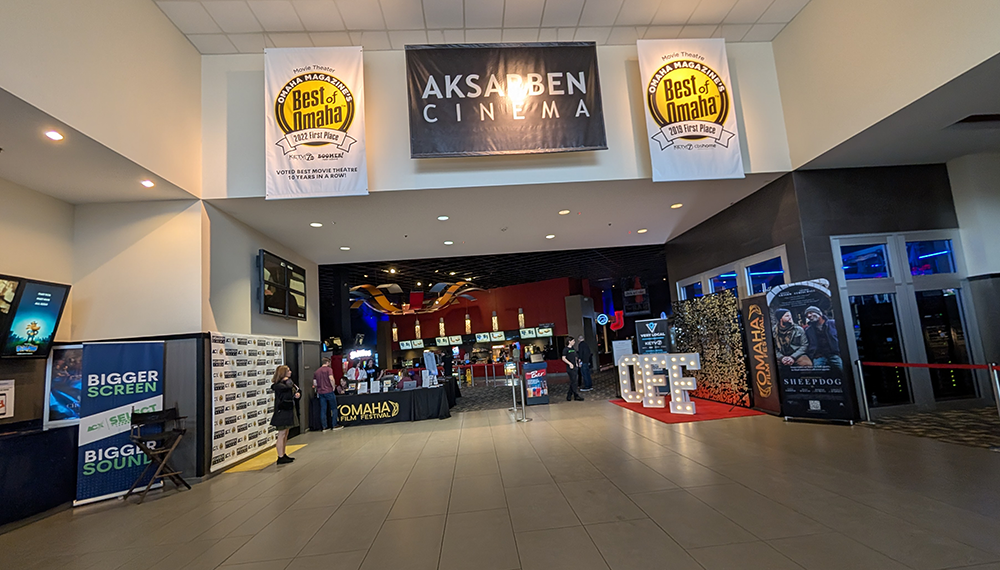
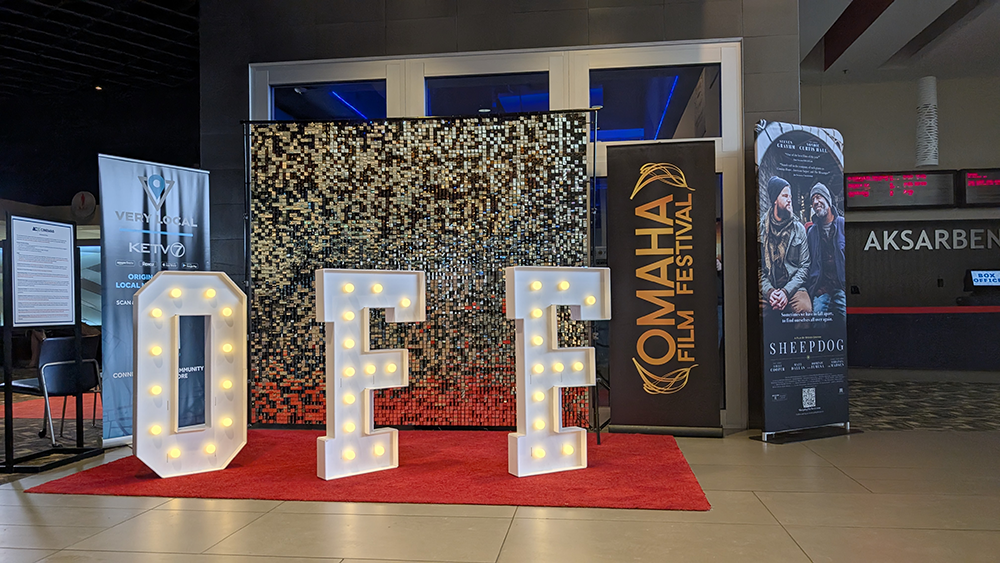
Check out their schedule and buy tickets at:
https://omahafilmfestival.org
