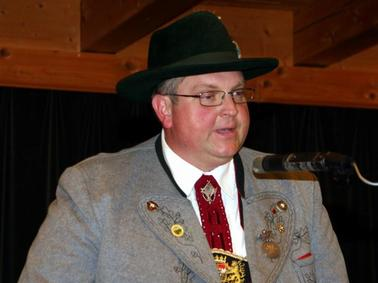
Michael Olk, Cultural Director of the German American Society
Now I’ll backtrack to the festival that’s coming up on the 18th and 19th of September. You asked why Oktoberfest is in September. Oktoberfest originally got started when King Ludwig I of Bavaria got married in 1810. His wedding was in October. After that they decided to celebrate his wedding every year. The king wanted it to be a celebration for the people of Bavaria, so everybody was invited. Eventually it started turning into more like a fair-type situation where people were bringing animals and they had horse races and all kinds of things. Of course, now it’s the biggest beer drinking and cultural festival in Bavaria. But at some point, they figured out that it was too cold in October to have an outdoor festival, so they moved it back into September but still called it Oktoberfest. The celebration starts in Germany on the same weekend that we do in Omaha. September 18–19 is the exact same weekend when Oktoberfest starts in Munich. But of course, we only run it for two days in Omaha but in Germany they run it for two weeks.
Thank you. Tell us what to expect at Oktoberfest. food-wise and celebration-wise.
Okay. Well, we call it German Day Oktoberfest because what we actually combined two festivals into one. Our German Day festival, which was started in 1884, used to take place in October and later on Labor Day weekend every year. In 1998, we decided to start doing an Oktoberfest that would be open to the public. At first we were having our German Day on Labor Day weekend and then the next month at the beginning of October we were doing Oktoberfest. We found that it was tough to get volunteers two months in a row, so we decided to combine the two events into one and just call it German Day Oktoberfest. This year is our 142nd German Day, combined with Oktoberfest.
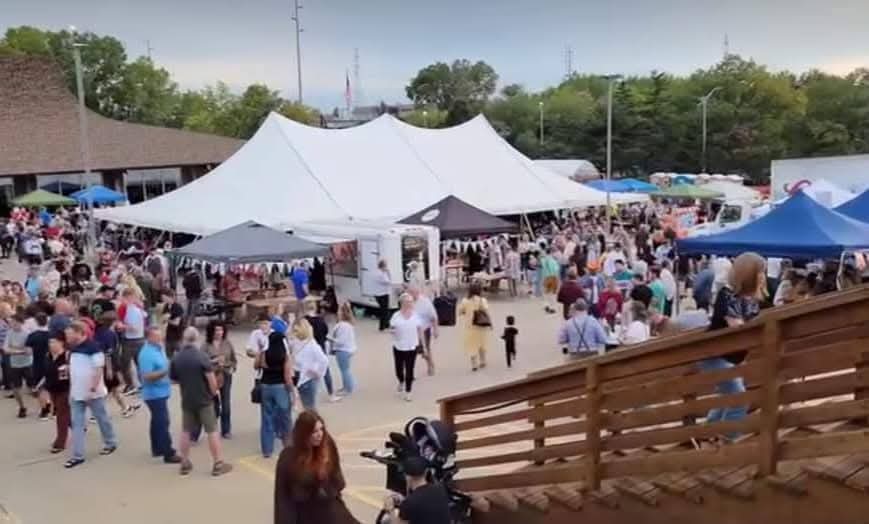
What you can expect is a big festival. We have three areas where we have constant music and we have a big food tent. Admission is $7, but children 13 and under are free. Any active military person with a current ID gets in for free, but they have to show their ID to get free admission.
Is that for dependents and retired military also, or just active-duty military?
Just active.
We’ll have three bands playing all the time: one in the main hall, one in the south hall and another in a tent in the north parking lot. You can sit in the tent and eat while you listen to the band and we’ll have an area where you can get up and dance if you want to. In the main parking lot north of the building, we’ll have two big beer trucks with approximately 10 to 16 German beers. In the south parking lot, we’ll have a large selection of German beers that are going to be on tap. We will also have a large selection of German beers in all three halls.
In the food tent we’ll serve schnitzel, which is a pork cutlet that is breaded and fried and then we’ll have our homemade brats. We also do what’s called currywurst. We make a curry sauce that you can put over your brats, which is a tradition from Germany. We have our own homemade sauerkraut. We do hot German potato salad. We also do the big Bavarian pretzels.
We have a rotisserie where we do whole hogs: six hogs at a time, just like they do in Munich. We can do six whole hogs at a time and 240 whole chickens at a time. We do pork dinners and chicken dinners, but that’s only on Saturday. If you get a brat dinner, it includes a brat and a bun with sauerkraut and hot German potato salad. If you get a schnitzel dinner, you get the schnitzel with a roll with it, hot German potato salad and sauerkraut. We also have a food kiosk on the south side of the building by the garage. If you don’t want to wait in line for a whole dinner and you just want a brat or a schnitzel sandwich, you can get a sandwich and put lettuce and onions and tomato on it, and you don’t have to wait in line. On the south side of the building we’ll have a grill that serves nothing but brats and schnitzel sandwiches. If you just want to have something in your hand and a beer or soft drink in your other hand, you can go over there instead of waiting in line for a full meal.
Outside, we’ll also have a wine booth that sells German wines by the glass or by the bottle. We’ll also have a merchandise booth with German hats, hat pins and T-shirts with this year’s Oktoberfest logo on it, which is beautiful. One of our members helps design it. We also sell glassware directly imported from the breweries in Germany. You can buy half-liter glassware or one-liter glassware. We also have the beer boots, which are one liter or two liters and we also have stone crock beer steins that you can buy.
In the South Hall, we’ll have another band playing and you can go into the Rathskeller on the lower level. We’ll have another bar down there and more seating down there. In our main hall, that’s where our dance group performs and the choir sings.
On the north side of the building, we’ll have a huge tent where people can sit and eat. On the south side of the building, we’ll have another tent where people can sit and eat. We’ll have another beer wagon back there from Spaten, another German beer company.
The building that houses our museum and the library is our torte house. It’s air-conditioned and a little bit quieter and you can go in there and enjoy a piece of German torte and coffee and conversation. From there you can take a walk through the museum.
There will be a lot of activities and on Saturday we’ll have a lot of children’s activities. If you go outside on the west side of the building, we’ll have carnival-style games for the kids. We’ve been doing that for many years. We also have performances with hand-carved marionettes just like they have in Germany. They have a stage that was specially built for them and they do two shows for the kids. We’ll also have face painters back there for the kids.
We try to make Oktoberfest family oriented so you can bring your whole family to the fest. It’s just not a beer-drinking event. You can bring Mom, Dad, kids, Grandma, Grandpa and have a good time. There’s something for everybody to enjoy.
I always tell everybody that there are two aspects to the fest. One is the Oktoberfest aspect with the beer and the food and everything. The other aspect is German Day. When you read the history about German Day, you’ll see that it was celebrated in German communities all over Nebraska. I have souvenir books from celebrations in Lincoln, Falls City, Syracuse, and other German communities across Nebraska. When you go into our museum you can see all kinds of pictures and medals and all kinds of artifacts from German Day festivals across Nebraska.
We have a souvenir book from the German Day Festival here in Omaha in 1913 where they had horse-drawn floats going up Farnam Street. They used to have huge parades in downtown Omaha before the First World War. Of course, when the First World War came along, all of that stopped for a little while.
One reason they started German Day in 1884 when they founded the club was that they wanted to raise funds to build a clubhouse. The other reason was to invite the whole community to come and immerse themselves in the German culture for a day.
That’s actually what German Day is all about: to invite people to come and see what we do and get involved in it for a day or maybe decide to join the club. You don’t even have to be German to join the German American Society.
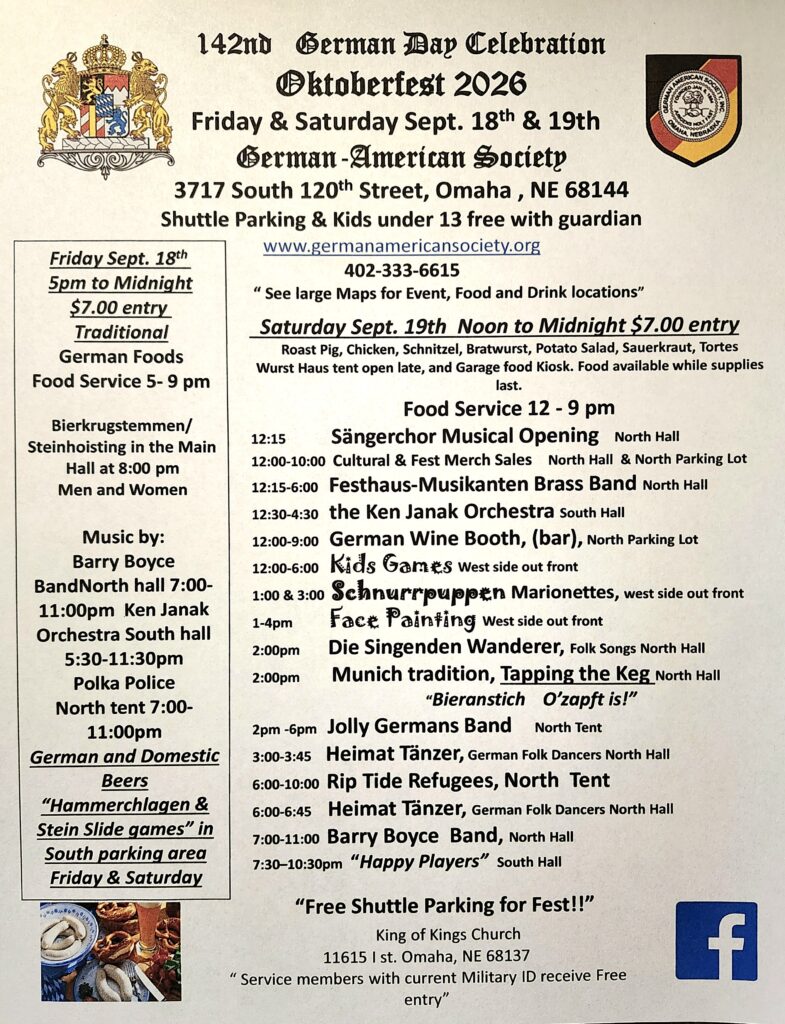
Flyer for celebration; Alt text has content for screen readers
Michael Olk, Cultural Director of the German American Society
OmahaNebraska.com here with…
Michael Olk. I am the cultural director at the German American Society in Omaha, Nebraska.
What first sparked your interest in German American history and history in Omaha?
My parents and my brother emigrated from Germany to Omaha in 1959. I grew up in a German household and we spoke nothing but German at home. I literally grew up at the German American Society almost from day one. When my parents came to Omaha, they got to know other Germans in the community. My uncle and aunt who lived here in Omaha sponsored my parents and introduced them to other Germans. They took them to the old German club that was on South 13th Street and my parents got involved in 1959 when they came to Omaha. In 1966 the German American Society sold the old clubhouse on 13th Street and built the new one where we are now on 120th Street and finished it in 1969. I grew up four blocks away from the club.
We were up there when it was being built. It was built by volunteers except for the main beam work and the concrete pylons that hold up the beams. It was built by the members. We had all of the trades in the club, so they were all going up there like my dad. My dad was a master bricklayer and stonemason, so he helped with a lot of the stone work and the brick work and tile work and slate work. He always took me along and I was only three or four years old at the time. Of course, they all knew I understood German, so all the old guys were asking me to hand them this or that, even though I was just a little guy.
Yeah, I was around the club from basically as soon as I could walk. I was always interested in history and especially German history because I always heard from my parents about our family history back in Germany. That’s what really sparked my interest. And of course later on in life, it really sparked an interest in me in the history of the Germans in Nebraska and Western Iowa: how they came here and how they helped build Nebraska and what they did here and what they did to contribute to Nebraska and everything, especially in Omaha and in the community. So that’s how I got involved in German history in this area.
Do you know why a lot of people, including your family, picked Omaha?
I think my parents picked Omaha because my aunt and uncle were here and my mom and dad didn’t know anybody else in the United States.
There were a couple of reasons why my parents decided to come to America. My dad was originally from East Prussia. The northern part of that region is in Russia and the southern part of it is in Poland. It was divided up after the Second World War as war reparations. My dad is from the southeastern corner of East Prussia. He grew up about six kilometers from the Polish border, so he also spoke Polish. His dad used to deal with a lot of Polish farmers before the war, because they had markets every weekend and they had a horse market. My grandfather was head of the co-op in their town and he knew a lot of the Polish farmers, so they spoke a lot of Polish back and forth. My dad learned Polish also.
My dad and his mom got captured by the Russians after the war and they had to live under communism for two years. Then they escaped: my dad and his mom, his cousin, and a neighbor girl whose parents had passed away. They escaped from the Russians in 1947 and met up with my dad’s siblings and my grandfather who had left in January of 1945 to go west. My dad’s dad—my grandfather—had spent part of the war in a Russian prison camp, but he was over 50 years old, so the Russians let him go.
After the war was over, my father found out where his siblings were through the Red Cross. My father always told me that he didn’t have to leave Germany. He and my mother had just built a brand-new house. They had a new baby—my brother—who was a couple of years old. They had about three acres of land, which in Germany is a lot of land. My grandparents were living downstairs and my parents and my brother were living upstairs. But my dad was afraid that communism was going to spill into West Germany because of the way it was spreading in the East and he always said he was never going to have his kids grow up under communism because of what he had experienced when he and his mom had to live under it for two years. He also said that coming to America was a bit of an adventure. They wanted to go to a new country.
The old timers at the club always used to say, “I’ve got an uncle in America.” That’s what the saying used to be. Even in the early 1900s, they always used to say, “Yeah, I’ve got an uncle in America.” My dad explained to me why they came to the U.S. It was a little bit of an adventure and they also were apprehensive about what was going on in the East. My parents always said there was only one time when they were thinking about going back.
I just lost my parents last year…both of them. My dad was 91 and my mom was 90 when they died, so they both had long lives. They always told me that coming here was the best thing they ever did. They said they had no regrets about coming here. Of course, they missed our family in Germany because my mom and dad were the only ones who had left, other than my uncle who lived here in Omaha. I have a first cousin here in Omaha, but the rest of our family is still in Germany. Of course, we go over there and they come here and we still stay in contact with them.
My parents and my brother became U.S. citizens in 1975 and the World Herald did a story about them because they were the only Europeans that day in the courtroom who were becoming citizens. The World-Herald did a little story about them and I still have the newspaper clipping about it. In the article, my mom talked about becoming an American citizen and how proud she was. She also said people should be proud to be American citizens, but they should also never forget their heritage and where they came from. I agree with that.
That’s wonderful.
Do you know why your uncle and other Germans picked Omaha?
Well, my Uncle George didn’t really pick Omaha at first.
Oh. Where did he go first?
He went to McCook, Nebraska. His first wife was my dad’s oldest sister and they had a son whose name was Hans. When my uncle was in the German Army, he was stationed up in Norway. In January 1945, when they heard that the Russians were breaking through, my dad’s siblings got on refugee trains to go to the west. My dad’s oldest sister who was married to my uncle George contracted hepatitis and died. After the war, my Uncle George ended up in an English prison camp. He found out through the English Red Cross where my dad’s siblings and his son were and he went there and lived with them for several years.
Then he met somebody else and got married and they decided to emigrate to America. Uncle George was a master dairy farmer and he got a job on a dairy farm in McCook, Nebraska. I’m sure it was a culture shock going from northern Germany where it’s plush and green to the sandhills in Nebraska. When they got out there it didn’t last very long because my aunt didn’t like it. I guess she even had a run-in with a rattlesnake while picking up eggs. So then they decided to move to Omaha and Uncle George got into construction and eventually into home building. Uncle George told my dad, “If you come to Omaha, you can do all the brickwork and stonework for me.”
Anyway, that’s another story. But that’s how he came over here. I did a lot of interviews with different immigrants. Some of them came after the First World War and before the Second World War. Others came after the Second World War and a lot of them had different reasons for coming to America. Some of them are sad. Some of them had come because of economic reasons. Some of them had come out of desperation. But after the Second World War, a lot of ladies came over because they had married American GIs after the Second World War. They were called war brides. A lot of Germans came to America after the Second World War because they had nothing after the war. Everything had been bombed out. There wasn’t any opportunity to make a living.
The Marshall Plan helped a lot. I always heard a lot of them talking about the Marshall Plan and my dad talked about the Marshall Plan also. When General Marshall came up with the Marshall Plan to help rebuild Germany, it put a lot of the Germans back to work, but not everybody. Big cities like Hamburg and Frankfurt had been flattened to nothing during the war. Some people lost their whole families and were literally on their own. My dad remembered seeing walls covered with pieces of paper that said, “Have you seen this person?” He remembered seeing children walking alone on the street, with no parents or brothers or sisters. People didn’t even know who they were or where they came from—nothing. He said that post-war Germany was in total disarray. That’s why a lot of people came to America after the war: because they looked toward America as a land of opportunity. They wanted to start a new life. A lot of them came to Omaha and joined the German American society. Especially after the Second World War, we gained a lot of members and they came from all over Germany.
Originally when the club was founded, it wasn’t called the German American Society. It was called the Omaha Plattdeutsch and Plattdeutsch means Low German, which is a certain dialect from northern Germany. Most of the Germans who settled here in Nebraska in the 1800s were from northern regions of Germany, because Nebraska and Iowa look kind of like northern Germany. It’s flat and it’s all farmed around. A lot of people from northern Germany liked Iowa and Nebraska because most of them were farmers. But in 1950, we changed the name because there were so many people who came after the war that were from different parts of Germany. Plattdeutsch didn’t fit with everybody else that was coming from all the different parts of Germany like Bavaria and all the other different provinces that spoke other dialects, so we changed the name to the German American Society.
What parts of town did people end up living in and are there still buildings and different things that were built by the early immigrants?
Well, there really wasn’t a German, per se, neighborhood, because Germans were all over Omaha. There were Germans in North Omaha. There were Germans around St. Joe’s [St. Joseph], a German Catholic church at 15th and Center. Another German Catholic church was St. Mary Mags [St. Mary Magdalene Church] on Dodge. But there were Germans in North Omaha, Midtown, South Omaha… they were all over the place, so there wasn’t really a German neighborhood.
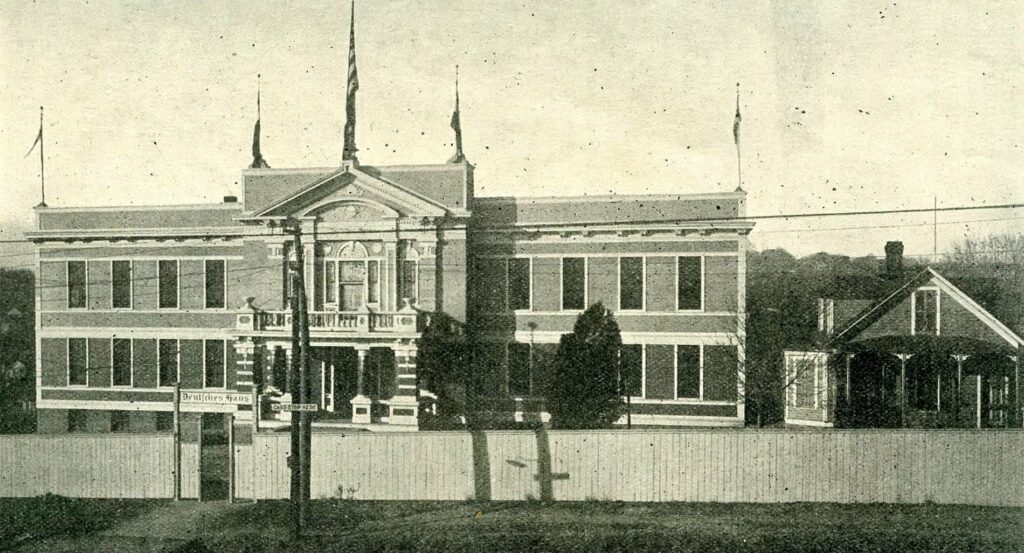
Photo Courtesy German American Society: Deutsche Hause
But when they decided to build what they called the Deutsche Haus on South 13th Street, it was the Brennan Farm and they bought it in 1906. That clubhouse was there until 1966 when it was sold. But before the Deutsche Haus, we had various clubhouses all over the place. We had a place at 19th and Harney.
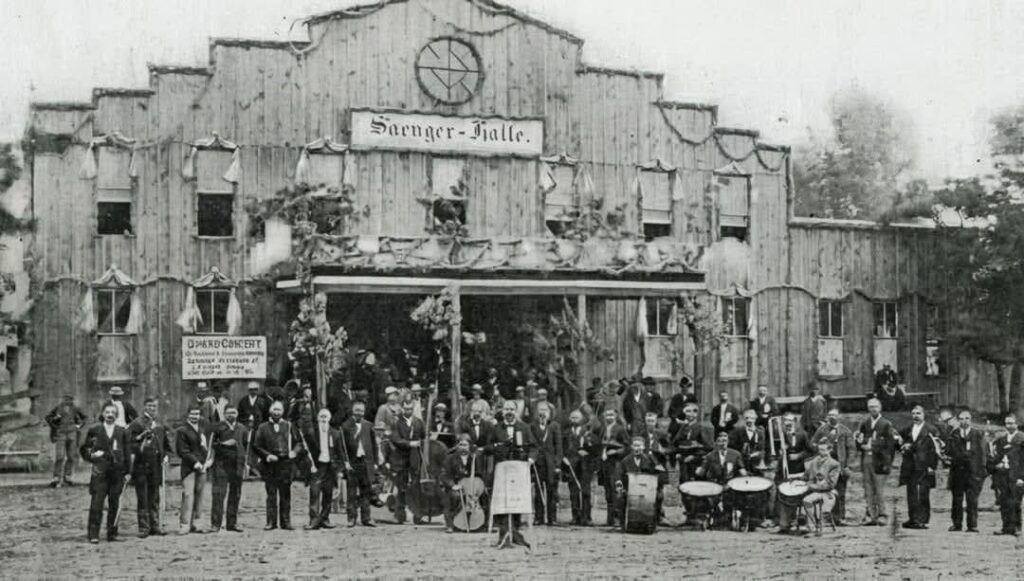
Photo Courtesy German American Society: Sängerhalle
We even had a music hall that was built in 1871 at 17th and Capitol Street. We called it a Sängerhalle. It was for the German music societies that were in Omaha at that time. The first German choir in Omaha was founded in 1868.
There were Germans all over Omaha and they pretty much lived where the work was, where the churches were, where the breweries were. We had four German breweries in Omaha: Krug, Storz, Metz, Jetters. Krug was first on Farnam Street and then on Vinton and then later on they sold the Falstaff. Then you had the Metz Brewery building, which was in East Omaha. There wasn’t really one German neighborhood.
That’s interesting because some different ethnic groups in Omaha were more concentrated.
Yeah, well, like the Italians, were in East Omaha in Little Italy. The Lithuanians and the Ukrainians were in South Omaha. They were off of Martha Street and in those neighborhoods there. But there were a lot of Germans, too, like a lot of them around 17th and Vinton because we had the Turner Hall where they did the gymnastics until 1969. But that building got sold also.
In 1966, there was a meeting of the three remaining big German clubs in Omaha, which was the German American Society on South 13th Street; the Musikverein, which was our German singing societies on 17th and Cass and they were going to be losing their building to the new interstate; and then the South Side Turners, which were on 18th and Vinton. That building is still there. It’s a restaurant or a rental hall or something now.
The president of the German American Society at that time, Joseph Meschede, got everybody together in 1966. The singers were going to be moving in with the German American Society anyway, because they were going to be losing their building. He got all three clubs together and they had a big meeting and he said, “We can’t sustain three German clubs in Omaha, because on the weekends when we’re trying to have a dance we have to figure out where to go.” In addition, all of the clubhouses needed thousands of dollars’ worth of repairs because they were getting old and in disrepair. So, Joe came up with the idea of merging the clubs, selling all the buildings and moving west. Of course, some of the old timers got a little irate about it because they didn’t want to move out of the old neighborhoods, but it was the best thing we ever did. All of those old neighborhoods have changed and the old-timers in those ethnic groups aren’t in those neighborhoods anymore. If we would have stayed on 13th Street, we [German American Society] would have died because nobody would have gone down there. That’s what happened with Sokol down on 22nd and U Street. Nobody wanted to go down there anymore. I felt so bad when they had to close Sokol down on 22nd and U, because I used to like going there as a kid for dances and stuff. I’m a big supporter of all the ethnic groups in Omaha. I want to see them all thrive.
So then we bought five acres where we’re at now on 120th Street, and we sold all three buildings, pooled our money, and came up with an agreement. The Turners agreed to merge, if we would keep the gymnastics going. They agreed to it and we still do the gymnastics. We have five classes of kids from different age groups that come every single Thursday for gymnastics at the club, and we’ve been doing gymnastics since 1860.
The continuity is very impressive.
Yep. It was the same with the Omaha Musikverein, the Singing Society, that was on 17th and Cass. The Singing Society and the Turners (the gymnastics) were the two oldest German organizations in Omaha. The Turners started in 1860, and they used to have an old Turner Hall on 10th and Howard Street. That was their first German Hall. So, they go way back. For us to keep going that long is quite an accomplishment. But we sold all the buildings, pooled all the money together, and started construction at 120th Street. We have these big, huge wooden beams that kind of swoop up to the middle in the ceiling of the main hall, and that was the first hall that we built. Construction of the building started in late 1966 and was finished in 1969. I would say 85% of the work was done by volunteers.
Wow.
They came on the weekends after work. My dad and a lot of the other guys played soccer for Falstaff and Storz brewing companies, and they were coming out on the weekends and stuff. The salesmen were coming out with their station wagons full of free beer, and Warren Larson, he used to own Larson Block Company that was in South Omaha off of F Street, he was a member of the club. He was selling all the block and everything at cost to the club. The German American Society got a lot of help from a lot of people. I still remember all those guys out there working. It was quite an accomplishment when they got it done. We’re pretty proud of what we’ve done out there.
It’s a very nice facility, and you host so many different events.
Yeah, yeah. I’m also the chairman for all of our festivals and enjoy that very much.
You wear quite a lot of hats, and they’re all very big ones.
Yeah, yeah, but you know what? I enjoy doing it because it’s pretty much where I grew up, and I’m proud of what we have there and I’m proud of what I do there. I’m going to keep doing it until I can’t do it anymore. I like seeing new young people come in, and I like telling them about the club and telling them about the history of the club and about the history of the Germans in Nebraska. I like taking people into the museum, and I also give talks about the history of the Germans in Nebraska. I also enjoy working on the archives and all the other things I do there. The people at the German American Society are like family to me.
While I do wear a lot of hats, other people do also. Without the hard work of many of our members, none of these things would be possible.
Please tell us a little bit about the different events that you have, including the festival coming up. A lot of people wonder why it is called Oktoberfest when it takes place in September.
Okay. Well, we do rent the club out for weddings and other events, but our main focus is on teaching people about the German culture and heritage. That’s why the club exists. We are a cultural organization, and we have many different sub-organizations. We have a traditional German dance group called the Heimat Tänzer. We have our formal choir, which is called the Sängerchor. Of course, like I said before, we have the Turners. We have a Wurst Klub. They meet once a month, and they make the sausage for all of our festivals.
Oh, it is so good.
It’s all made in-house. We have a men’s group that is actually tied to the Turners—the gymnastics—and they are called the Bärenbrut. We also have a ladies’ group called the Die Rosen. We have a ladies’ organization called the Heimatfreunde, which means “homeland friends.” We have cooking classes. We have language classes for children and adults. We basically touch on every aspect of German culture that you could probably ever think of. from organizations to activities. We also have a library… just anything and everything that you can think of on German culture. We even have a store. I run the store also. My parents started it. Of course, now that my parents are gone, I run it, and I have it open every other Saturday from 9 to 11. It’s open to the public, and it’s all imported German products.
Our main goal is to teach and foster the German culture. And then we also have a few dinner dances here in February. We have what’s called Fasching. It’s like the same thing as Mardi Gras, but in Germany they call it Fasching or Karnival. In January, we have what we call Stiftungsfest; that’s our anniversary dinner. In January 2027, we’ll be celebrating 143 years.
We have events that are open to the public. In March, we have Bockfest, which is a celebration of Bockbier. It’s a darker beer, and the alcohol content is just a little bit higher. We have guys out on the patio who heat up hot steel rods. They put the rods in the beer, and it kind of caramelizes the beer and brings up the alcohol content just a little bit, and it tastes really good. We serve different German foods with it, and we have entertainment. We have bands.
In May, we have Maifest, which is celebrated very widely and extensively in Germany. We have a traditional maypole at the clubhouse. Our dance group does the traditional Bandl Tanz which is the maypole dance. They wear the traditional dress from where their families came from, in different parts of Germany. Our choir sings, and we have a mixed group that sings nothing but beer drinking songs, hiking songs and folk songs. They’re called the Singenden Wanderer. We have bands and we serve German food. We have a market where you can buy food products and other things.
On September 18th and 19th this year we’ll have our German Day Oktoberfest. I’ll backtrack to that in a bit.
The last festival for the year is our Christmas in Germany. That is our second largest festival of the year. It’s one of my favorites because it’s traditional. We put on a traditional German Christmas. It’s on the first Sunday of December every year, and we run it from noon to six. We have this big, beautiful, 16- to 18-foot-tall Christmas tree with hand-carved ornaments on it. Some of our members are wood carvers. They hand carved all these ornaments that are on this tree, and all of the ornaments are in German style. We serve traditional German food, and our choir sings German Christmas songs. Our group, Sängerchor, also sings German Christmas songs. Our dance group, the Heimattänzer, does traditional dances and also some Christmas dances. We have what we call the Christkindlmarket, the German Christmas market. Saint Nicholas comes for the kids and we also have entertainment for the kids. We have the Mid-America Wood Carvers downstairs in our Ratskeller, a lower level in the basement of our South Hall. We also have some other groups down there selling items.
We make our own mulled wine, which is called Gluhwein. We have an organization of wine connoisseurs called the Weinverein. They make the Gluhwein, and you can either buy it in bottles or buy it fresh in a specially made cup just made for the festival, and they actually come from Germany. It’s just a really beautiful fest that helps you get into the German Christmas spirit. At 6:00, right before it ends, we hand out sheets with the verses of Silent Night in German and in English. We turn the lights down, and everybody gets really quiet. Then the choir leads it off, and everybody that is there will sing. There’s got to be over a thousand people there at the time. We do a Silent Night sing-along in German and in English, and that’s the end of the festival for Christmas in Germany.