The College Word Series Pre-Game Press Conference was held this morning at the Charles Schwab Field Omaha.
In attendance were:
Joey Gardner, Marketing & Creative Manager College World Series of Omaha, Inc.
Jim Pillen, Governor, State of Nebraska
John Ewing, Mayor, City of Omaha
John “Jack” Diesing Jr., Former Chairman and President of College World Series of Omaha, Inc.
Lisa Diesing, Board of Directors College World Series of Omaha, Inc.
Anthony Holman, NCAA Vice President of Championships
Adam Straight, President and CEO of MECA
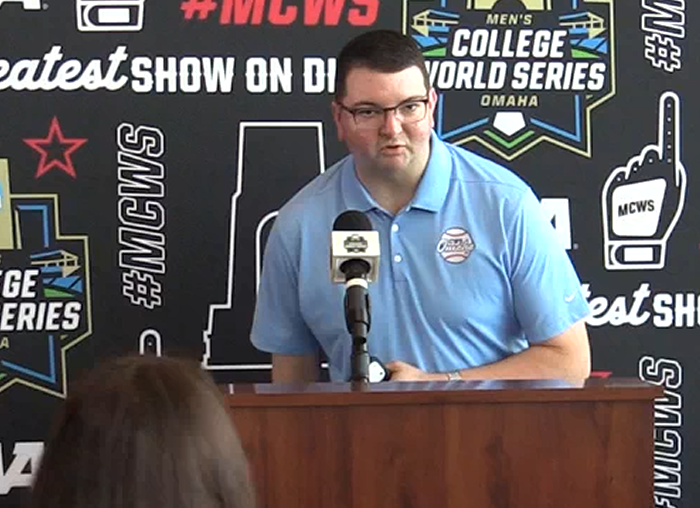
JOEY GARDNER: Welcome, ladies and gentlemen. I’d like to welcome you all here today for pre-series media availability. We’re going to go ahead and get started here. First, I’m going to welcome the Honorable Jim Pillen, Governor of Nebraska.
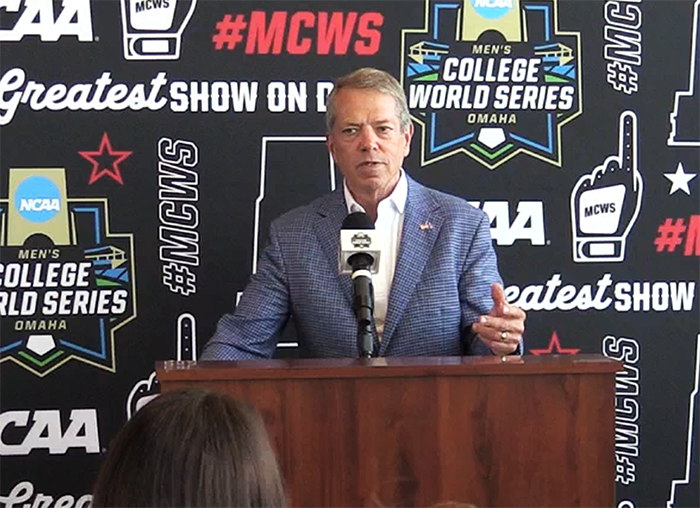
GOVERNOR PILLEN: Good morning. I want to just take a minute to welcome everybody to the incredible city of Omaha in the state of Nebraska. When I talk with anybody who comes to Nebraska, moves here, or lives here for a short period of time, I always ask them, “What do you love the most about Nebraska?” and they can’t get their answer out fast enough: “It’s the people.” It’s the people. And you know what I wanted to share? It’s the 76th year.
This one’s really important. College World Series. Sports Illustrated did an article 10, 12 years ago, so at my age I might mean it was 20 years ago, but they did an article talking about all the extraordinary sporting events across America. Think of all the incredible sporting events. Guess where they ranked the College World Series sporting event. Number three. Let’s ask ourselves, why did that happen? 76th year, why? What makes the College World Series so special? To be the third most relevant sporting event.
Number one, every young man that starts throwing a baseball and catching it with a glove and starts in whatever league and doing games, they don’t dream about the majors. They dream about Omaha. So what makes Omaha so incredibly special? Why do we have governors coming from states and their team’s not even in the game? Why do we have fans coming, the LSU Tigers? I don’t know how many will be here, but why do they keep coming back? Because of the people. And everybody from Omaha and Nebraska that make an incredible impact. And that’s why, on behalf of the state of Nebraska, we were really, really proud to make a $30 million investment into the Creighton campus to sew that baseball. We’re really, really proud that Creighton and UNO are co-host sponsors that make this happen and make the event extraordinary for the young men that are coming to Omaha and really, really finding out where the greatest show on earth is. Welcome to Nebraska. God bless. Have great times while you’re here. Thanks for everything that everybody does.
JOEY GARDNER: Questions? We’ll start with the recent economic impact numbers that were released. What impact does this have on the state of Nebraska?
GOVERNOR PILLEN: Well, I think that what’s really, really important on the state of Nebraska is sales tax revenue. More activity, more people coming and spending money doing business with business. What’s important for everybody to understand is that in Nebraska, 95% of our businesses are family owned, generationally successful. We’re all stakeholders. We’re not going somewhere else. And so it’s another flurry of extraordinary economic activity. Helps the state with sales tax revenue, but the big one is what it does for all family-owned businesses.
JOEY GARDNER: Any other questions?
GOVERNOR PILLEN: Kindest group I’ve ever been in front of.
JOEY GARDNER: Mayor John Ewing.
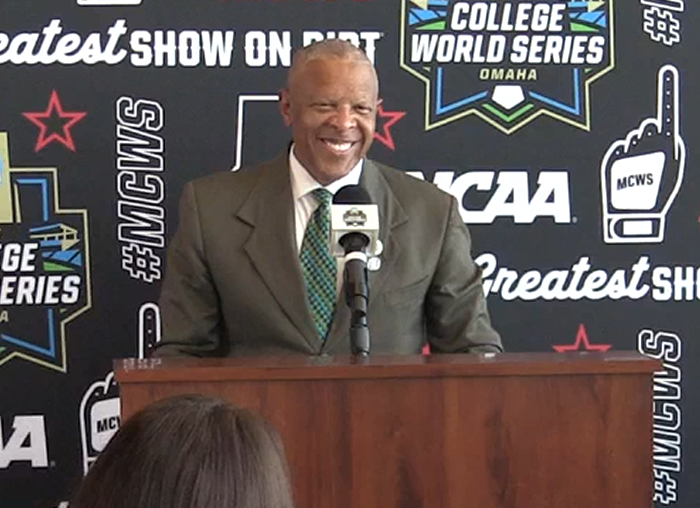
MAYOR EWING: Good morning, everyone. Welcome to the amateur capital for youth baseball. For those of you who weren’t over at Creighton, I made that proclamation earlier today. And so this is the amateur capital of baseball.
First, I would like to thank Adam Straight and the folks at MECA for their hospitality, being exemplary hosts, and welcome to your, I believe, first College World Series. It is an amazing experience, and we’re glad you get to share it with us this year. Second, I would like to thank Mr. Holman and the NCAA for all the great work that they do, as well as CWS with Jack and Lisa, thank you for, and Amy, thank you for the great work that you do making this happen every year. Omaha has been the proud host for 76 years for this amazing opportunity. And we are thankful that you all are here. Welcome home.
When you see our police officers, medics, public works crews, know that this is us fluffing the pillows, putting on the coffee, laying out a big spread, and know that everyone is here to welcome you and make sure that you have a great time. Also, everyone is asking about the streetcar, which is under construction and now will be ready in the fall of 2028. We have worked diligently just like we did with Berkshire Hathaway to make sure people will have a great traffic route and be able to get anywhere in this city that they want to go. We made sure that Tenth and Capitol was open so that people can experience Omaha and be able to get around the city.
We also want to thank everyone in advance for supporting our businesses in Midtown, downtown, and Blackstone. We believe it is critically important that we support them and allow them to be able to continue to prosper so that when the streetcar is completed they can be the beneficiaries of that effort. So support those businesses.
There will be parking changes at this time of year, obviously. And we have a lot of information that will be shared at the hotels and other places so that people can find adequate parking. Also, we have transportation options so people don’t have to try to get as close to the stadium as they can. They can actually park a little bit away, drive the Metro bus to be able to get to the College World Series, or ride our e-bike. We have the best e-bike program in the United States of America as well as our scooter program. So we just ask if you have any questions about parking, Sarah is in the back there… if you could raise your hand to let people know so they can get that information. We also would ask people to look at Google, Apple, and Wave if they want to know routes to be able to take to get to their destinations. Use the tear-off maps at the hotel for any road closures. And then finally, know that we are standing at the door, awaiting the car in the drive, ready to welcome you all home to the best show on dirt, the College World Series, and thank you all for being here.
JOEY GARDNER: Can you talk about the economic impact that this has on the city and what it does?
MAYOR EWING: Absolutely. As the governor mentioned, with the state, there’s sales tax revenue. There’s also sales tax revenue for the city of Omaha. We also get hotel tax revenue, and we get the other revenue from when people spend money in this city and partner with our businesses. But the most important thing is we get the branding of being part of the greatest show on dirt, and that’s good for Omaha year-round.
JOEY GARDNER: Any questions for the mayor? Next up, we’ll have Lisa Diesing with the College World Series of Omaha.
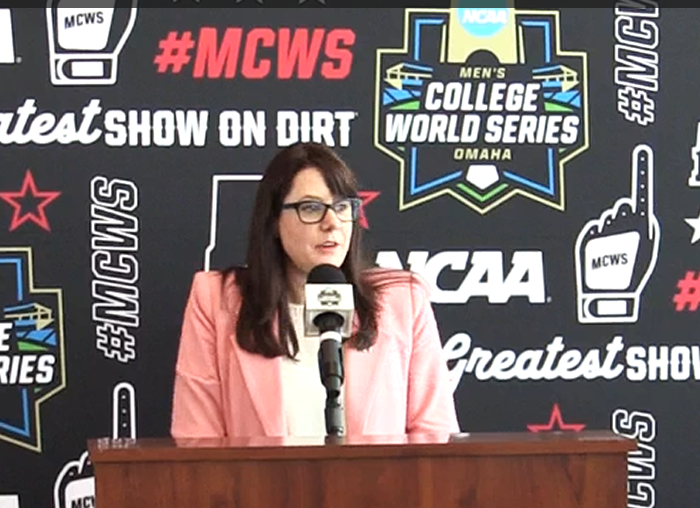
LISA DIESING: Good morning, everyone. As Joey said, my name’s Lisa Diesing. I’m a long-time board member and executive committee member for the College World Series of Omaha, Inc. First of all, I want to thank both Governor Pillen and Mayor Ewing. Thank you for your kind words. Thank both of you for your ongoing support of this championship, because you help us do what we do best and host this championship for all of those that travel in and those that are dedicated to it locally. Along with that, I would also like to formally welcome on behalf of our board, our partners at the NCAA, welcome home. I’d also like to formally welcome the eight teams and their fans. We’re excited to help you understand what Omaha has to bring, and we hope you enjoy the experience.
JOEY GARDNER: Lisa, can you talk about the importance of this event to both the city and the state?
LISA DIESING: Absolutely. I want to add a couple of things regarding the economic impact, and I’ll talk bigger picture. When we talk about Omaha locally and economic impact, our organization ran an economic impact study last year. We hired an independent economist. And with the results of that, $147.6 million economic impact in the city of Omaha last year, just over the next two years. Along with a financial perspective, we also impact people. That includes over 1,500 jobs, full-time positions, over these 10 days.
And both the governor and the mayor alluded to this, but our name is mentioned so many times, not just within these 10 days, but in these three weeks, that the value of that publicity is over $2 billion. So we’ve got to take advantage of that and make sure that, again, we continue to do our best and be the hosts that we have been for 76 years, as you’ve heard.
Outside of the quantitative piece of this, though, there’s an important piece that we’re not yet focused on, which is all of you… all of our local fans, and those that travel in from across the country. Folks that are dedicated to showing what Omaha has to give with this event and how the impact of our culture affects those folks in returning and building their own traditions. For example. I have a very close friend whose family is from California. They have a 20-year history of coming here year after year. They’ve built their own traditions. They go to the same restaurants. They share the stories of how great Omaha is. That family, though, actually has a full 45-year history of being involved in the College World Series from a coaching perspective, from a player perspective, and their commitment to Omaha. So if we can continue to build the excitement of folks that don’t live here, who also help share our story, we can get those folks to come back and continue to reaffirm that Omaha is the place to host the greatest show on dirt in perpetuity.
JOEY GARDNER: Any questions for Lisa? Next, we’ll have Anthony Holman with the NCAA.
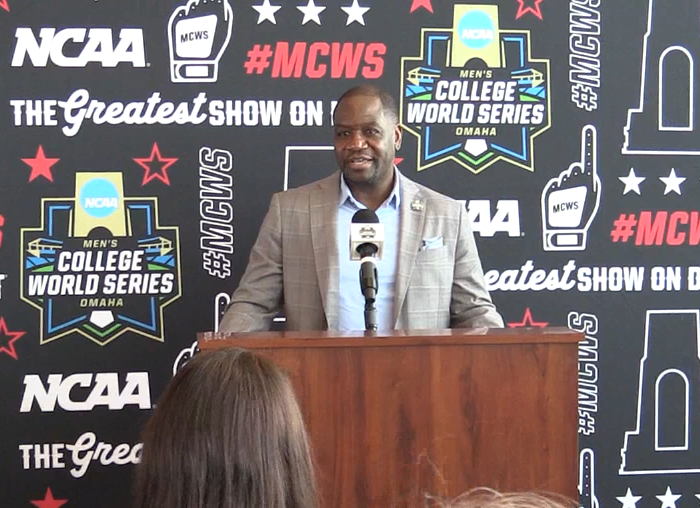
ANTHONY HOLMAN: Thanks, Joey. We are excited to be back home. I think everyone has said it before about how long the championship’s been here. And I think I mentioned during this press conference last year and years before, one of my other responsibilities at the association is managing our bid selection process. And you wouldn’t believe the number of times folks say to us, “Hey, we want to be the Omaha of … (insert sport).” So that’s a testimony to other people in other cities, other states recognizing the special thing that we have here. And that starts with, as the governor said, with the people that support this, and how that’s generational. We’ve got Lisa up here talking. Jack led the CWS for so many years, his dad before that, and that consistency has been really special for us. Adam has come in and hit the ground running with MECA, right? The progress that we saw around the stadium, the development, he’s walked into all those things, he’s embraced it, he’s challenged us to think even broader on those things. We had a change in leadership with the mayor. Same thing, right? Development continues. So for us, as an association, when there’s so much going on around college athletics, it’s really foundational to have that foundation in place around a championship that’s so important to what we do. And you won’t have the kids that are playing here this weekend talking about Transfer Corridor or NIL. They’ll be talking about The Road to Omaha and how exciting it is to be here and to play in front of the fans, and the energy and the excitement that goes along with this championship, and that’s special. We really appreciate that opportunity. And thanks to so many our host institutions both at Creighton and at the University of Nebraska at Omaha. We couldn’t do it without their support and their facilities and their staff that help us to make this special for our teams and student athletes. So thank you all for your continued support, and we are really excited to be here.
JOEY GARDNER: Anthony, can you talk about what maybe you’re looking forward to most this year?
ANTHONY HOLMAN: So we’ve got some new things here, right? If you look out in left field, you’re not just looking over to the bridge, which is great. We’ve got another video board. We’ve got ribbon boards. So some additions to the stadium have been really nice. Some upgrades to the space. We’re doing some additional things in FanFest. We’ve got some new teams that are going to be making their first appearance here. I think that’ll be exciting, providing a new opportunity for a different fan base and a different market to experience. So as much as the consistency that we have there, we’re excited about the newness and the new opportunities that come in each year as well.
JORY GARDNER: And finally, Adam Straight, President and CEO of MECA
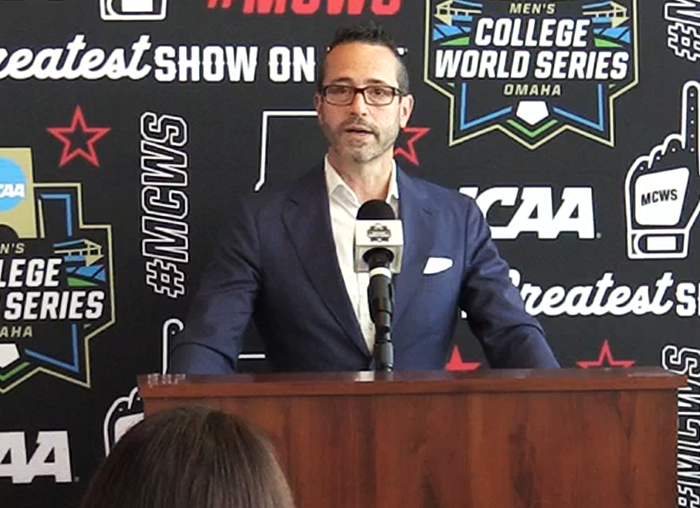
ADAM STRAIGHT: Good morning, everyone. Thank you, Governor Pillen. Mayor Ewing, I will confirm your thought on the people. It’s what got me here. And in my short five to six months here, the one part I go back to was genuine. The people were really genuine, not only in Omaha, but Nebraska State. So thank you all for your hospitality towards me and my family.
I understand that I’m the last stop between y’all and the food, so I’ll be somewhat brief. I hope y’all did skip breakfast. As mentioned, this is not only my first year as the president and CEO of MECA, it’s my first year as an attendee. It was always on my bucket list, and I like to say that, well, now I’m in the bucket. So I’m very much looking forward to the competition on the field and just the genuine atmosphere. I’ve been around a lot of large-scale events in my career. But I’ll tell you, even before it started, it’s the the second to none. I’m glad you’re happy, Anthony, and I’m here to make you happy for years to come…decades to come.
So over the last six months, again, I gave noticed just the genuine nature of not only the Omaha community, but my team. And I want to take a little privilege here just to give them a shout out for all of the work that they put into this event, into this campus, and the greater community is just so outstanding. So just a round of applause for all of them.
It’s no small feat, but the memories that the players, coaches, and fans walk away with of Omaha and the CWS make those long days and months of planning absolutely worth it. We’re in it, and we’ll get above water here in several days, but we can’t wait to host everyone. We’re just very much looking forward to that.
One new little thing that we have this year that I’ll show off a little bit. I don’t know if we have a sample of it, but you might see it. We’re introducing a commemorative Yeti tumbler that has the College World Series logo of the year. We spoke a lot about our city being synonymous with an event, much like Augusta and much like Louisville has with the Churchill Downs. Anyone that goes to Augusta collects as many Masters cups as you can with the year, and you show them off and you are at home. So that was the thought here is to grab a cup. If you purchase the cup, you get free refills of non-alcoholic beverage at any concession standard throughout the series. So we hope you take advantage of that for $75 apiece, but well worth the memory. So I think that’s all I have. I’ll open up to questions.
JOEY GARDNER: Adam, can you talk about the new technology upgrades and kind of what that means to the facility?
ADAM STRAIGHT: Yes, I think they mentioned it a little bit. We have a new video board in left field and a new video board in right field. So the upgrade we did in left, brand new, we took the old board down to right and matched it with the technology in left, along with ribbon boards. Anyone that doesn’t know those are the electronic advertising panels on the fascia of the Stadium Bowl. What that does is it gives us a tremendous opportunity to roll through sponsorships and roll through any kind of ads and whatever the series, however they want to appropriate that. So it very greatly adds to not only the facility but the fan experience. And we’re not stopping there. Small potatoes, but great in the operational world, and you’ll love this, Anthony, I know you do, but we added speakers to the gates so we can communicate more effectively during those times of need and any kind of weather situation.So again, small pieces. The one that I just didn’t really point out, but brand-new stadium lights, and anyone that’s a stadium geek like me will notice those immediately when you go out, the slimmer, sleeker version of those lights, they’re LED, they’re interactive. We can program a lighting show after any kind of home run. So that’s just again, it speaks to the fan experience and it speaks to not only our commitment, but our obligation to keep up with those that want to take our title. So again, we’re not stopping there; we have many more plans to come in the future to not only reshape what the stadium looks like and how it operates, but reshape the campus.
Now to the main event, right? Our fantastic partners at Levy have created another incredible baseball team specialty menu for this year’s CWS. Chef Katie will talk about those new menu items once she’s set up over there. Thank you.

