The Sensory Yard – Common Senses Festival
10:00 AM–7:00 PM
KANEKO
1111 Jones St
Omaha, NE 68102
Free
The interactive installation is designed around sensory inclusion, accessibility, movement, imagination, and disability acceptance. https://thekaneko.org/seasons/cs-sensory-yard/
Slice of Life Family Night: Part 1
5:00–7:00 PM
The Union for Contemporary Art
2423 N 24th St
Omaha, NE 68110
Free
Youth and families will create illustrated stories about their families and cultures, inspired by The House on Mango Street. https://www.u-ca.org/events/slice-of-life-family-night
TRAJECTORY: An Exhibition Celebrating the Art & Impact of Justin Kemerling
5:00–9:00 PM
The Mastercraft, Entrance #4
1111 N 13th St
Omaha, NE 68102 https://millworkcommons.com/event/trajectory/
Sounds of the City – Omaha Symphony
7:30 PM
Gene Leahy Mall at The RiverFront
1001 Douglas St
Omaha, NE 68102
Free
Omaha Symphony presents this community concert as part of the One Community Cultural Festival. https://www.omahasymphony.org/concerts/sound-of-the-city-26
Saturday, September 19, 2026
Omaha Farmers Market – Old Market
8:00 AM–12:30 PM
11th & Jackson Streets
Omaha, NE 68102
Free admission https://omahafarmersmarket.com/
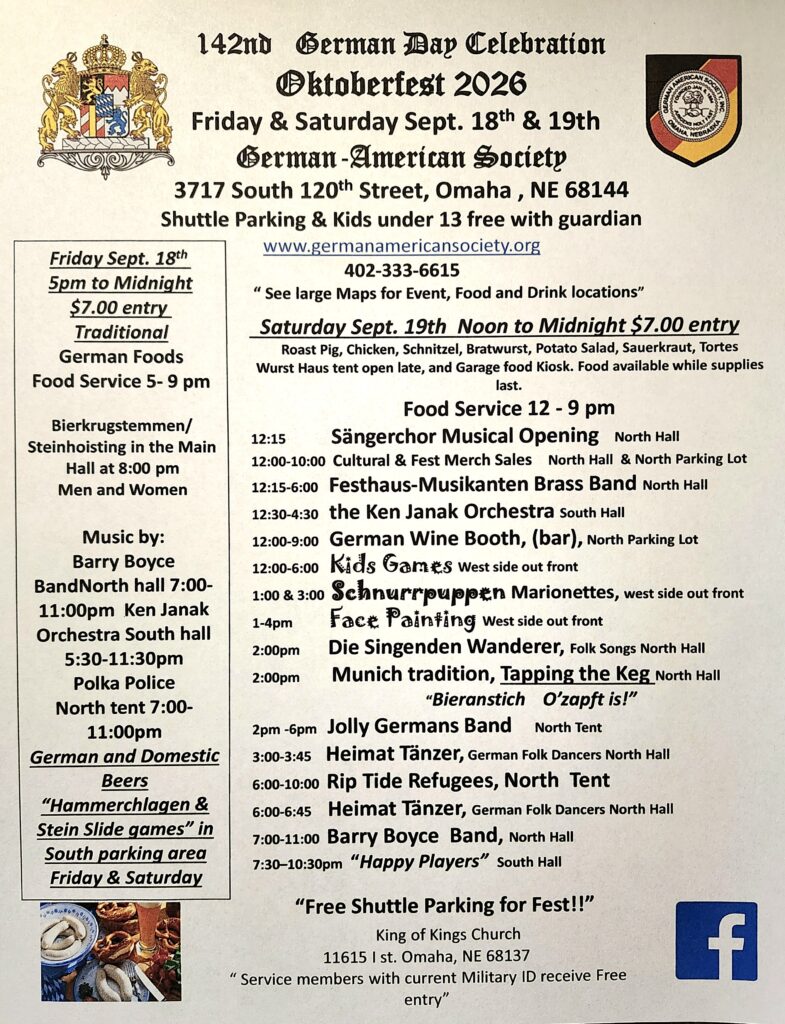
142nd German Day Oktoberfest – Family-Friendly / German Cultural
12:00–11:50 PM
German-American Society
3717 S 120th St
Omaha, NE 68144
Tickets required
The Saturday celebration includes German cuisine, traditional beer, live music, dancing and cultural performances for all ages. https://www.germanamericansociety.org/event-details/142nd-german-day-oktoberfest-saturday
One Community Cultural Festival – Multicultural
6:00–10:00 PM
Gene Leahy Mall at The RiverFront
1001 Douglas St
Omaha, NE 68102
The festival brings together multiple cultures and community traditions through performances and activities. https://www.onecommunityculturalfestival.com/
Sunday, September 20, 2026
Omaha Farmers Market – Aksarben Village – Family-Friendly
9:00 AM–1:00 PM
67th Street & Mercy Road
Omaha, NE 68106
Free admission https://omahafarmersmarket.com/
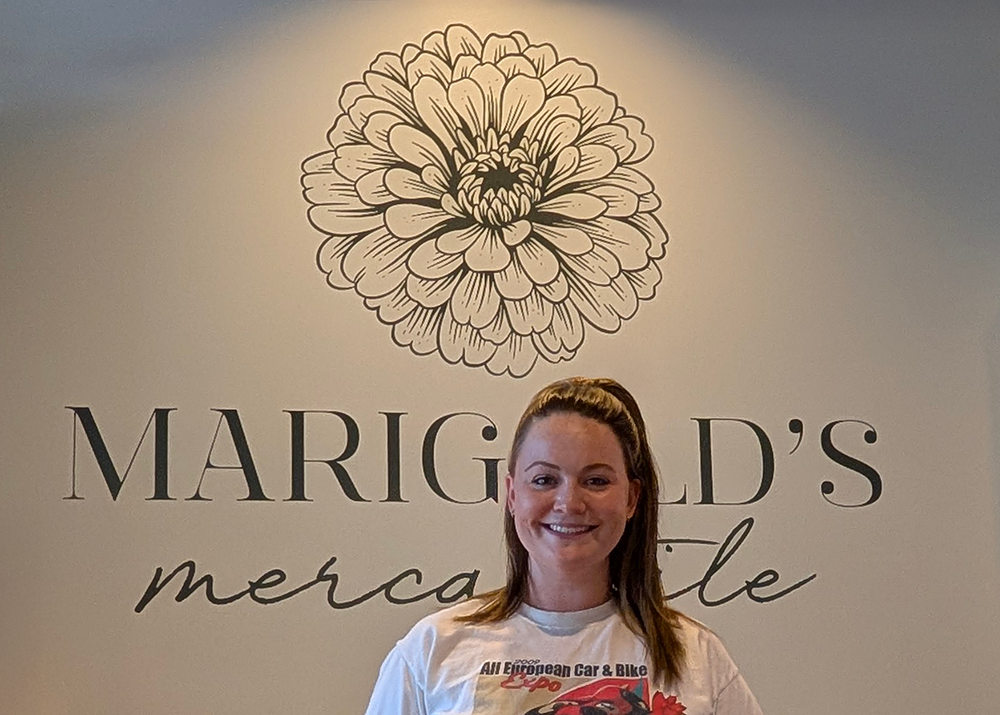
Ashley Evon, and I’m the owner of Marigold’s Mercantile.
Please tell us a little bit about how the idea got started and why you chose the name.
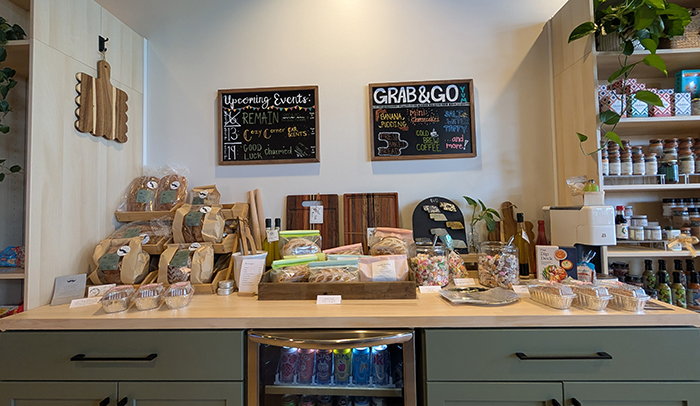
Yeah, the idea kind of came up just happenstance. I was picturing a place that had small local goods, provisions, everything you need for your pantry, and then with that, things like flour sack towels and kitchen supplies. Then it kind of spread to home goods. The more that I researched it and thought about it, the more it kind of resonated with the old school mercantiles and general stores that you used to see on every corner of every small town that had a little bit of everything. So, it kind of stemmed from that idea. I chose the name Marigold because it’s the flower for the month of October, which is my favorite month. My husband and I got married in October, and I love fall and celebrating, so it just made sense. I also thought that “Mercantile” was a good way to explain the business, and I also loved the alliteration of Marigold’s Mercantile. So, it kind of just came together that way. But yeah, I think it fits.
It’s a very lovely store. I haven’t seen anything like this in a really long time, and I haven’t seen anything like this in Nebraska yet.
Yeah, yeah. I actually was visiting a girlfriend in Nashville, Tennessee, and I ran into a mercantile that they have down there when I was still brainstorming the idea. I realized that we didn’t really have anything quite like that yet in Nebraska. There’s also another one, I believe it’s called Des Moines Mercantile, that I follow their social media. They have a really gorgeous social media account and they’ve been a big inspiration to me as well. I haven’t made it there yet, but they look amazing. I’ve been pulling inspiration from other places that have done it, for sure. It’s not just like I came up with the idea all on my own.
You have such a lovely selection and variety. What’s your thought process for that, and how do you find these amazing items?
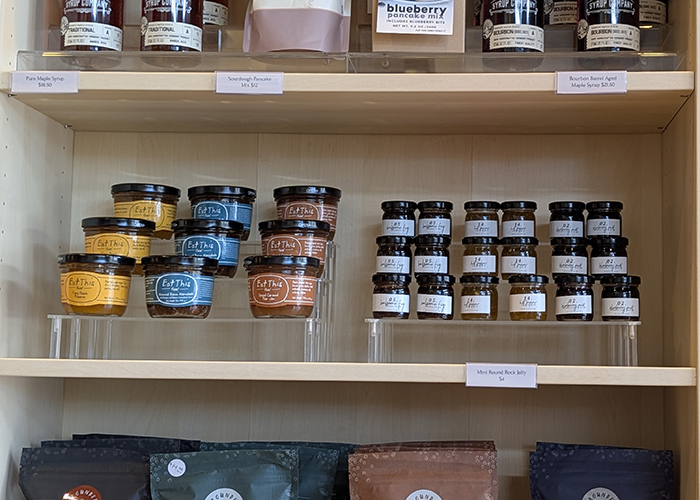
A lot of things go into selecting the items. I definitely try to prioritize local merchandise, so I’m looking at Omaha, Nebraska makers first and foremost. With some other items we definitely branch out to Iowa, and we have products made in Kansas and in Chicago, Illinois. Any makers that are outside of our little Midwest heartland are still almost always owners of a small, locally owned business in their community, often women-owned. The only time when that isn’t true is with some of the larger brands that produce popular items like the Maldon Salt or Graza olive oil. Those are things that have been really popular lately, and we’ve brought those in because of that.
But to continue to answer your question, the process of choosing a product starts with where it’s from. Then I try the product. Is the product high-quality and a good price point? I think both of those considerations really factor in here. I want things here to feel affordable for people but still be quality, so that definitely factors into it. It also depends on their ordering process. Sometimes when you wholesale order, you can only order, like, 24 of something. I don’t have a lot of storage space, so that can factor in it as well. Some of the deciding factors could be cost or quantity. There are a lot of factors, but I would say ultimately it’s based on whether it’s local or who that business is, and then the quality of the product as well as the price point. And then I think about whether my customers would like it. What do I think they would be interested in?
How did you pick this location?
The way it happened is sort of funny. I was actually just driving through when I was kind of brainstorming the idea, and I saw the “For Lease” sticker in the window. I called the number that was on the sticker, and then I was in this space maybe about a week later to tour it, and a month or two after that, I signed the lease. So, it sort of just happened. It wasn’t necessarily planned. But as soon as I saw that this space was available, I thought, “Well, Aksarben doesn’t really have someplace where you can just grab a greeting card, something to say happy birthday to someone, on your way home from work or school or whatever. There are a lot of people who work here and live here in these apartments or in this neighborhood and a lot of students that go to school here. There are also a lot of events at Aksarben that bring people here.” So, it just seems to make sense. I also grew up right over in Dundee. My parents still live there. My brother lives in the apartments right back here, and my husband and I are five minutes away on Center Street, so the family’s all in the neighborhood. It’s where I grew up, and it sort of just makes sense to be here. But yeah, it was kind of an accident.
You get a lot of tourists here in Aksarben, I’ve noticed, as well.
Yeah, yeah, we do. I think there are three hotels right here in the area, so we get people that are staying here, maybe visiting family or students at the college or just Omaha in general. We also get a lot of people who are looking for fun little Nebraska trinkets or things like that to remember the town they visited.
Having traveled a little bit and lived in other places, I was surprised at the limited selection of those items.
Yes, that’s very true.
I think you’ve got a really great inventory here.
Thank you, I really appreciate that.
And then with all the variety of everything here, everyone should come.
Thank you, thank you. I think that the community here has been so welcoming. I get a lot of people that come in and say that they want me to do well too or ask me how I’m doing, which is always like fun. But everybody’s just been so kind about me being here, and they seem excited about it. So yeah, I feel good about it. I feel good being here.
Tell us what your website and social media are.
So my website is just www.marigoldsmercantile.com. All of my social media is pretty much at Marigolds Mercantile as well. So that would be my handle for Instagram, Facebook, and TikTok, which are what I’m on right now.
Please tell us a little bit about your journey to become a business owner and what you did before.
My full-time job was in digital marketing. I had worked from home for about eight years. During that time, my husband and I and his sister and her husband all decided to open a retail store in Springfield, Nebraska, called Remain. Remain is still open and still a functioning business. You can visit there today. They sell vintage furniture as well as some other locally made goods. So that was my intro to owning a business, my intro to retail. I was able to work there very part time while I had a full-time job in digital marketing, so it was easy to ease into that. The Springfield community, being a smaller town, was a little bit more affordable, so it was easier to ease into it financially as well. And yeah, my husband and his sister are from Springfield and their parents still live in Springfield, so that was kind of the connection there. We started Remain almost four years ago now, and that was super fun and exciting. I wanted that, but I wanted it where I grew up, in a way. Also, I think it’s difficult to find and source vintage. It’s very competitive. It takes a lot of time and a lot of work. I still think it’s worth it. I still think it’s really fun. But I wasn’t necessarily trying to carry that over into a new business idea. It was sort of interesting too. I wasn’t necessarily looking to open a retail store and be a new business owner, but I was looking for something in digital marketing and couldn’t find exactly what I wanted. Also, there were some twists and turns and bumps on the way. And then, next thing I knew, I toured the space and I was like, “Well, I have an idea that might work here,” and it just kind of happened. But yeah, I have had a little bit of business ownership and a little bit of retail experience previously.
I’m glad you’re here. And is there a question you would have liked me to ask or something you want to say or an item you want to promote?
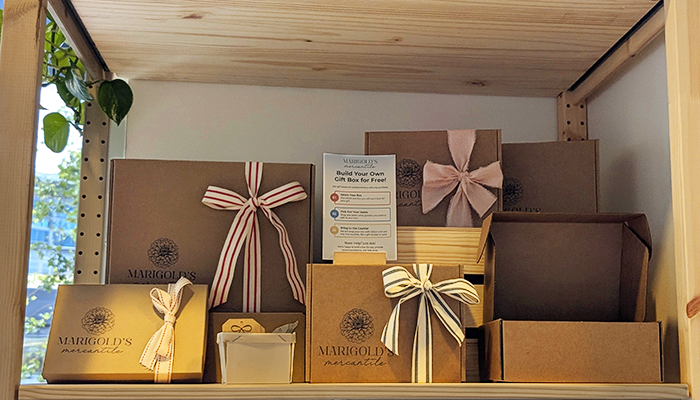
Right now, I think something special that I want more people to know about Marigolds is that we offer complimentary gift wrapping, and if you want to package up items that you buy in our store in a cute box with a fun ribbon or a bag with tissue paper, we have everything here so you can literally walk in the door, grab a gift, get it wrapped, and go to your event. I think that’s really convenient for people, and I think it would be helpful if more people knew about that because it just makes things easier.
It sure does.
Yeah.
Especially last moment, and also not everyone is, pardon the pun, “gifted” at wrapping.
Yes, and we have different levels. We have cardboard boxes that we can make cute, and those are complimentary. Then we have other options. If you want a wicker basket, you can pay a couple of dollars for a wicker basket or a rope tie basket. Ultimately, you can come in and get complimentary gift wrap for anything that you purchase here for anyone.
Michael Olk, Cultural Director of the German American Society
Now I’ll backtrack to the festival that’s coming up on the 18th and 19th of September. You asked why Oktoberfest is in September. Oktoberfest originally got started when King Ludwig I of Bavaria got married in 1810. His wedding was in October. After that they decided to celebrate his wedding every year. The king wanted it to be a celebration for the people of Bavaria, so everybody was invited. Eventually it started turning into more like a fair-type situation where people were bringing animals and they had horse races and all kinds of things. Of course, now it’s the biggest beer drinking and cultural festival in Bavaria. But at some point, they figured out that it was too cold in October to have an outdoor festival, so they moved it back into September but still called it Oktoberfest. The celebration starts in Germany on the same weekend that we do in Omaha. September 18–19 is the exact same weekend when Oktoberfest starts in Munich. But of course, we only run it for two days in Omaha but in Germany they run it for two weeks.
Thank you. Tell us what to expect at Oktoberfest. food-wise and celebration-wise.
Okay. Well, we call it German Day Oktoberfest because what we actually combined two festivals into one. Our German Day festival, which was started in 1884, used to take place in October and later on Labor Day weekend every year. In 1998, we decided to start doing an Oktoberfest that would be open to the public. At first we were having our German Day on Labor Day weekend and then the next month at the beginning of October we were doing Oktoberfest. We found that it was tough to get volunteers two months in a row, so we decided to combine the two events into one and just call it German Day Oktoberfest. This year is our 142nd German Day, combined with Oktoberfest.
What you can expect is a big festival. We have three areas where we have constant music and we have a big food tent. Admission is $7, but children 13 and under are free. Any active military person with a current ID gets in for free, but they have to show their ID to get free admission.
Is that for dependents and retired military also, or just active-duty military?
Just active.
We’ll have three bands playing all the time: one in the main hall, one in the south hall and another in a tent in the north parking lot. You can sit in the tent and eat while you listen to the band and we’ll have an area where you can get up and dance if you want to. In the main parking lot north of the building, we’ll have two big beer trucks with approximately 10 to 16 German beers. In the south parking lot, we’ll have a large selection of German beers that are going to be on tap. We will also have a large selection of German beers in all three halls.
In the food tent we’ll serve schnitzel, which is a pork cutlet that is breaded and fried and then we’ll have our homemade brats. We also do what’s called currywurst. We make a curry sauce that you can put over your brats, which is a tradition from Germany. We have our own homemade sauerkraut. We do hot German potato salad. We also do the big Bavarian pretzels.
We have a rotisserie where we do whole hogs: six hogs at a time, just like they do in Munich. We can do six whole hogs at a time and 240 whole chickens at a time. We do pork dinners and chicken dinners, but that’s only on Saturday. If you get a brat dinner, it includes a brat and a bun with sauerkraut and hot German potato salad. If you get a schnitzel dinner, you get the schnitzel with a roll with it, hot German potato salad and sauerkraut. We also have a food kiosk on the south side of the building by the garage. If you don’t want to wait in line for a whole dinner and you just want a brat or a schnitzel sandwich, you can get a sandwich and put lettuce and onions and tomato on it, and you don’t have to wait in line. On the south side of the building we’ll have a grill that serves nothing but brats and schnitzel sandwiches. If you just want to have something in your hand and a beer or soft drink in your other hand, you can go over there instead of waiting in line for a full meal.
Outside, we’ll also have a wine booth that sells German wines by the glass or by the bottle. We’ll also have a merchandise booth with German hats, hat pins and T-shirts with this year’s Oktoberfest logo on it, which is beautiful. One of our members helps design it. We also sell glassware directly imported from the breweries in Germany. You can buy half-liter glassware or one-liter glassware. We also have the beer boots, which are one liter or two liters and we also have stone crock beer steins that you can buy.
In the South Hall, we’ll have another band playing and you can go into the Rathskeller on the lower level. We’ll have another bar down there and more seating down there. In our main hall, that’s where our dance group performs and the choir sings.
On the north side of the building, we’ll have a huge tent where people can sit and eat. On the south side of the building, we’ll have another tent where people can sit and eat. We’ll have another beer wagon back there from Spaten, another German beer company.
The building that houses our museum and the library is our torte house. It’s air-conditioned and a little bit quieter and you can go in there and enjoy a piece of German torte and coffee and conversation. From there you can take a walk through the museum.
There will be a lot of activities and on Saturday we’ll have a lot of children’s activities. If you go outside on the west side of the building, we’ll have carnival-style games for the kids. We’ve been doing that for many years. We also have performances with hand-carved marionettes just like they have in Germany. They have a stage that was specially built for them and they do two shows for the kids. We’ll also have face painters back there for the kids.
We try to make Oktoberfest family oriented so you can bring your whole family to the fest. It’s just not a beer-drinking event. You can bring Mom, Dad, kids, Grandma, Grandpa and have a good time. There’s something for everybody to enjoy.
I always tell everybody that there are two aspects to the fest. One is the Oktoberfest aspect with the beer and the food and everything. The other aspect is German Day. When you read the history about German Day, you’ll see that it was celebrated in German communities all over Nebraska. I have souvenir books from celebrations in Lincoln, Falls City, Syracuse, and other German communities across Nebraska. When you go into our museum you can see all kinds of pictures and medals and all kinds of artifacts from German Day festivals across Nebraska.
We have a souvenir book from the German Day Festival here in Omaha in 1913 where they had horse-drawn floats going up Farnam Street. They used to have huge parades in downtown Omaha before the First World War. Of course, when the First World War came along, all of that stopped for a little while.
One reason they started German Day in 1884 when they founded the club was that they wanted to raise funds to build a clubhouse. The other reason was to invite the whole community to come and immerse themselves in the German culture for a day.
That’s actually what German Day is all about: to invite people to come and see what we do and get involved in it for a day or maybe decide to join the club. You don’t even have to be German to join the German American Society.
Flyer for celebration; Alt text has content for screen readers
Michael Olk, Cultural Director of the German American Society
OmahaNebraska.com here with…
Michael Olk. I am the cultural director at the German American Society in Omaha, Nebraska.
What first sparked your interest in German American history and history in Omaha?
My parents and my brother emigrated from Germany to Omaha in 1959. I grew up in a German household and we spoke nothing but German at home. I literally grew up at the German American Society almost from day one. When my parents came to Omaha, they got to know other Germans in the community. My uncle and aunt who lived here in Omaha sponsored my parents and introduced them to other Germans. They took them to the old German club that was on South 13th Street and my parents got involved in 1959 when they came to Omaha. In 1966 the German American Society sold the old clubhouse on 13th Street and built the new one where we are now on 120th Street and finished it in 1969. I grew up four blocks away from the club.
We were up there when it was being built. It was built by volunteers except for the main beam work and the concrete pylons that hold up the beams. It was built by the members. We had all of the trades in the club, so they were all going up there like my dad. My dad was a master bricklayer and stonemason, so he helped with a lot of the stone work and the brick work and tile work and slate work. He always took me along and I was only three or four years old at the time. Of course, they all knew I understood German, so all the old guys were asking me to hand them this or that, even though I was just a little guy.
Yeah, I was around the club from basically as soon as I could walk. I was always interested in history and especially German history because I always heard from my parents about our family history back in Germany. That’s what really sparked my interest. And of course later on in life, it really sparked an interest in me in the history of the Germans in Nebraska and Western Iowa: how they came here and how they helped build Nebraska and what they did here and what they did to contribute to Nebraska and everything, especially in Omaha and in the community. So that’s how I got involved in German history in this area.
Do you know why a lot of people, including your family, picked Omaha?
I think my parents picked Omaha because my aunt and uncle were here and my mom and dad didn’t know anybody else in the United States.
There were a couple of reasons why my parents decided to come to America. My dad was originally from East Prussia. The northern part of that region is in Russia and the southern part of it is in Poland. It was divided up after the Second World War as war reparations. My dad is from the southeastern corner of East Prussia. He grew up about six kilometers from the Polish border, so he also spoke Polish. His dad used to deal with a lot of Polish farmers before the war, because they had markets every weekend and they had a horse market. My grandfather was head of the co-op in their town and he knew a lot of the Polish farmers, so they spoke a lot of Polish back and forth. My dad learned Polish also.
My dad and his mom got captured by the Russians after the war and they had to live under communism for two years. Then they escaped: my dad and his mom, his cousin, and a neighbor girl whose parents had passed away. They escaped from the Russians in 1947 and met up with my dad’s siblings and my grandfather who had left in January of 1945 to go west. My dad’s dad—my grandfather—had spent part of the war in a Russian prison camp, but he was over 50 years old, so the Russians let him go.
After the war was over, my father found out where his siblings were through the Red Cross. My father always told me that he didn’t have to leave Germany. He and my mother had just built a brand-new house. They had a new baby—my brother—who was a couple of years old. They had about three acres of land, which in Germany is a lot of land. My grandparents were living downstairs and my parents and my brother were living upstairs. But my dad was afraid that communism was going to spill into West Germany because of the way it was spreading in the East and he always said he was never going to have his kids grow up under communism because of what he had experienced when he and his mom had to live under it for two years. He also said that coming to America was a bit of an adventure. They wanted to go to a new country.
The old timers at the club always used to say, “I’ve got an uncle in America.” That’s what the saying used to be. Even in the early 1900s, they always used to say, “Yeah, I’ve got an uncle in America.” My dad explained to me why they came to the U.S. It was a little bit of an adventure and they also were apprehensive about what was going on in the East. My parents always said there was only one time when they were thinking about going back.
I just lost my parents last year…both of them. My dad was 91 and my mom was 90 when they died, so they both had long lives. They always told me that coming here was the best thing they ever did. They said they had no regrets about coming here. Of course, they missed our family in Germany because my mom and dad were the only ones who had left, other than my uncle who lived here in Omaha. I have a first cousin here in Omaha, but the rest of our family is still in Germany. Of course, we go over there and they come here and we still stay in contact with them.
My parents and my brother became U.S. citizens in 1975 and the World Herald did a story about them because they were the only Europeans that day in the courtroom who were becoming citizens. The World-Herald did a little story about them and I still have the newspaper clipping about it. In the article, my mom talked about becoming an American citizen and how proud she was. She also said people should be proud to be American citizens, but they should also never forget their heritage and where they came from. I agree with that.
That’s wonderful.
Do you know why your uncle and other Germans picked Omaha?
Well, my Uncle George didn’t really pick Omaha at first.
Oh. Where did he go first?
He went to McCook, Nebraska. His first wife was my dad’s oldest sister and they had a son whose name was Hans. When my uncle was in the German Army, he was stationed up in Norway. In January 1945, when they heard that the Russians were breaking through, my dad’s siblings got on refugee trains to go to the west. My dad’s oldest sister who was married to my uncle George contracted hepatitis and died. After the war, my Uncle George ended up in an English prison camp. He found out through the English Red Cross where my dad’s siblings and his son were and he went there and lived with them for several years.
Then he met somebody else and got married and they decided to emigrate to America. Uncle George was a master dairy farmer and he got a job on a dairy farm in McCook, Nebraska. I’m sure it was a culture shock going from northern Germany where it’s plush and green to the sandhills in Nebraska. When they got out there it didn’t last very long because my aunt didn’t like it. I guess she even had a run-in with a rattlesnake while picking up eggs. So then they decided to move to Omaha and Uncle George got into construction and eventually into home building. Uncle George told my dad, “If you come to Omaha, you can do all the brickwork and stonework for me.”
Anyway, that’s another story. But that’s how he came over here. I did a lot of interviews with different immigrants. Some of them came after the First World War and before the Second World War. Others came after the Second World War and a lot of them had different reasons for coming to America. Some of them are sad. Some of them had come because of economic reasons. Some of them had come out of desperation. But after the Second World War, a lot of ladies came over because they had married American GIs after the Second World War. They were called war brides. A lot of Germans came to America after the Second World War because they had nothing after the war. Everything had been bombed out. There wasn’t any opportunity to make a living.
The Marshall Plan helped a lot. I always heard a lot of them talking about the Marshall Plan and my dad talked about the Marshall Plan also. When General Marshall came up with the Marshall Plan to help rebuild Germany, it put a lot of the Germans back to work, but not everybody. Big cities like Hamburg and Frankfurt had been flattened to nothing during the war. Some people lost their whole families and were literally on their own. My dad remembered seeing walls covered with pieces of paper that said, “Have you seen this person?” He remembered seeing children walking alone on the street, with no parents or brothers or sisters. People didn’t even know who they were or where they came from—nothing. He said that post-war Germany was in total disarray. That’s why a lot of people came to America after the war: because they looked toward America as a land of opportunity. They wanted to start a new life. A lot of them came to Omaha and joined the German American society. Especially after the Second World War, we gained a lot of members and they came from all over Germany.
Originally when the club was founded, it wasn’t called the German American Society. It was called the Omaha Plattdeutsch and Plattdeutsch means Low German, which is a certain dialect from northern Germany. Most of the Germans who settled here in Nebraska in the 1800s were from northern regions of Germany, because Nebraska and Iowa look kind of like northern Germany. It’s flat and it’s all farmed around. A lot of people from northern Germany liked Iowa and Nebraska because most of them were farmers. But in 1950, we changed the name because there were so many people who came after the war that were from different parts of Germany. Plattdeutsch didn’t fit with everybody else that was coming from all the different parts of Germany like Bavaria and all the other different provinces that spoke other dialects, so we changed the name to the German American Society.
What parts of town did people end up living in and are there still buildings and different things that were built by the early immigrants?
Well, there really wasn’t a German, per se, neighborhood, because Germans were all over Omaha. There were Germans in North Omaha. There were Germans around St. Joe’s [St. Joseph], a German Catholic church at 15th and Center. Another German Catholic church was St. Mary Mags [St. Mary Magdalene Church] on Dodge. But there were Germans in North Omaha, Midtown, South Omaha… they were all over the place, so there wasn’t really a German neighborhood.
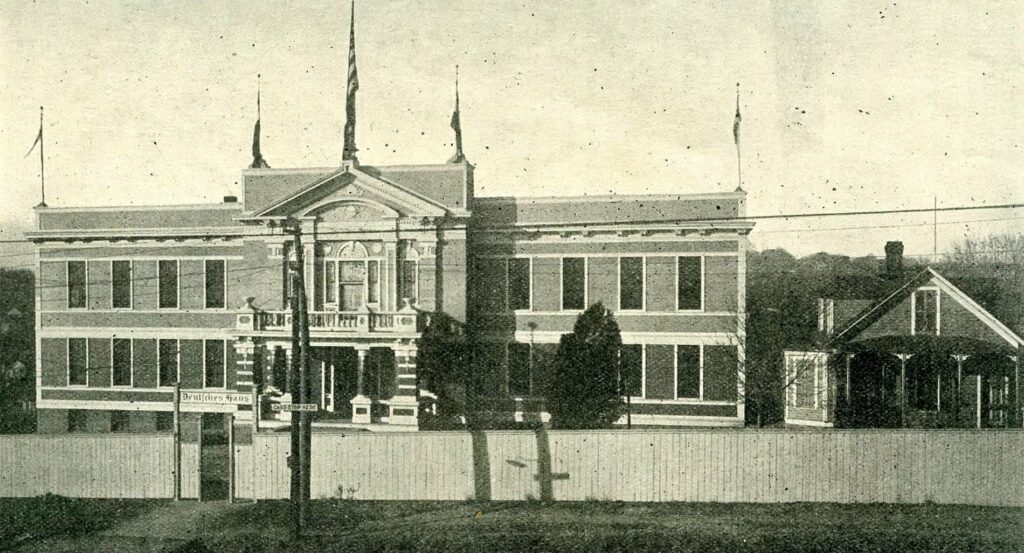
Photo Courtesy German American Society: Deutsche Hause
But when they decided to build what they called the Deutsche Haus on South 13th Street, it was the Brennan Farm and they bought it in 1906. That clubhouse was there until 1966 when it was sold. But before the Deutsche Haus, we had various clubhouses all over the place. We had a place at 19th and Harney.
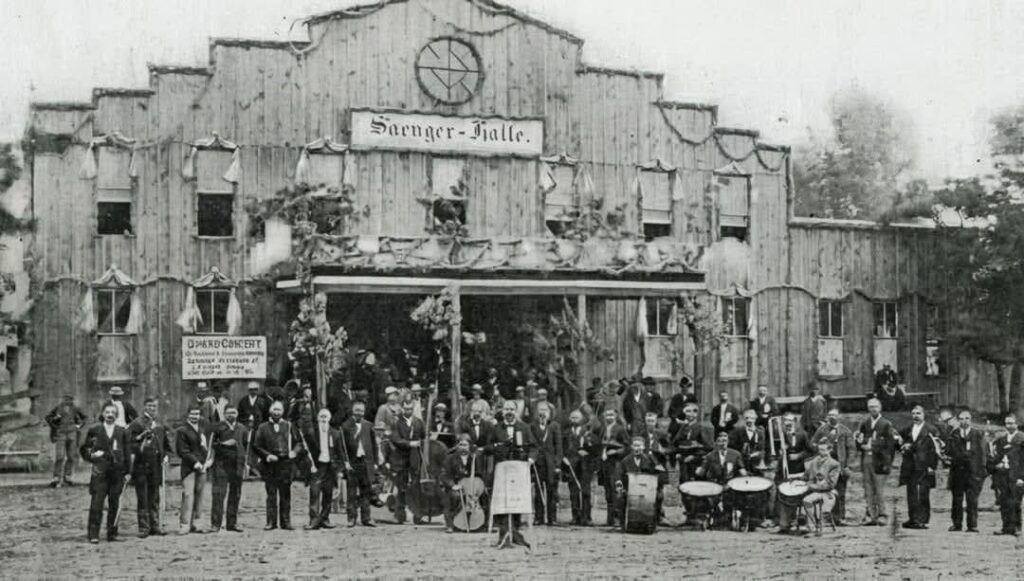
Photo Courtesy German American Society: Sängerhalle
We even had a music hall that was built in 1871 at 17th and Capitol Street. We called it a Sängerhalle. It was for the German music societies that were in Omaha at that time. The first German choir in Omaha was founded in 1868.
There were Germans all over Omaha and they pretty much lived where the work was, where the churches were, where the breweries were. We had four German breweries in Omaha: Krug, Storz, Metz, Jetters. Krug was first on Farnam Street and then on Vinton and then later on they sold the Falstaff. Then you had the Metz Brewery building, which was in East Omaha. There wasn’t really one German neighborhood.
That’s interesting because some different ethnic groups in Omaha were more concentrated.
Yeah, well, like the Italians, were in East Omaha in Little Italy. The Lithuanians and the Ukrainians were in South Omaha. They were off of Martha Street and in those neighborhoods there. But there were a lot of Germans, too, like a lot of them around 17th and Vinton because we had the Turner Hall where they did the gymnastics until 1969. But that building got sold also.
In 1966, there was a meeting of the three remaining big German clubs in Omaha, which was the German American Society on South 13th Street; the Musikverein, which was our German singing societies on 17th and Cass and they were going to be losing their building to the new interstate; and then the South Side Turners, which were on 18th and Vinton. That building is still there. It’s a restaurant or a rental hall or something now.
The president of the German American Society at that time, Joseph Meschede, got everybody together in 1966. The singers were going to be moving in with the German American Society anyway, because they were going to be losing their building. He got all three clubs together and they had a big meeting and he said, “We can’t sustain three German clubs in Omaha, because on the weekends when we’re trying to have a dance we have to figure out where to go.” In addition, all of the clubhouses needed thousands of dollars’ worth of repairs because they were getting old and in disrepair. So, Joe came up with the idea of merging the clubs, selling all the buildings and moving west. Of course, some of the old timers got a little irate about it because they didn’t want to move out of the old neighborhoods, but it was the best thing we ever did. All of those old neighborhoods have changed and the old-timers in those ethnic groups aren’t in those neighborhoods anymore. If we would have stayed on 13th Street, we [German American Society] would have died because nobody would have gone down there. That’s what happened with Sokol down on 22nd and U Street. Nobody wanted to go down there anymore. I felt so bad when they had to close Sokol down on 22nd and U, because I used to like going there as a kid for dances and stuff. I’m a big supporter of all the ethnic groups in Omaha. I want to see them all thrive.
So then we bought five acres where we’re at now on 120th Street, and we sold all three buildings, pooled our money, and came up with an agreement. The Turners agreed to merge, if we would keep the gymnastics going. They agreed to it and we still do the gymnastics. We have five classes of kids from different age groups that come every single Thursday for gymnastics at the club, and we’ve been doing gymnastics since 1860.
The continuity is very impressive.
Yep. It was the same with the Omaha Musikverein, the Singing Society, that was on 17th and Cass. The Singing Society and the Turners (the gymnastics) were the two oldest German organizations in Omaha. The Turners started in 1860, and they used to have an old Turner Hall on 10th and Howard Street. That was their first German Hall. So, they go way back. For us to keep going that long is quite an accomplishment. But we sold all the buildings, pooled all the money together, and started construction at 120th Street. We have these big, huge wooden beams that kind of swoop up to the middle in the ceiling of the main hall, and that was the first hall that we built. Construction of the building started in late 1966 and was finished in 1969. I would say 85% of the work was done by volunteers.
Wow.
They came on the weekends after work. My dad and a lot of the other guys played soccer for Falstaff and Storz brewing companies, and they were coming out on the weekends and stuff. The salesmen were coming out with their station wagons full of free beer, and Warren Larson, he used to own Larson Block Company that was in South Omaha off of F Street, he was a member of the club. He was selling all the block and everything at cost to the club. The German American Society got a lot of help from a lot of people. I still remember all those guys out there working. It was quite an accomplishment when they got it done. We’re pretty proud of what we’ve done out there.
It’s a very nice facility, and you host so many different events.
Yeah, yeah. I’m also the chairman for all of our festivals and enjoy that very much.
You wear quite a lot of hats, and they’re all very big ones.
Yeah, yeah, but you know what? I enjoy doing it because it’s pretty much where I grew up, and I’m proud of what we have there and I’m proud of what I do there. I’m going to keep doing it until I can’t do it anymore. I like seeing new young people come in, and I like telling them about the club and telling them about the history of the club and about the history of the Germans in Nebraska. I like taking people into the museum, and I also give talks about the history of the Germans in Nebraska. I also enjoy working on the archives and all the other things I do there. The people at the German American Society are like family to me.
While I do wear a lot of hats, other people do also. Without the hard work of many of our members, none of these things would be possible.
Please tell us a little bit about the different events that you have, including the festival coming up. A lot of people wonder why it is called Oktoberfest when it takes place in September.
Okay. Well, we do rent the club out for weddings and other events, but our main focus is on teaching people about the German culture and heritage. That’s why the club exists. We are a cultural organization, and we have many different sub-organizations. We have a traditional German dance group called the Heimat Tänzer. We have our formal choir, which is called the Sängerchor. Of course, like I said before, we have the Turners. We have a Wurst Klub. They meet once a month, and they make the sausage for all of our festivals.
Oh, it is so good.
It’s all made in-house. We have a men’s group that is actually tied to the Turners—the gymnastics—and they are called the Bärenbrut. We also have a ladies’ group called the Die Rosen. We have a ladies’ organization called the Heimatfreunde, which means “homeland friends.” We have cooking classes. We have language classes for children and adults. We basically touch on every aspect of German culture that you could probably ever think of. from organizations to activities. We also have a library… just anything and everything that you can think of on German culture. We even have a store. I run the store also. My parents started it. Of course, now that my parents are gone, I run it, and I have it open every other Saturday from 9 to 11. It’s open to the public, and it’s all imported German products.
Our main goal is to teach and foster the German culture. And then we also have a few dinner dances here in February. We have what’s called Fasching. It’s like the same thing as Mardi Gras, but in Germany they call it Fasching or Karnival. In January, we have what we call Stiftungsfest; that’s our anniversary dinner. In January 2027, we’ll be celebrating 143 years.
We have events that are open to the public. In March, we have Bockfest, which is a celebration of Bockbier. It’s a darker beer, and the alcohol content is just a little bit higher. We have guys out on the patio who heat up hot steel rods. They put the rods in the beer, and it kind of caramelizes the beer and brings up the alcohol content just a little bit, and it tastes really good. We serve different German foods with it, and we have entertainment. We have bands.
In May, we have Maifest, which is celebrated very widely and extensively in Germany. We have a traditional maypole at the clubhouse. Our dance group does the traditional Bandl Tanz which is the maypole dance. They wear the traditional dress from where their families came from, in different parts of Germany. Our choir sings, and we have a mixed group that sings nothing but beer drinking songs, hiking songs and folk songs. They’re called the Singenden Wanderer. We have bands and we serve German food. We have a market where you can buy food products and other things.
On September 18th and 19th this year we’ll have our German Day Oktoberfest. I’ll backtrack to that in a bit.
The last festival for the year is our Christmas in Germany. That is our second largest festival of the year. It’s one of my favorites because it’s traditional. We put on a traditional German Christmas. It’s on the first Sunday of December every year, and we run it from noon to six. We have this big, beautiful, 16- to 18-foot-tall Christmas tree with hand-carved ornaments on it. Some of our members are wood carvers. They hand carved all these ornaments that are on this tree, and all of the ornaments are in German style. We serve traditional German food, and our choir sings German Christmas songs. Our group, Sängerchor, also sings German Christmas songs. Our dance group, the Heimattänzer, does traditional dances and also some Christmas dances. We have what we call the Christkindlmarket, the German Christmas market. Saint Nicholas comes for the kids and we also have entertainment for the kids. We have the Mid-America Wood Carvers downstairs in our Ratskeller, a lower level in the basement of our South Hall. We also have some other groups down there selling items.
We make our own mulled wine, which is called Gluhwein. We have an organization of wine connoisseurs called the Weinverein. They make the Gluhwein, and you can either buy it in bottles or buy it fresh in a specially made cup just made for the festival, and they actually come from Germany. It’s just a really beautiful fest that helps you get into the German Christmas spirit. At 6:00, right before it ends, we hand out sheets with the verses of Silent Night in German and in English. We turn the lights down, and everybody gets really quiet. Then the choir leads it off, and everybody that is there will sing. There’s got to be over a thousand people there at the time. We do a Silent Night sing-along in German and in English, and that’s the end of the festival for Christmas in Germany.
Fiestas Patrias Omaha — Conjunto Rio Grande
5:00–10:30 PM
Historic South 24th Street
South 24th and N Streets
Omaha, NE 68107
Free
Opening night features Conjunto Rio Grande, Grupo Gitano, the Hispanic Art Center of Omaha and Raíces de México. https://www.fiestaomaha.com/en/events/conjunto-rio-grande-2
Shadow Ridge Music Festival
Doors open at 5:00 PM; music begins at approximately 5:20 PM and ends at approximately 11:00 PM
Shadow Ridge Country Club
1501 S. 188th Plaza
Omaha, NE 68130
Tickets needed
Outdoor concert featuring Blues Traveler, Gin Blossoms, Spin Doctors and The Samples. A portion of ticket proceeds supports the 50 Mile March Foundation and its work with veterans experiencing mental-health challenges. https://shadowridgemusicfestival.com/
Saturday, September 12, 2026
Omaha Farmers Market — Old Market
8:00 AM–12:30 PM
Old Market
11th and Jackson Streets
Omaha, NE 68102
Free
Approximately 100 vendors offer produce, baked goods, meats, flowers, crafts and prepared foods. SNAP and Double Up Food Bucks are accepted. https://omahafarmersmarket.com/
World O! Water
12:00–4:00 PM
Papio-Missouri River NRD Natural Resources Center at Chalco Hills Recreation Area
8901 S. 154th Street
Omaha, NE 68138
Free
An all-ages environmental festival with water-conservation demonstrations, science experiments, games, face painting and recreational activities. https://www.worldowater.org/ https://www.papionrd.org/education-events-world-o-water/
Sunday, September 13, 2026
Omaha Farmers Market — Aksarben Village
9:00 AM–1:00 PM
Aksarben Village
67th Street and Mercy Road
Omaha, NE 68106
Free
Local produce, foods, plants and specialty goods, with SNAP and Double Up Food Bucks accepted. https://omahafarmersmarket.com/aksarben-village/
Fiestas Patrias Omaha — Misa con Mariachi
10:00–11:30 AM
Historic South 24th Street
South 24th and N Streets
Omaha, NE 68107
Free
Assumption Guadalupe Church leads an outdoor Mass accompanied by Mariachi Los Caballeros. https://www.fiestaomaha.com/en/events/misa-con-mariachi-1
Common Senses Festival Kick-Off
10:00 AM–4:00 PM
The Durham Museum, Heartland of America Park and KANEKO
801 S. 10th Street; 800 Douglas Street; 1111 Jones Street
Omaha, NE 68108 and 68102
Free; registration requested
An accessible family event featuring trains and photography at The Durham Museum, music and games at Heartland of America Park and sensory activities at KANEKO. Free UNO shuttles connect the locations. https://www.commonsensesfestival.org/events/common-senses-festival-kick-off
Fiestas Patrias Omaha — Grito de Independencia
7:00–11:00 PM
Plaza de la Raza on Historic South 24th Street
South 24th and M Streets
Omaha, NE 68107
Free
An evening celebration with charros, live music, a ceremony led by the Mexican Consulate and fireworks. https://www.fiestaomaha.com/en/events/grito-de-independencia-1
Nights at The Joslyn — Stories in Art
5:00–8:00 PM
Joslyn Art Museum
2200 Dodge Street
Omaha, NE 68102
Free
Food and drinks cost extra
An evening of gallery activities, artmaking and special programs exploring stories represented through art https://joslyn.org/events/nights-at-the-joslyn-24
Afro Fest Tech Day
5:00–8:00 PM
The Ashton at Millwork Commons
1229 Millwork Avenue
Omaha, NE 68102
Free
Registration requested
Networking, technology exhibits, AI panels and a small-business workshop intended to expand access to technology in African and Afro-diasporic communities https://afromaha.com/afro-fest-tech-day
La Festa Italiana
6:00–11:00 PM
Il Palazzo
5110 N. 132nd Street
Omaha, NE 68164
Tickets needed
The American Italian Heritage Society’s annual celebration features Italian food, cultural traditions, children’s activities and dancing to The 70’s Band beginning at 8:00 PM. https://omahaitaly.com/events-bad/la-festa-italiana
Midtown Mix featuring Post Service Collective
6:00–8:00 PM
Turner Park Terrace
3110 Farnam Street
Omaha, NE 68131
Free
An outdoor neighborhood concert featuring the Omaha funk band Post Service Collective https://midtowncrossing.com/things-to-do/events
Friday Night Flicks-Zootopia 2
7:30–9:00 PM
Gene Leahy Mall
1001 Douglas Street
Omaha, NE 68102
Free
An outdoor family movie night with lawn games, giveaways, food trucks, face painting and free popcorn https://theriverfrontomaha.com/events
Omaha Farmers Market — Old Market
8:00 AM–12:30 PM
Old Market, 11th and Jackson Streets
Omaha, NE 68102
Free
Approximately 100 vendors offer produce, baked goods, meats, flowers, crafts and prepared foods. SNAP and Double Up Food Bucks are accepted.
Monarch Tagging
9:00 AM–12:00 PM
Lauritzen Gardens, Quinn Oasis and Amphitheater
100 Bancroft Street
Omaha, NE 68108
Included with paid garden admission; free for garden members
Experts from the AAZK Omaha Chapter demonstrate how monarch butterflies are captured, tagged and released for migration research. No advance registration is required. https://www.facebook.com/LauritzenGardens/posts/1535066155316851
Level Up Job, Housing and Resource Fair
11:00 AM–4:00 PM
Gene Leahy Mall at The RiverFront
1001 Douglas Street
Omaha, NE 68102
Free
Employers, housing organizations and community groups provide hiring opportunities, homeownership guidance, career coaching, financial resources and family activities. https://www.freedomtainment.com/level-up-job-and-housing-fair
Art-Tastic Saturdays – Stories in Art
11:00 AM–2:00 PM
Joslyn Art Museum
2200 Dodge Street
Omaha, NE 68102
Free
All-ages art activities include an American Midwest Ballet presentation, gallery sketching, artmaking, an Art Cart and a designated quiet space. https://joslyn.org/events/art-tastic-saturday-13
Afro Fest Omaha
2:00–10:00 PM
Sonny’s Builders District
724 N. 16th Street
Omaha, NE 68102
Tickets needed
A celebration of African and African-diaspora culture featuring music, dance, fashion, food, arts and crafts, a children’s area, technology activities and more than 80 vendors https://afromaha.com
LOVAM Jazz Festival
4:30–10:00 PM
Turner Park Pavilion
3110 Farnam Street
Omaha, NE 68131
Free
The 14th annual outdoor jazz festival features Eric Darius, Vincent Ingala and Jessy J. https://midtowncrossing.com/things-to-do/events
La Festa Italiana -Saturday
5:00–11:00 PM
Il Palazzo
5110 N. 132nd Street
Omaha, NE 68164
Tickets needed
Italian food, cultural activities and family entertainment, with dancing to Taxi Driver beginning at 8:00 PM https://omahaitaly.com/events-bad/la-festa-italiana
Unity Fest
7:00–11:00 PM
Gene Leahy Mall Pavilion
1001 Douglas Street
Omaha, NE 68102
Free ticket required; paid VIP option available
Freedomtainment and Casa de la Cultura present music and cultural performances intended to connect Omaha’s neighborhoods and diverse communities. https://www.freedomtainment.com/unity-fest
Sunday, September 6
LIII Convención Hispana de Alcohólicos Anónimos
7:00 AM–11:59 PM
CHI Health Center Omaha
455 N. 10th Street
Omaha, NE 68102
Registration information is provided by the convention; the accessible official pages do not publish the fee
The concluding day of the Hispanic Alcoholics Anonymous Convention for the United States and Canada https://chihealthcenteromaha.com/event/liii-convencion-hispana-de-alcoholicos-anonimos
Omaha Farmers Market- Aksarben Village
9:00 AM–1:00 PM
67th Street and Mercy Road
Omaha, NE 68106
Free
Local produce, foods, plants and specialty goods, with SNAP and Double Up Food Bucks accepted https://omahafarmersmarket.com/aksarben-village
La Festa Italiana — Sunday
12:00–11:00 PM
Il Palazzo
5110 N. 132nd Street
Omaha, NE 68164
Tickets needed
The final festival day includes Italian food and cultural activities, with dancing to ECKO beginning at 8:00 PM. https://omahaitaly.com/events-bad/la-festa-italiana
Millard Days 5:00–10:00 PM Carnival
6:00–11:00 PM Beer garden
6:00 PM Jeep Night
Andersen Park
13625 Cottner St.
Omaha, NE 68137 https://www.millarddays.com/schedule
Thursday, August 27, 2026
Millard Days 5:00–10:00 PM Carnival
6:00–11:00 PM Beer garden Andersen Park 13625 Cottner St.
Omaha, NE 68137 Community carnival and beer-garden evening https://www.millarddays.com/schedule
Issa Trap Symphony-Afro-Fusion Guided gallery experiences 4:00–6:00 PM; concert and mixer 6:30–9:30 PM Joslyn Art Museum 2200 Dodge Street Omaha, NE 68102 Paid Admission
Registration required
Walk-ins accepted if space permits. Kevin Paradise, Joe.EZ, AJII and Kusher Snazzy perform with Omaha Symphony string musicians. The program also features Ray Bae, Afrobaddie, Big Wade & Black Swan Theory, Jevon Woods and Menice “Mars” Blackman https://joslyn.org/events/issa-trap-symphony-afrofusion/
Friday, August 28, 2026
Millard Days 5:00–11:00 PM Carnival
6:00 PM Beer garden
7:00–11:00 PM The Damones Andersen Park 13625 Cottner St.
Omaha, NE 68137 Friday’s principal attraction is a four-hour live performance by The Damones https://www.millarddays.com/schedule
Night Market, presented by Veridian Credit Union 6:00–10:00 PM Turner Park at Midtown Crossing 3110 Farnam Street Omaha, NE 68131 Free and open to the public More than 50 local vendors, artists and makers, plus BluesEd, Omaha Street Percussion, Chad Lee, The Pinheads and other musicians https://midtowncrossing.com/things-to-do/events/night-market/
Millard Days Horseshoe registration 10:30 AM; tournament 11:00 AM; family activities noon–3:00 PM; carnival 1:00–6:00 PM Andersen Park 13625 Cottner St.
Omaha, NE 68137 Family schedule: face painting and balloon animals at noon, Dino Bus from noon–1:00 PM, kids’ tractor pull at 1:30 PM and ice-cream social at 3:00 PM. https://www.millarddays.com/family-day
Omaha’s Original Greek Festival — Mykonos Taverna Night 5:00–10:45 PM St. John the Baptist Greek Orthodox Church 602 Park Avenue Omaha, NE 68105 $6 adult admission; students and children under 12 are free Greek food, pastries, church tours, cultural exhibits and children’s activities https://greekfestomaha.com/ https://greekfestomaha.com/schedule/
Friday, August 21, 2026
Omaha’s Original Greek Festival — Santorini Island Night 5:00–10:45 PM St. John the Baptist Greek Orthodox Church 602 Park Avenue Omaha, NE 68105 $6 adult admission; students and children under 12 are free https://greekfestomaha.com/ https://greekfestomaha.com/schedule/
Saturday, August 22, 2026
Omaha Farmers Market — Old Market 8:00 AM–12:30 PM Old Market, 11th and Jackson Streets Omaha, NE Approximately 100 vendors offer produce, baked goods, meats, flowers, crafts and prepared food. SNAP and Double Up Food Bucks are accepted. https://omahafarmersmarket.com/
Omaha’s Original Greek Festival — Athens All-Day 11:00 AM–10:45 PM St. John the Baptist Greek Orthodox Church 602 Park Avenue Omaha, NE 68105 $6 adult admission; students and children under 12 are free https://greekfestomaha.com/ https://greekfestomaha.com/schedule/
Art Cart 11:00 AM–2:00 PM Joslyn Art Museum 2200 Dodge Street Omaha, NE 68102 Free All-ages drop-in gallery activities with sensory materials, conversation and hands-on art experiences; summer lawn games are also planned weather permitting. https://joslyn.org/events/art-cart-3/
Sunday, August 23, 2026
Omaha Farmers Market — Aksarben Village 9:00 AM–1:00 PM 67th Street and Mercy Road Omaha, NE Local produce, foods, plants and specialty goods, with SNAP and Double Up Food Bucks accepted. https://omahafarmersmarket.com/
North Omaha Music & Arts Festival (NOMAFEST) – Masterclass & Frank McComb
5:00 PM Masterclass
7:00 PM Concert
North Omaha Music & Arts
2510 N 24th St
Omaha, NE 68110 https://nomafest.org/
Omaha Chalk Art Festival
10:00 AM – 6:00 PM
Turner Park at Midtown Crossing
3110 Farnam St
Omaha, NE 68131 https://midtowncrossing.com/
Millwork Market
11:00 AM – 3:00 PM
The Ashton / The Dock
1229 Millwork Ave
Omaha, NE 68102 https://millworkcommons.org/
North Omaha Music & Arts Festival (NOMAFEST) – The Bar-Kays, MonoNeon & Keyon Harrold
6:00 PM – 10:00 PM
Gene Leahy Mall
1001 Douglas St
Omaha, NE 68102 https://nomafest.org/
Sunday, August 16
Omaha Farmers Market – Aksarben Village
9:00 AM – 1:00 PM
67th St & Mercy Rd
Omaha, NE 68106 https://omahafarmersmarket.com/
Omaha Chalk Art Festival
10:00 AM – 6:00 PM
Turner Park at Midtown Crossing
3110 Farnam St
Omaha, NE 68131 https://midtowncrossing.com/
North Omaha Music & Arts Festival (NOMAFEST) – Richie Love
North Omaha Music & Arts
2510 N 24th St
Omaha, NE 68110 https://nomafest.org/
Always check with the organizer for exact time and any changes.
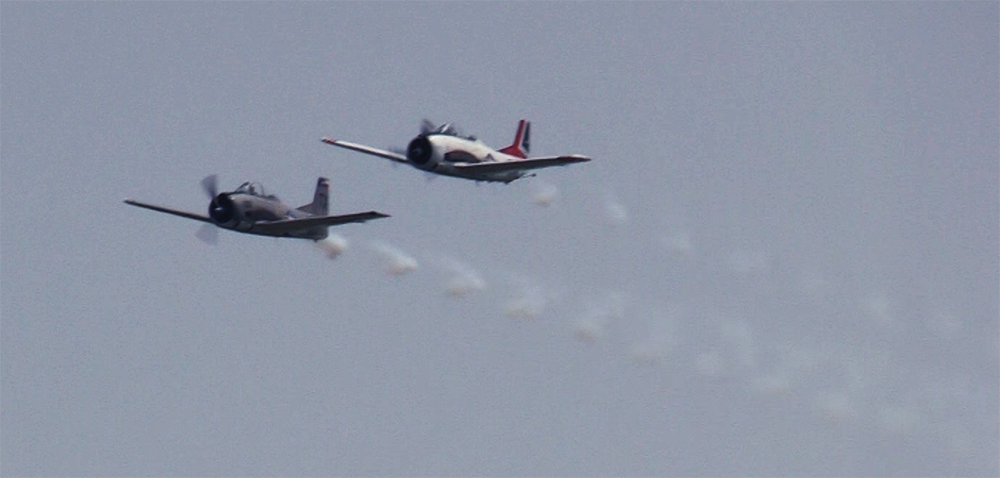
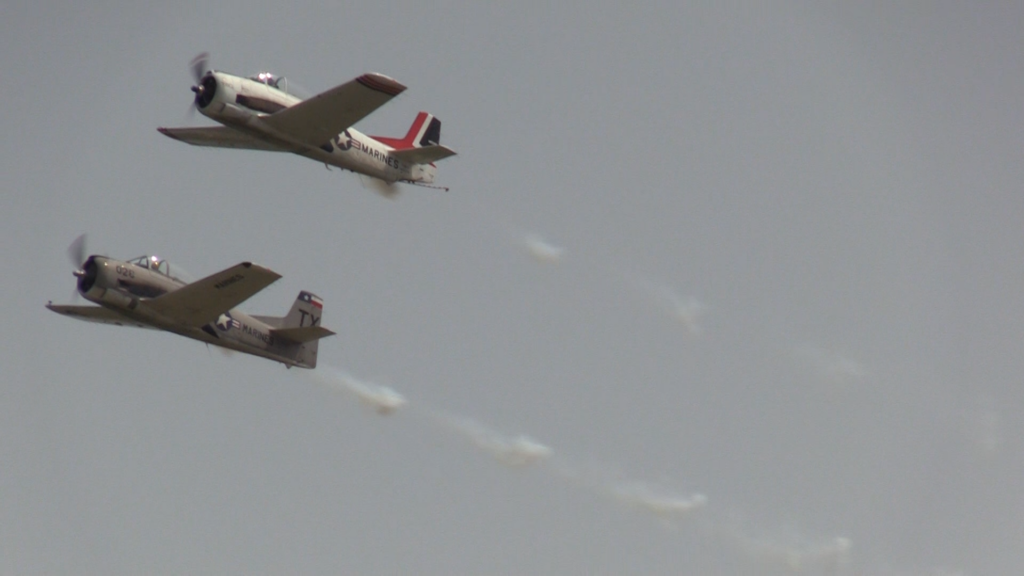
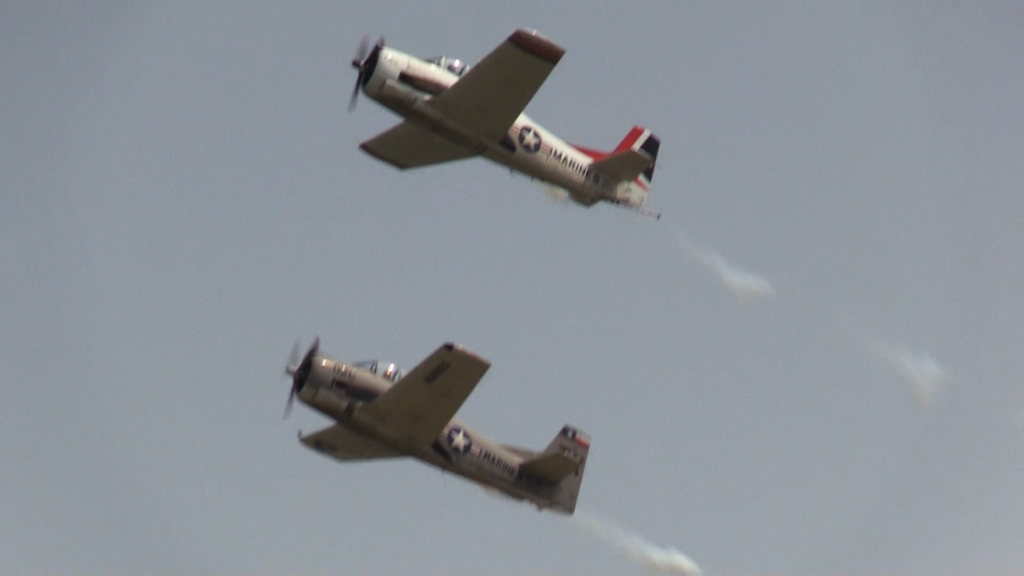
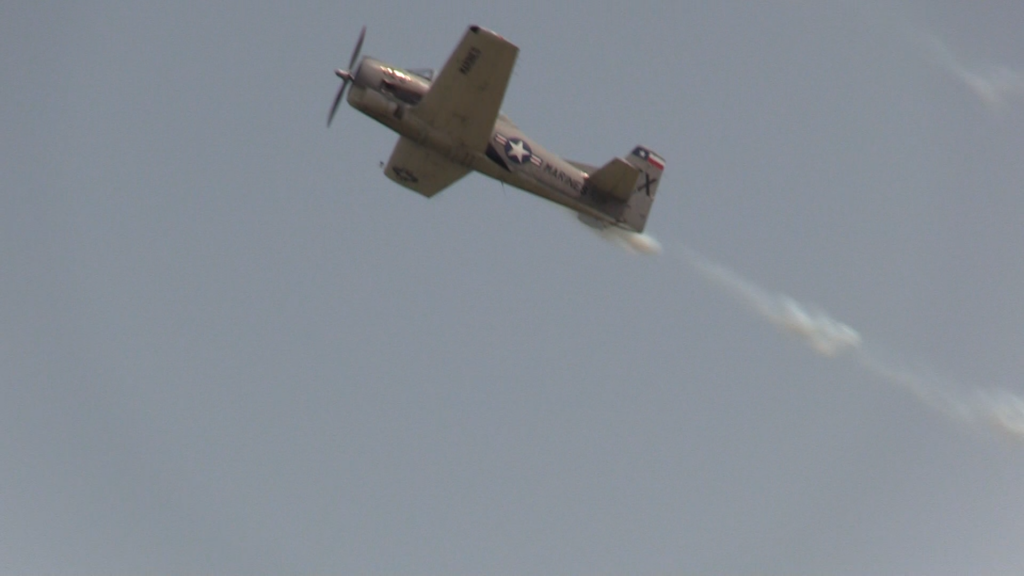
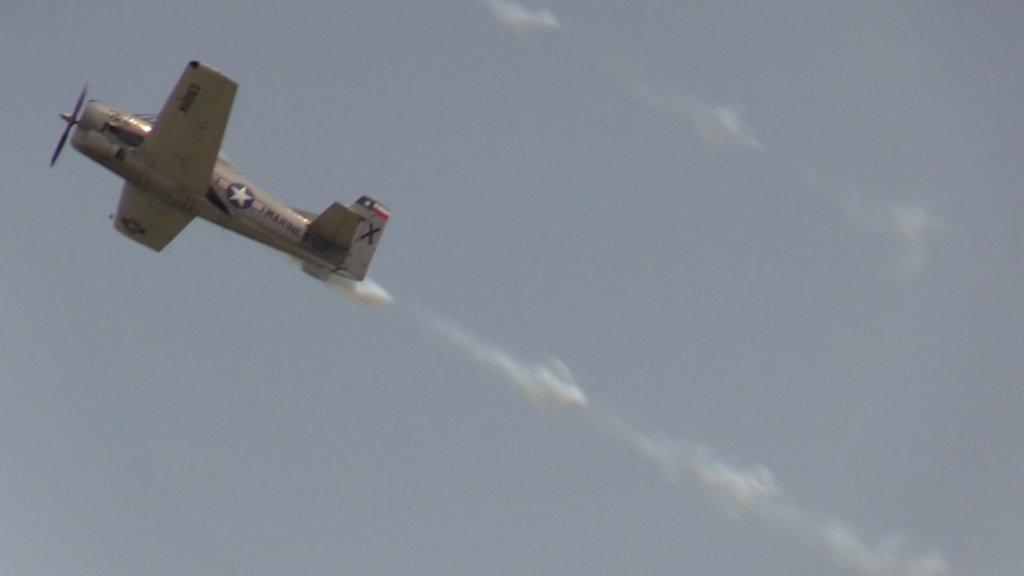
The Defenders of Freedom Air & Space Show made its return to Offutt Air Force Base, bringing thrilling aerial performances to the skies over Bellevue on 8 August. Stormy weather rolled in and cut Saturday’s lineup short, but we were able to catch the Trojan Phlyers before it hit. Their pair of T-28 Trojans performance was fun to watch and photograph. Here’s a look at what we caught through the haze.
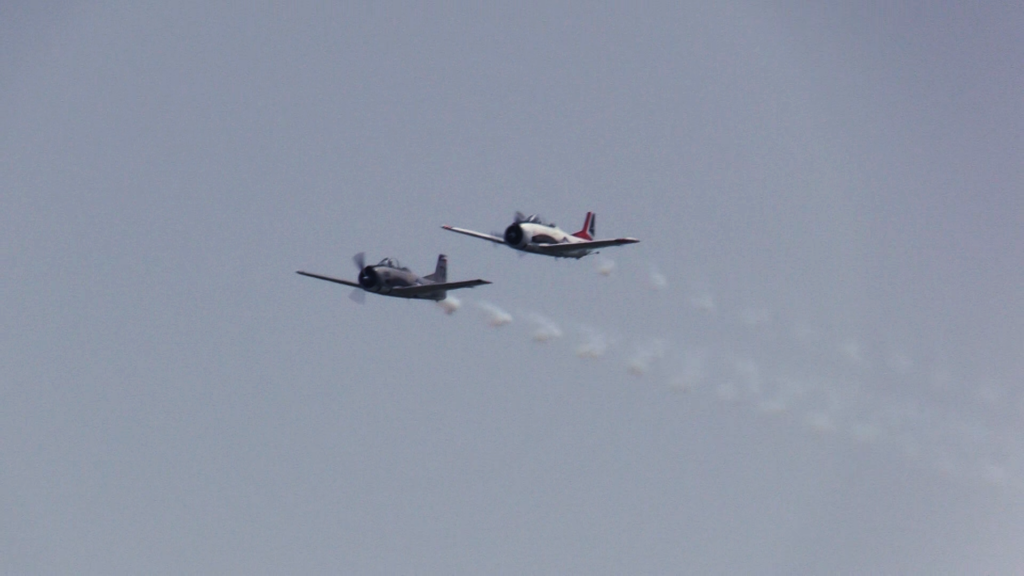 Two Trojan Phlyers T-28s cross paths, smoke trail streaming behind, Offutt AFB airshow